
Leave the Leaves!
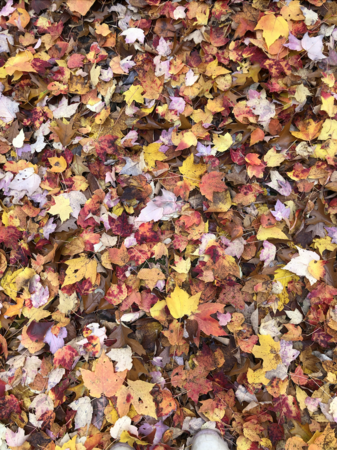
Leave Leaves! It’s the new mantra among ecological gardeners. And with good reason. Leaves feed the soil when they breakdown and provide crucial habitat for insect who overwinter in them. According to a recent study, entomologist Max Ferlauto of the Maryland Natural Heritage Program discovered that “When you remove the leaves, you reduce your butterfly and moth emergence by about 45%. And you reduce your spider population by about 56%, and your beetle population by about 25%,” he said on a recent Xerces podcast Bug Banter episode. Don’t send leaves (or grass clippings and woody debris, for that matter) to the landfill. Keep them on your property and feed them back to the plants that made them.
It’s an easy thing we can all do to help with the biodiversity crisis. Plus, how great would it be not to have to listen to leaf blowers spewing noise and poison 24/7?
What to do with all the leaves?
Here’s where you can get creative and have some fun.
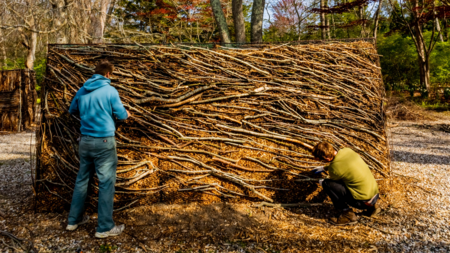
Make a leaf basket from fallen branches—as large or small as you’d like—and put them inside.
Weave fallen branches into a basket shape. Start by laying out the form then tuck in branches as you find them so that the basket takes shape and holds together. When you’ve created a rough form start adding leaves and keep weaving in new branches as you find them.
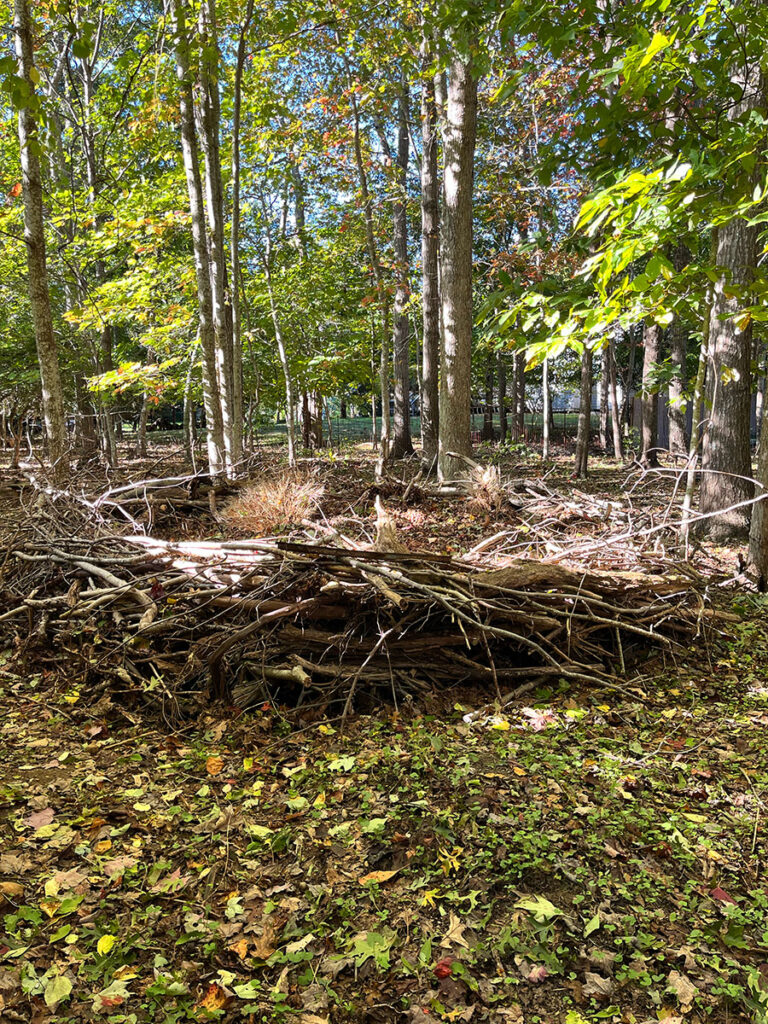
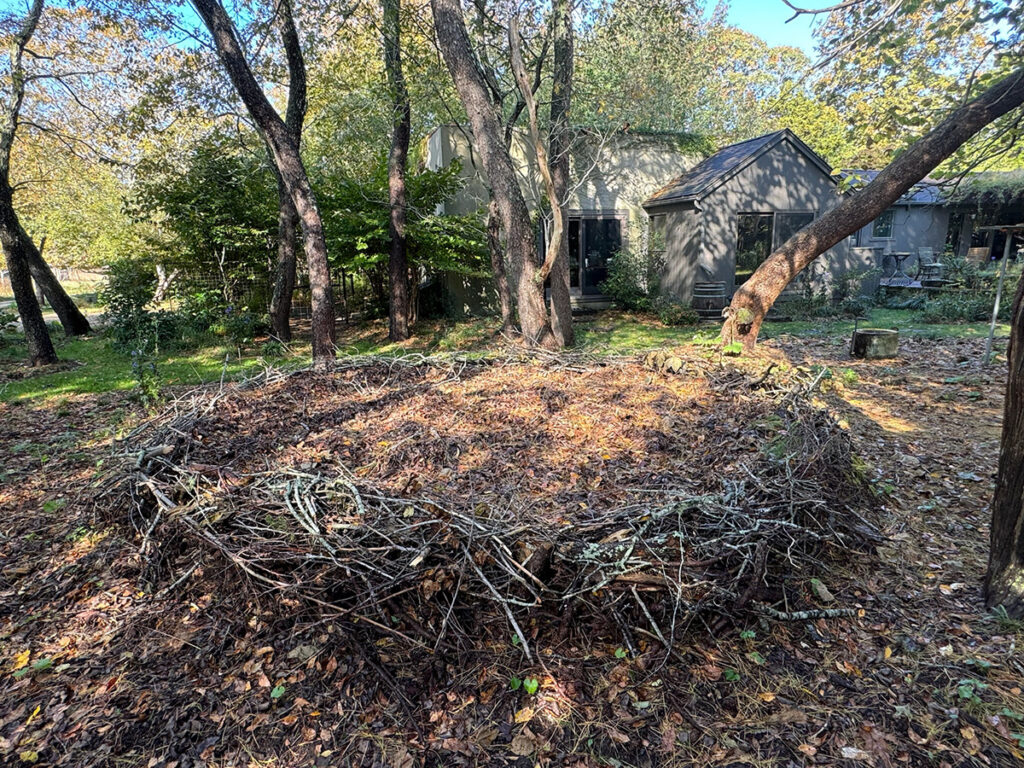
This leaf basket is full of leaves. They will eventually breakdown and feed the soil beneath it.
Create soft landings by placing leaves in planting beds, beneath trees and shrubs like mulch.
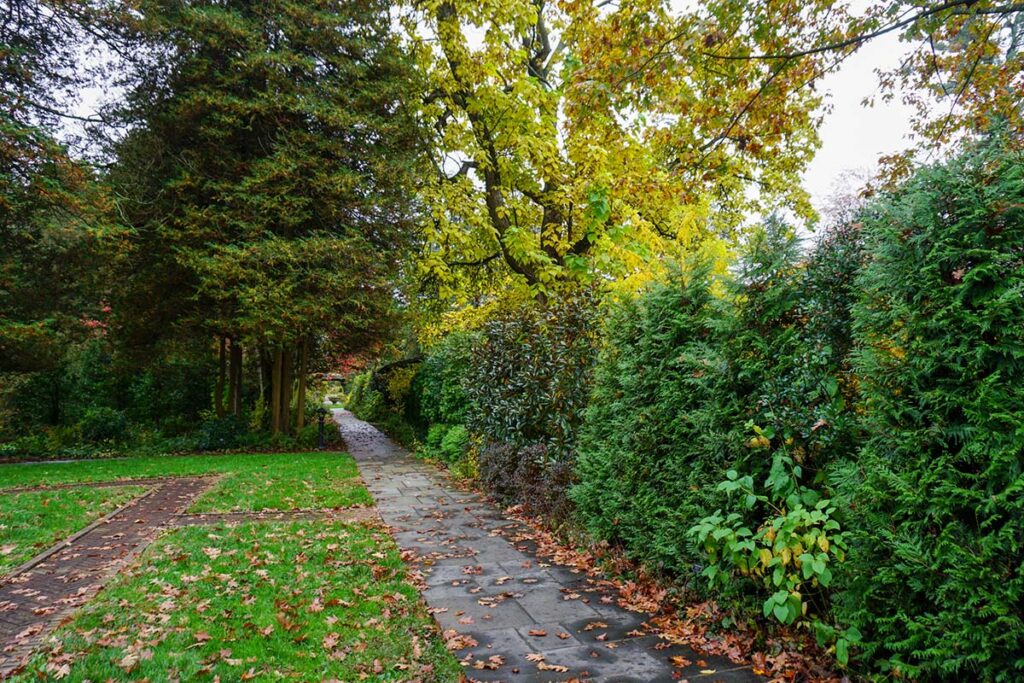
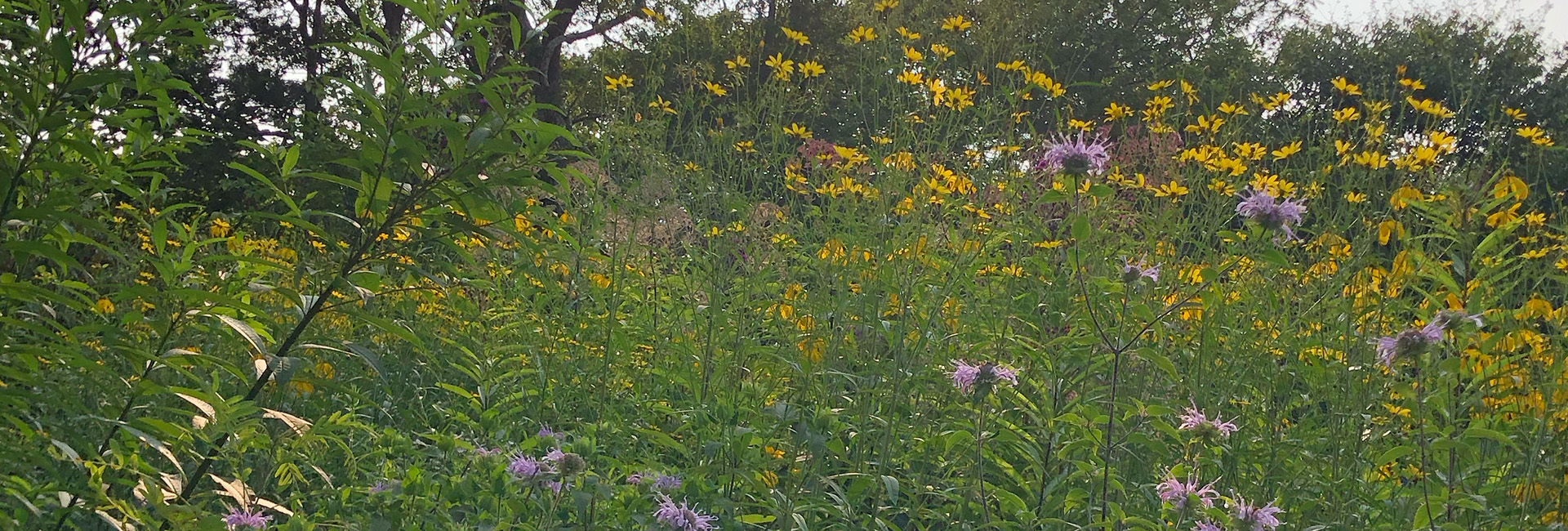
At Stoneleigh garden in Villanova, PA, fallen leaves provide a soft landing for overwintering insects beneath the garden’s native hedge.
Add them to a compost heap.
If you want to remove leaves from heavily trafficked area, add them to your compost or make a large leaf pile in an out of the way spot.
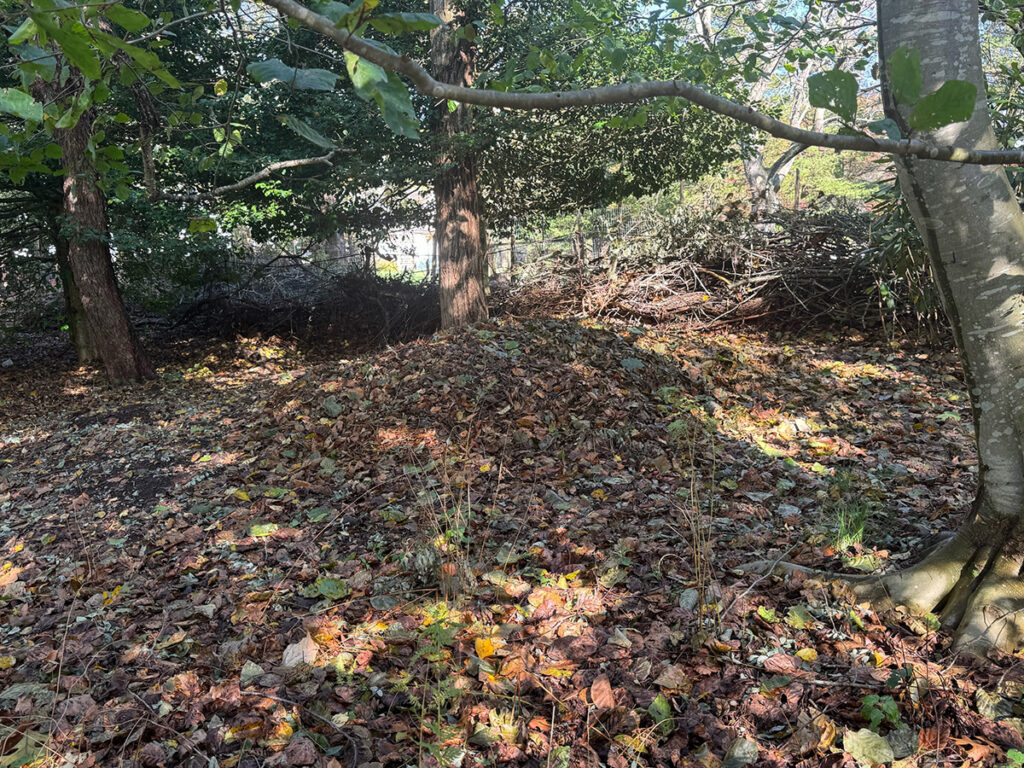
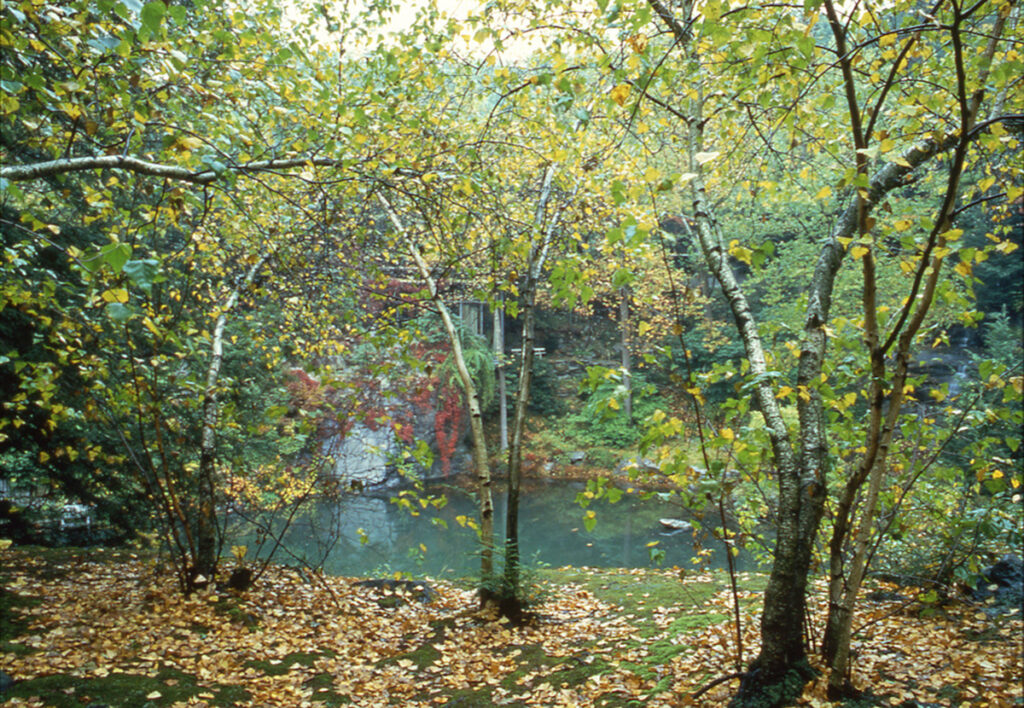
Leave them where they fall. They will eventually decompose and feed the soil.
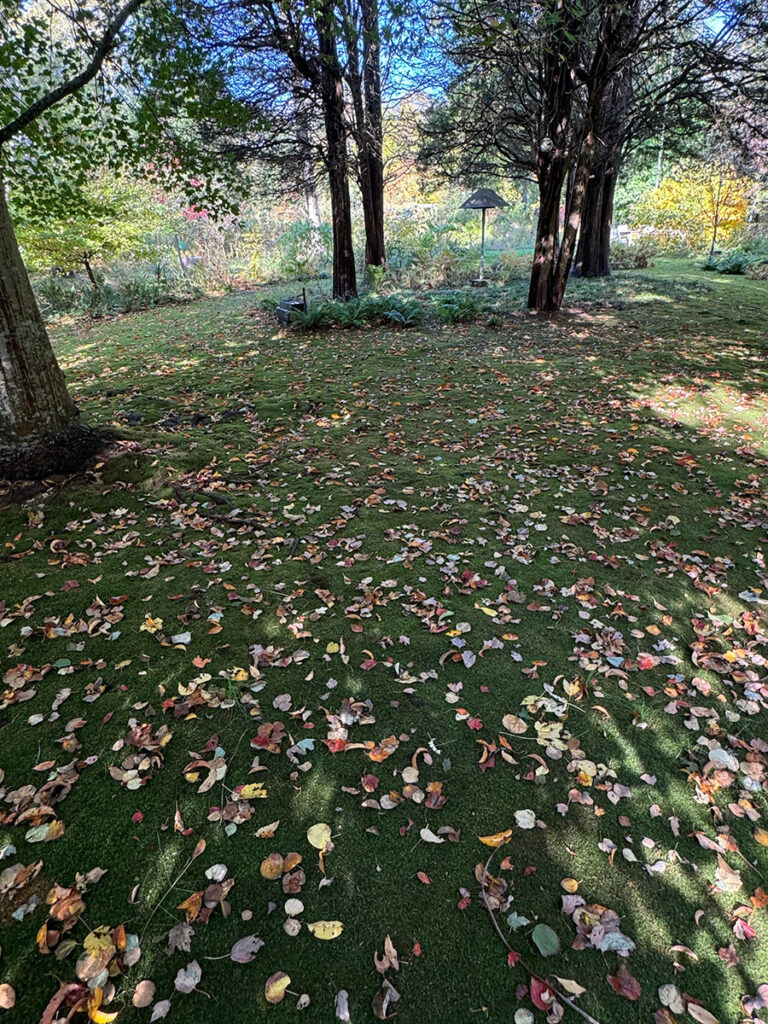
Let the leaves fall where they may.