
Marshouse: A PRFCT Place
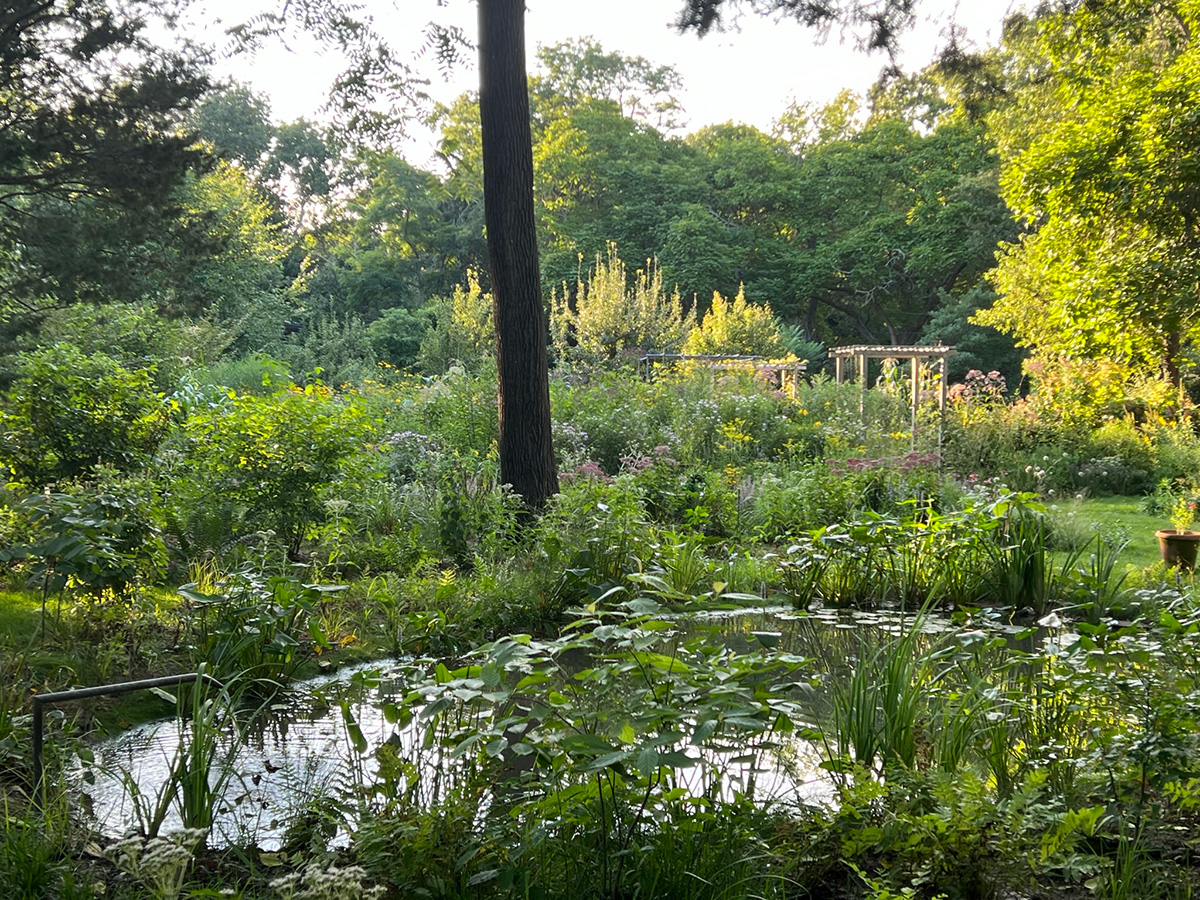
WHEN I FIRST CAME TO THIS PROPERTY, it was completely covered with invasive plants. I started by cutting everything back. I made a commitment that no biomass would leave and had to figure out what to do with everything I cut back. Dead trees became log walls. Branches, sticks, and twigs became woodchip paths. Vines, which I bundled up and placed around the edges so as not to remove all wildlife habitat, became homes for thrushes, rabbits, and wrens. Once the property was reasonably cleared, I started planting. The entire property is a constant experiment in how I can maximize biodiversity by focusing on food for non-human lifeforms. The only part of the property specifically for human consumption is the vegetable garden. I like to look at a property this way: What is for me and what is for everything else? If wildlife can’t eat the everything else, what will they eat?
The entire property is divided into two main areas: deer in and deer out. The deer fenced area is intended to support my gardening habit, but also to show people the native flowering plants we are losing to an overabundance of deer. The non-fenced area shows what you can do with deer and what they do not eat.
I call this a PRFCT property, meaning it follows our Principles of PRFCT: Minimize harm and maximize biodiversity. No chemicals are used on this property, and we operate as a closed loop, meaning no inputs aside from new plants and no outputs. All the biomass that the land produces stays here and returns to the earth. Most of the plants on the property are native, but not all. My goal is 2 of every 3 new plants are native to support wildlife populations; Or, what I call, “²/₃ for the Birds.”
—Edwina von Gal
Make a promise to your land and say yes to minimizing harm and maximizing biodiversity—and joy!
Download the self-guided tour map.
Marshouse Map
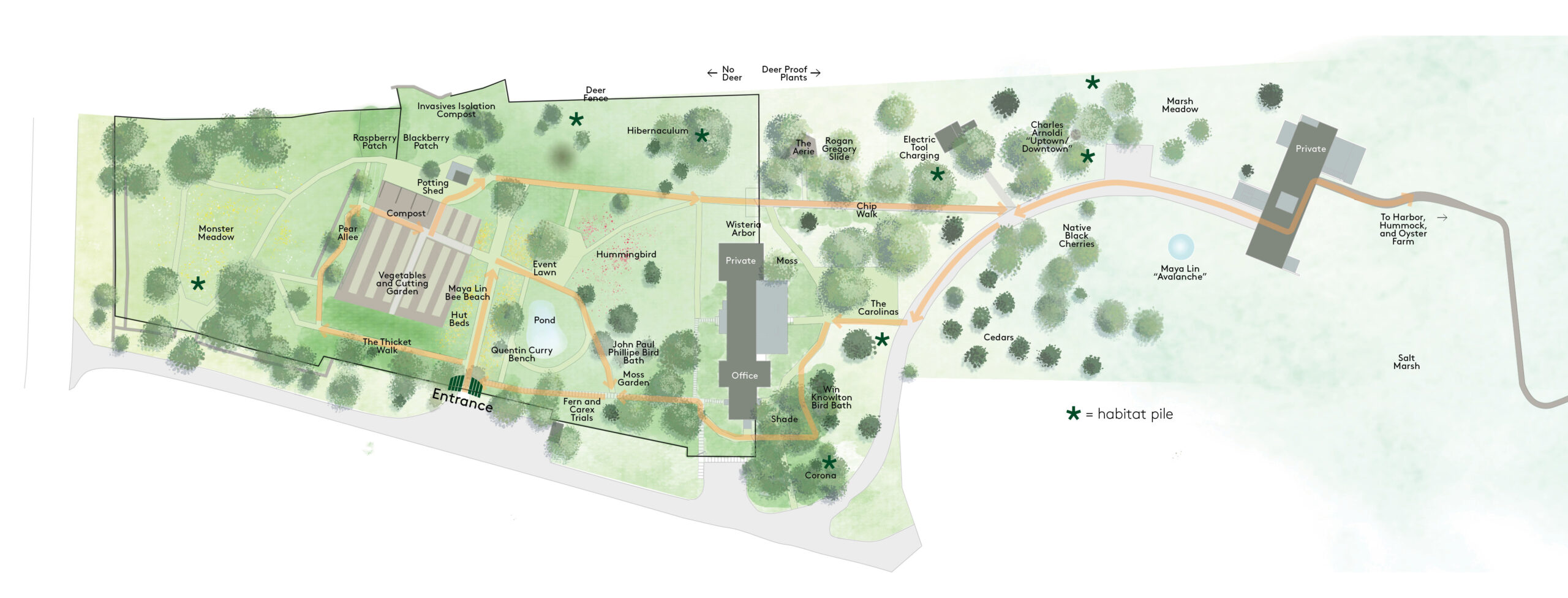
What’s Going On Here?
Monster Meadow
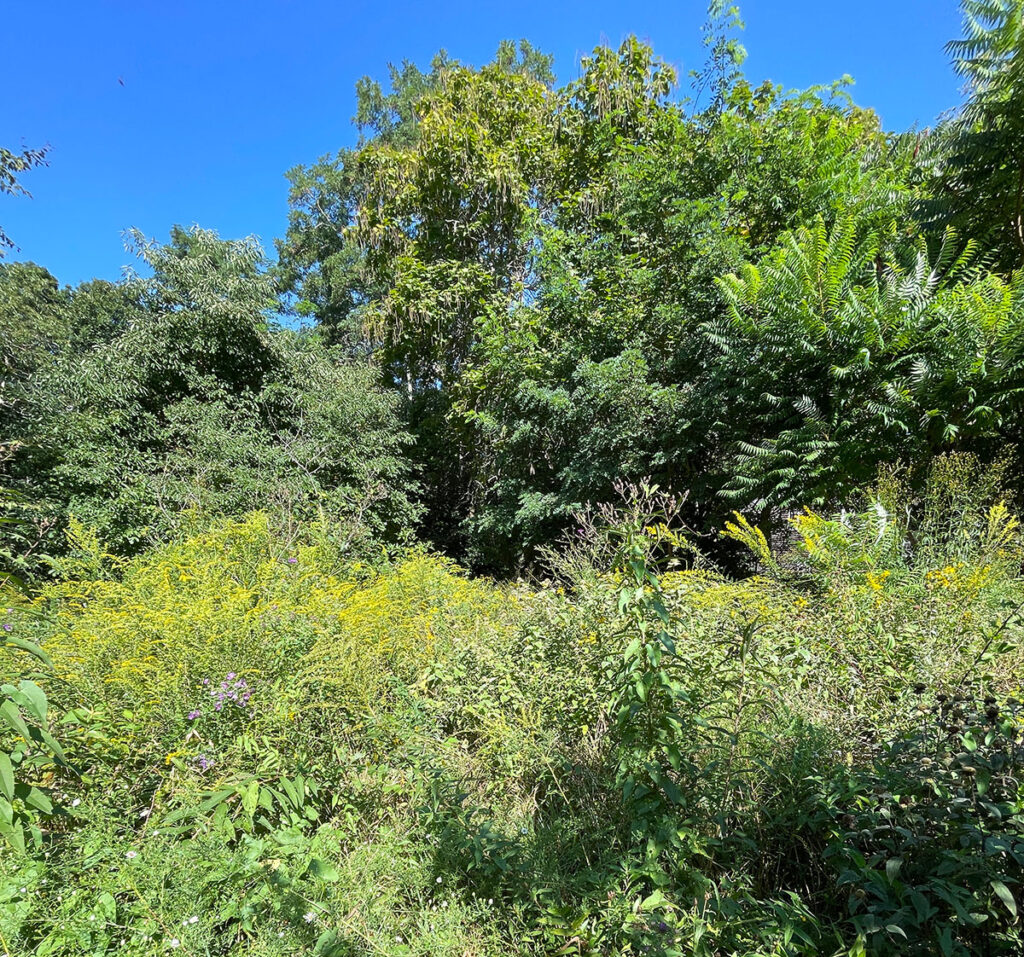
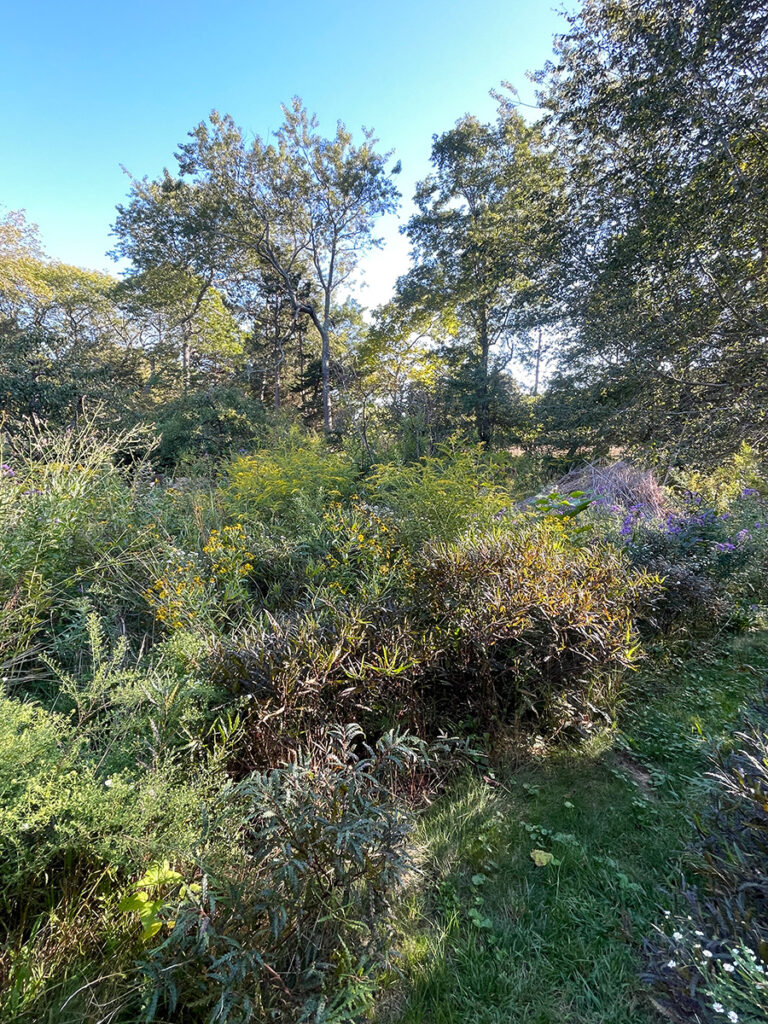
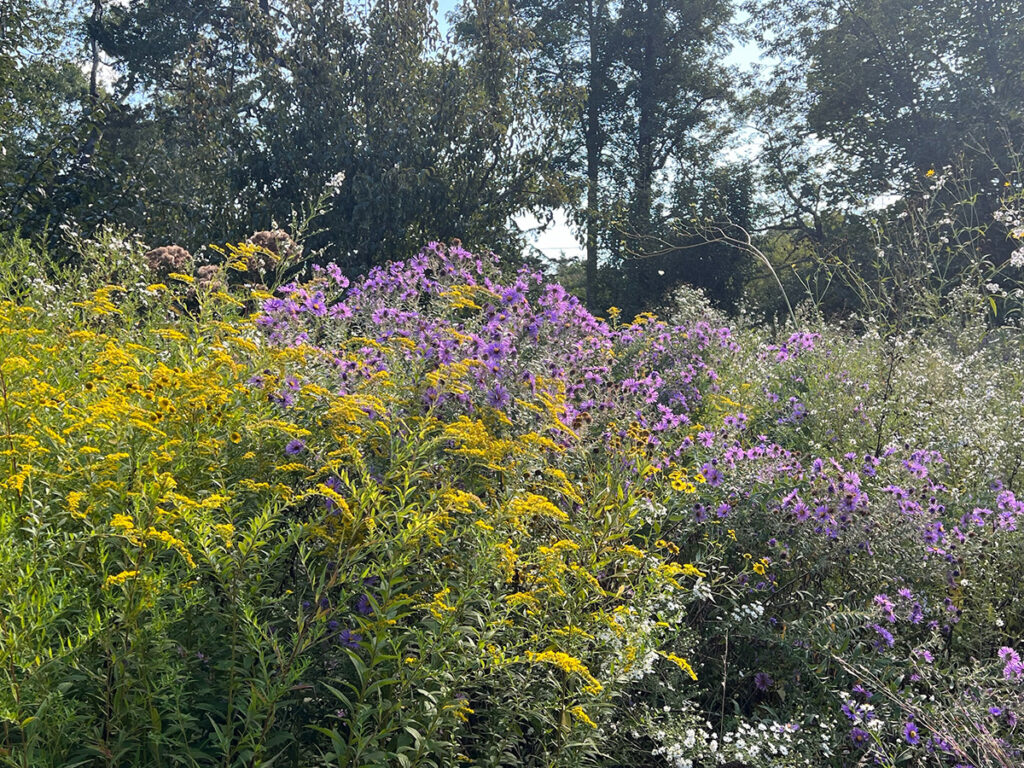
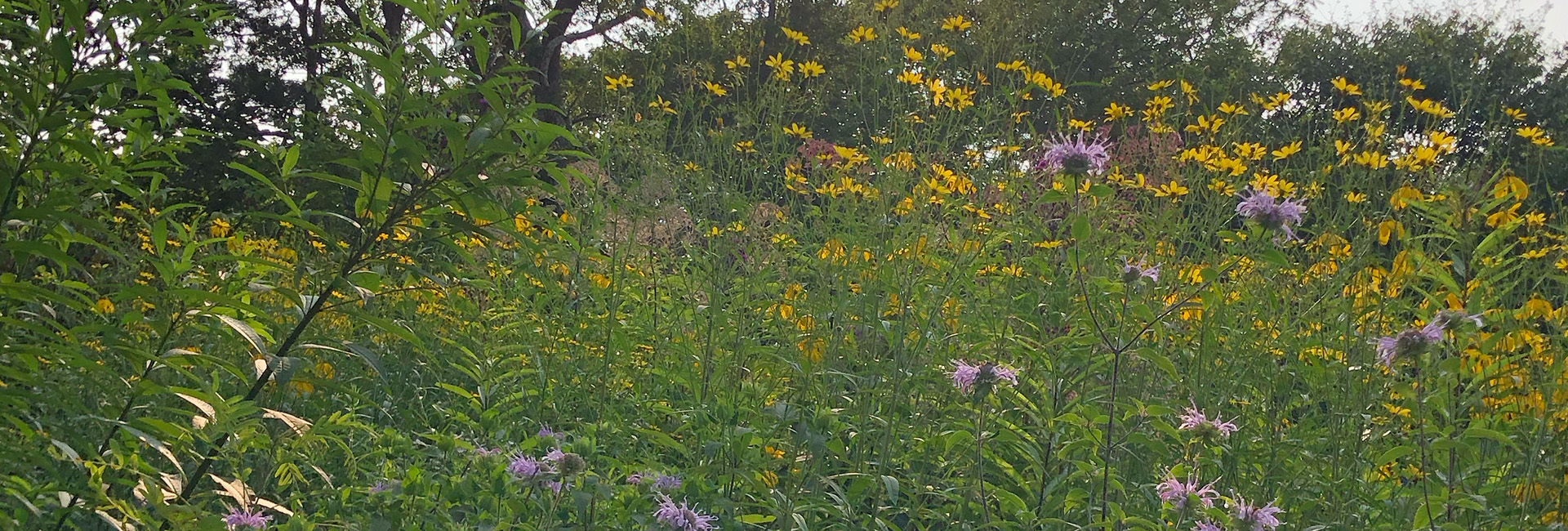
I started here. Aside from preexisting Catalpas, Cedars, and Oaks, I planted everything else starting in 2005. Many of the trees I planted were small. I’ve let things grow in this area that would probably not be suitable for a regular garden. Many of the plants are aggressive, but they form a great buffer.
The Thicket Walk
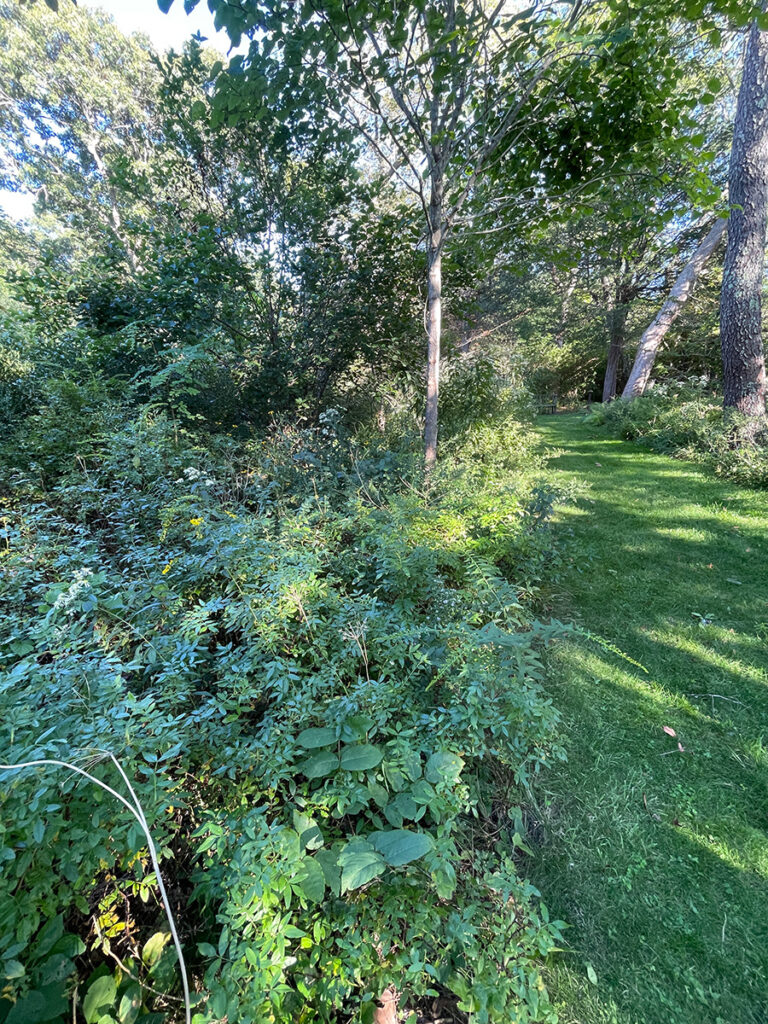
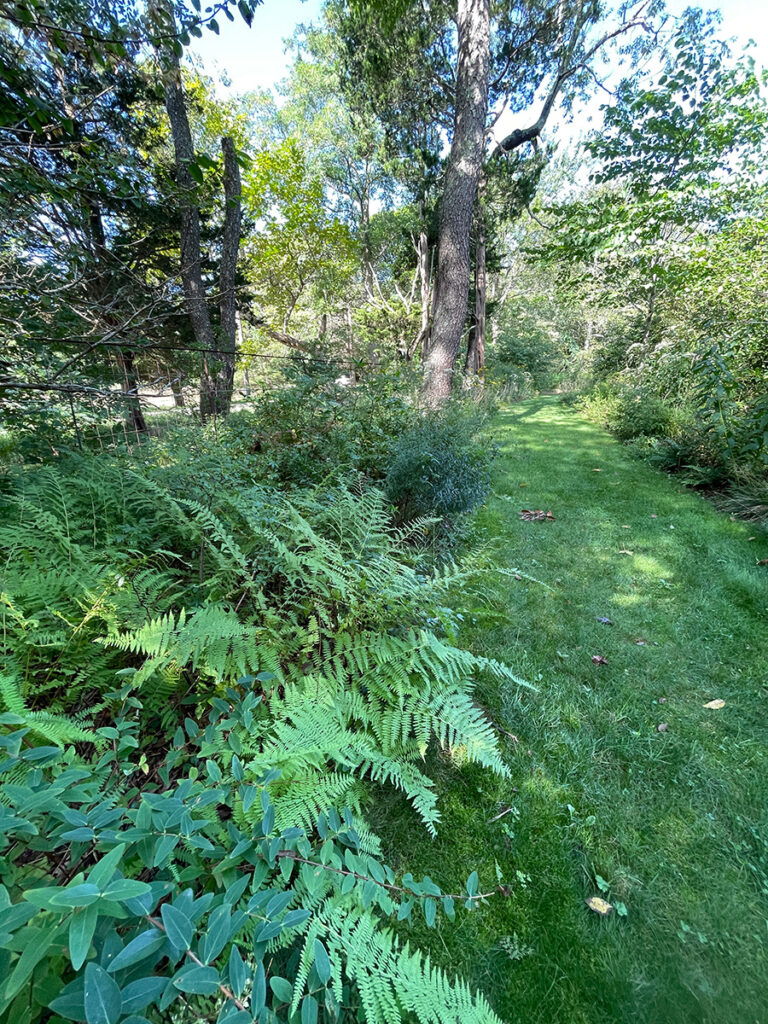
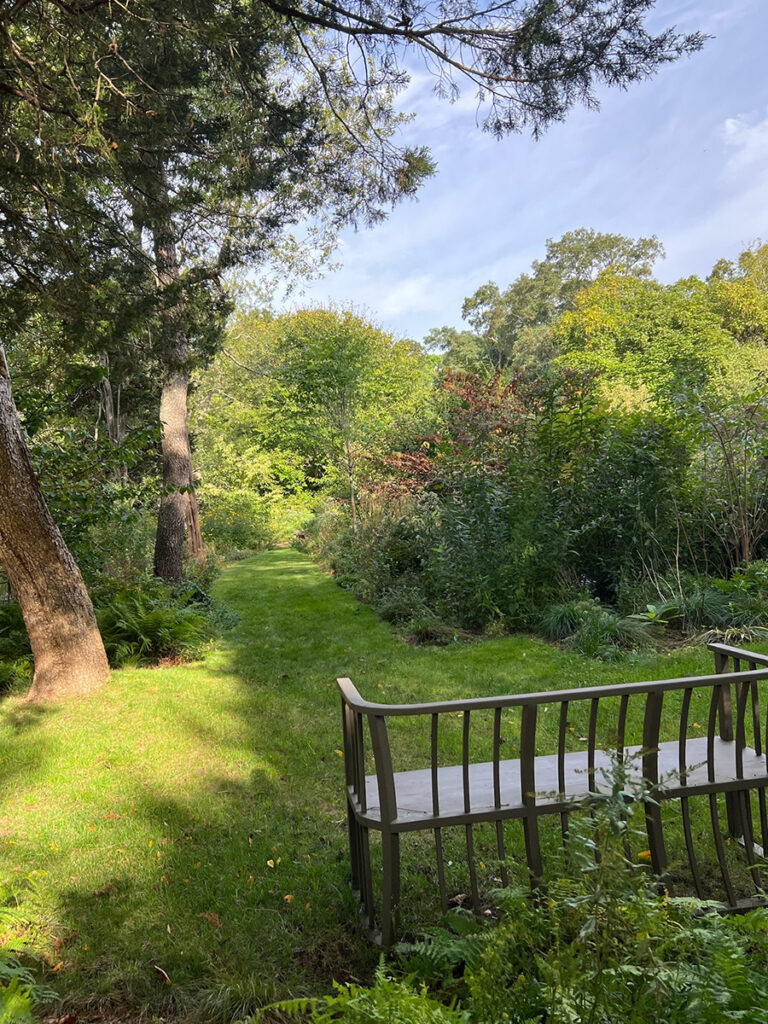
There is a focus on native azaleas and shrubs for bird habitat here. I acquired as many seed-grown shrubs as possible for this area, and I’m trying to make this the case for the entire property.
The Moss Garden
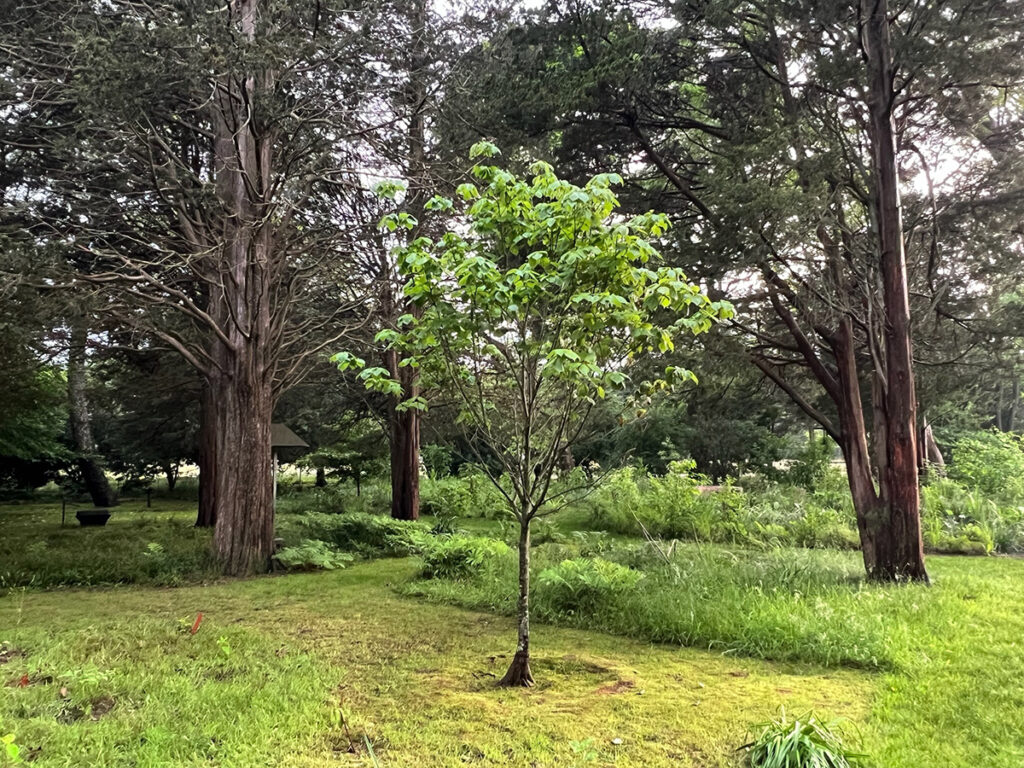
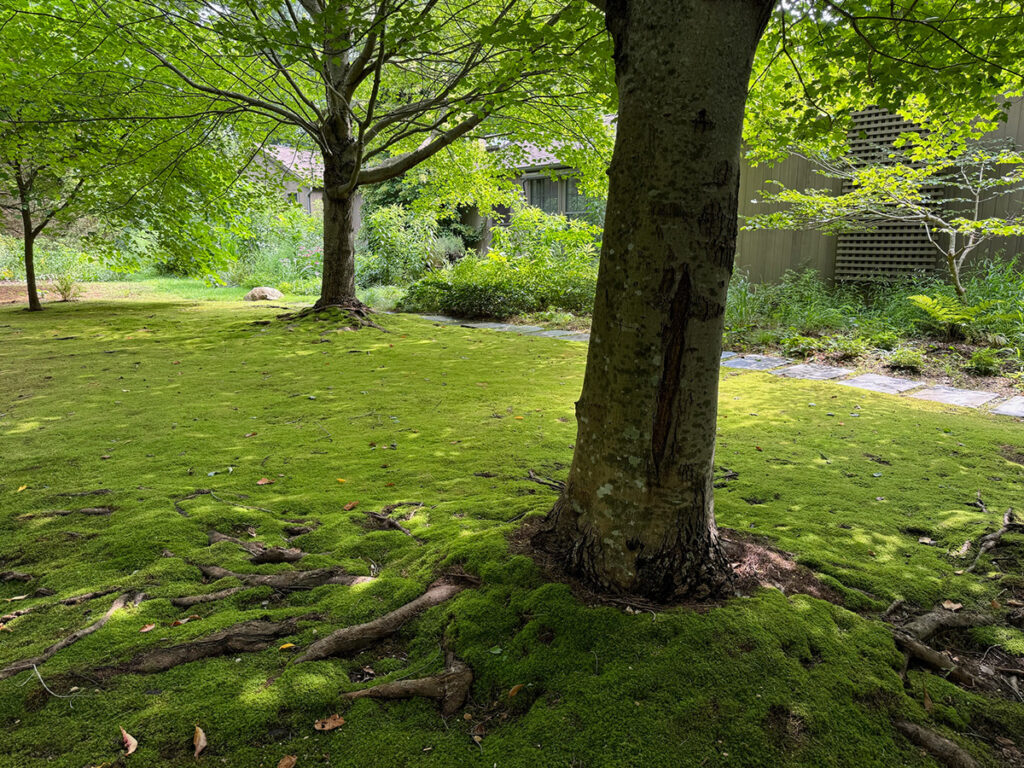
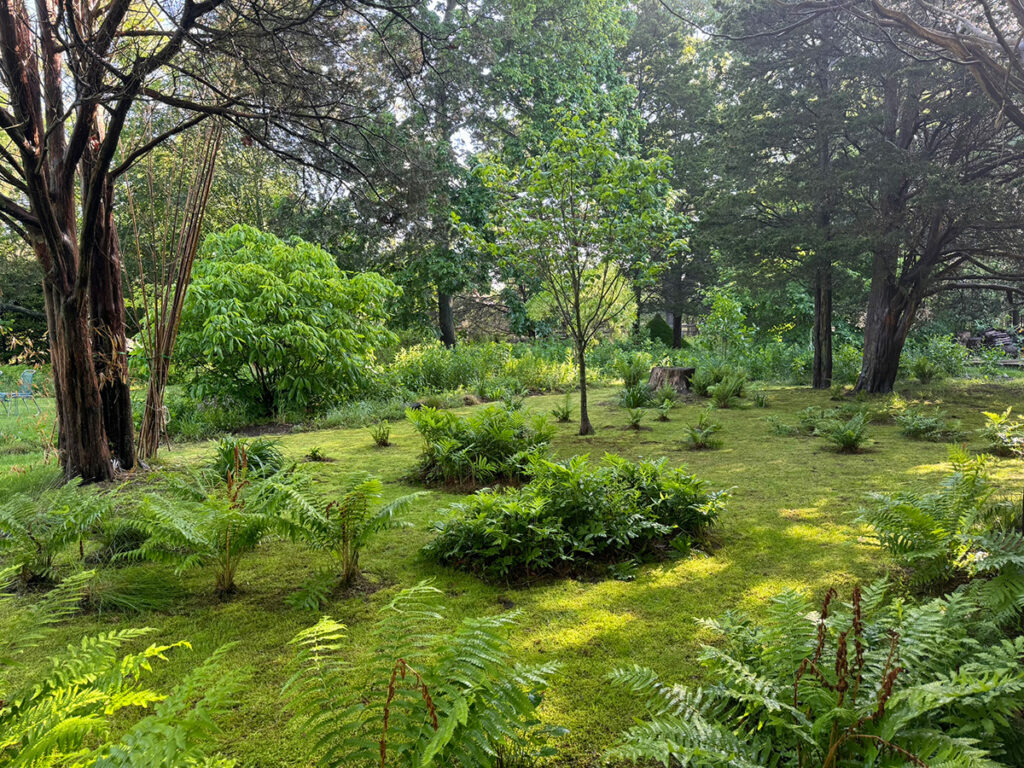
This area is managed for moss by reducing competition with super short weed whacking and providing a humid environment through short bursts of irrigation so that the moss will thrive in the shade of the Red Maples.
The Pond
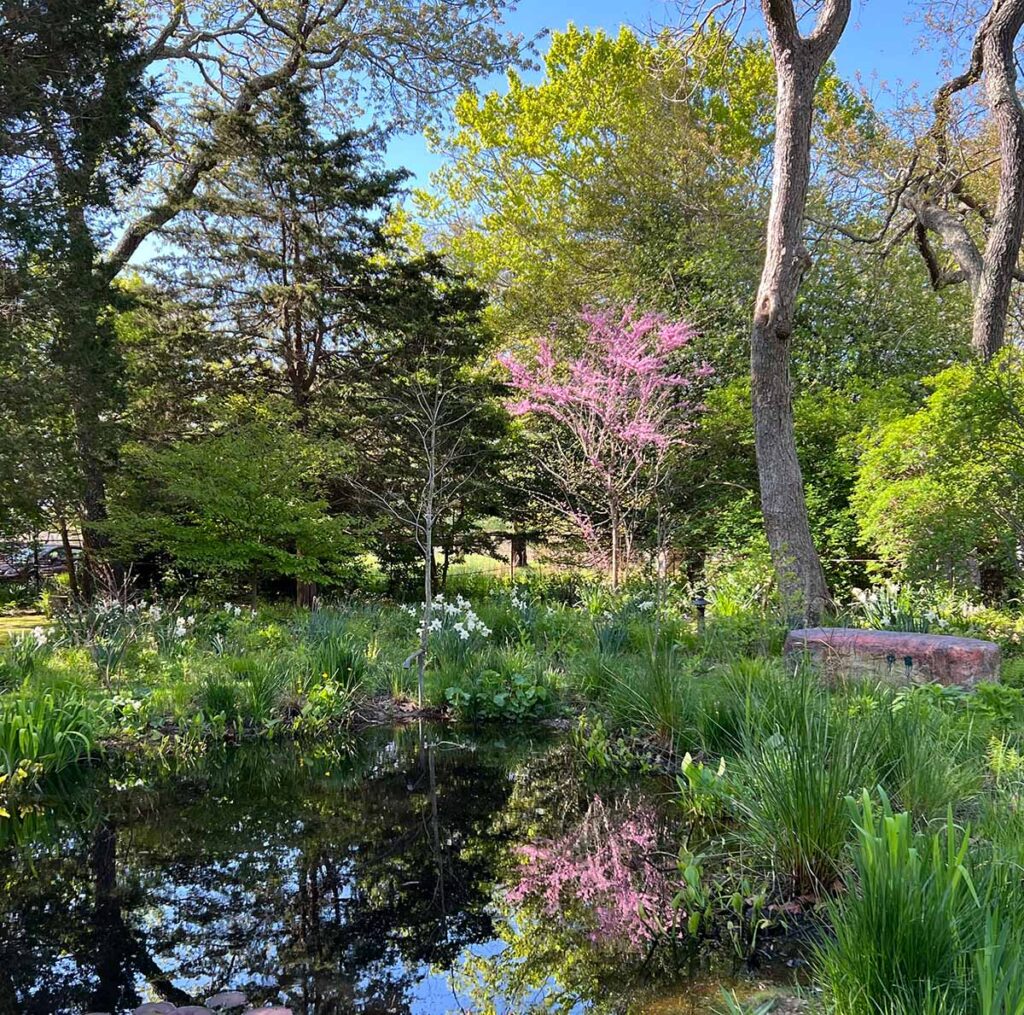
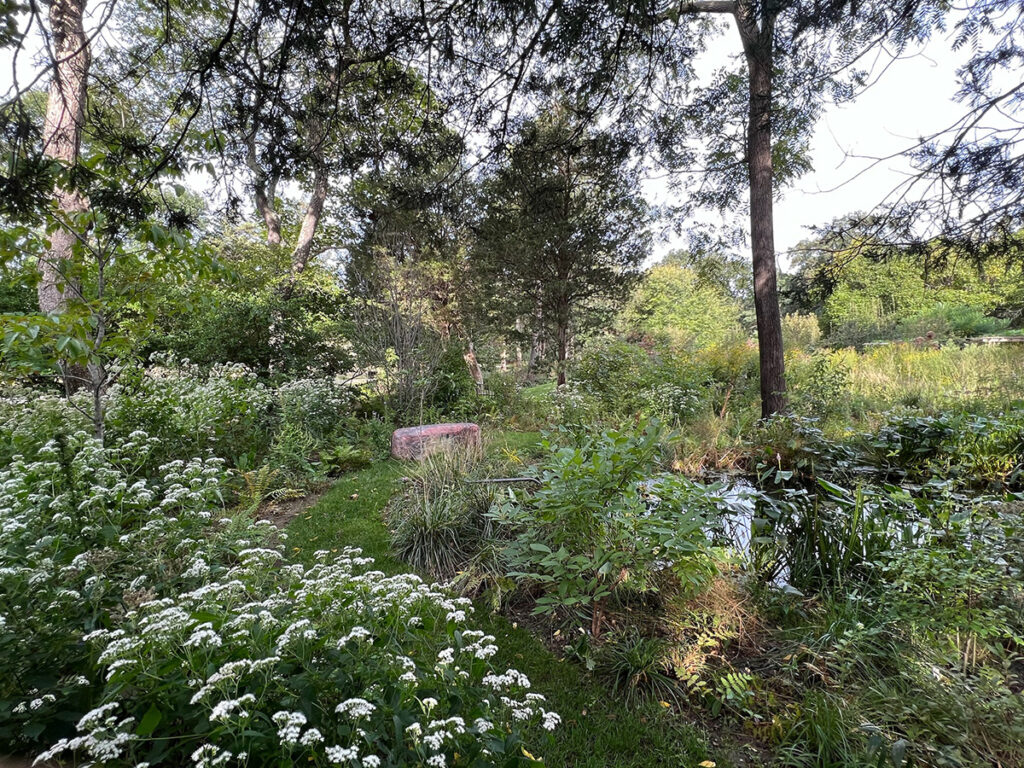
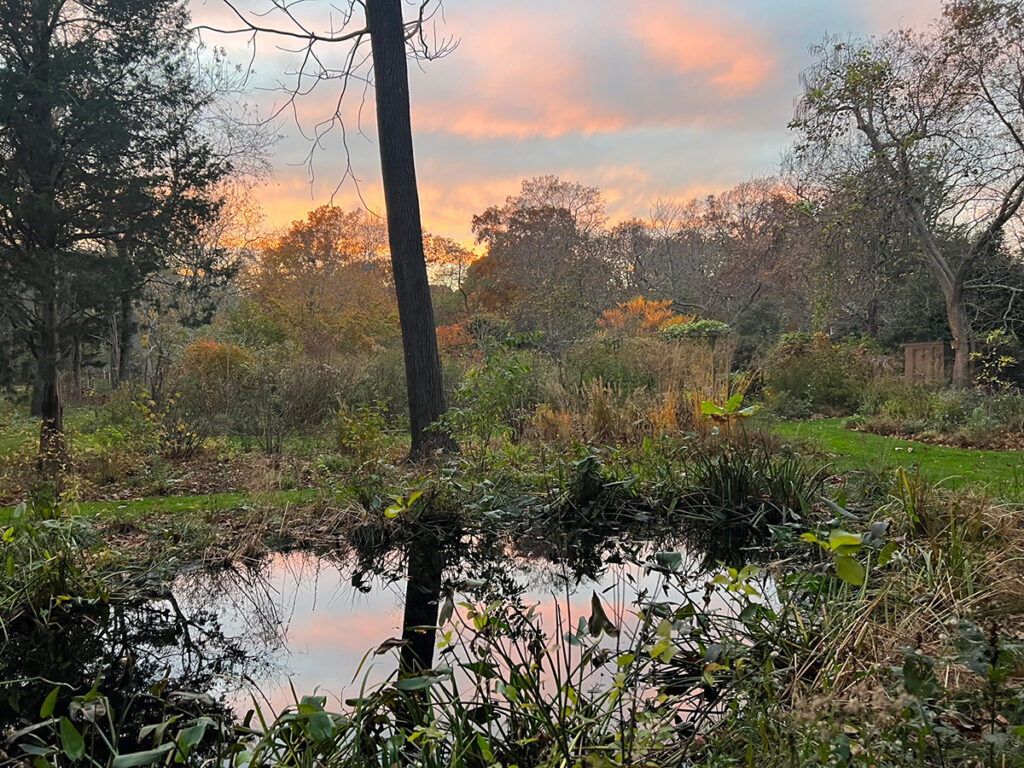
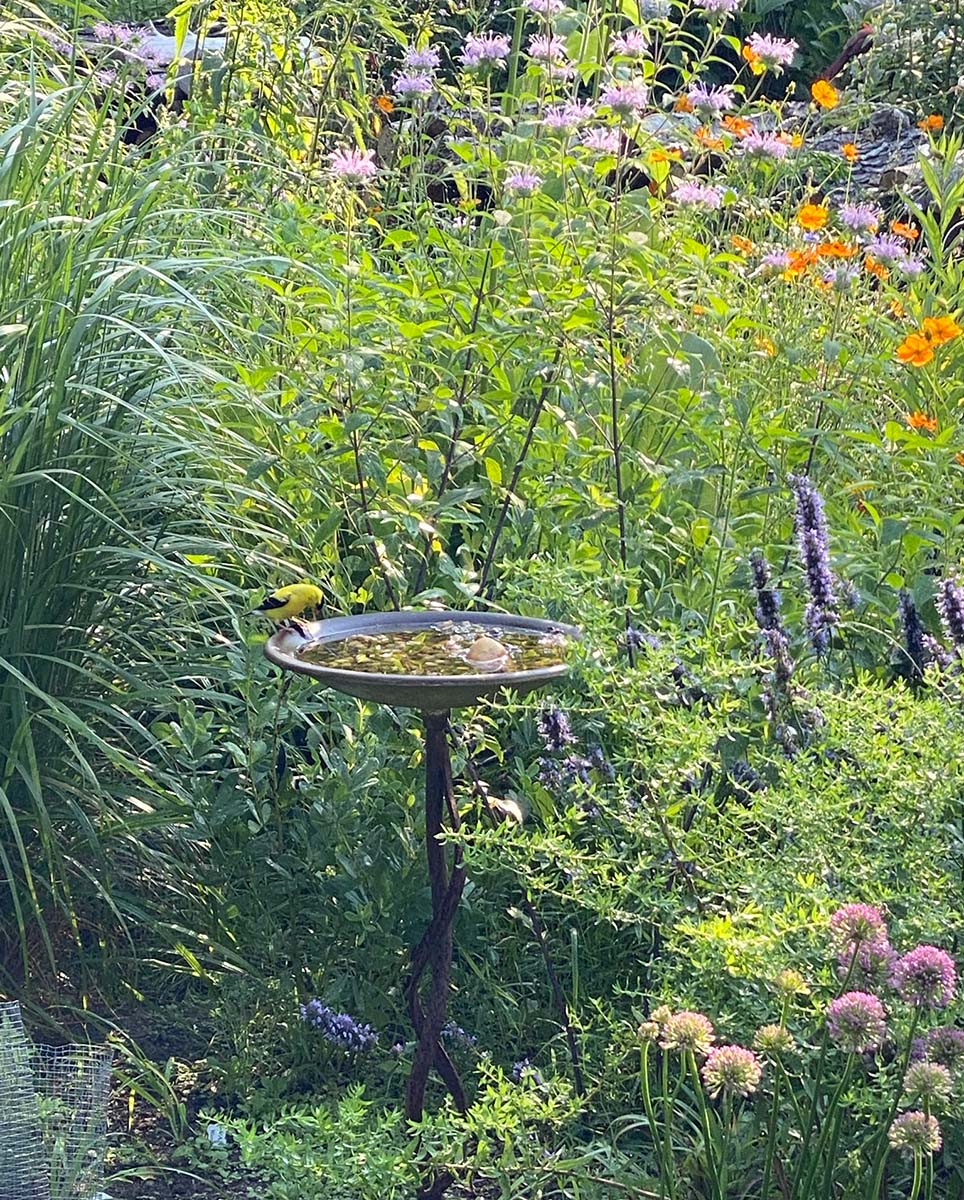
Habitat requires food, shelter, and water. For water, I have a pond, bird baths, and bee beaches. The pond has a clay liner, not only to help me meet my commitment of never burying plastic but also because you can plant right into it.
Hibernaculum
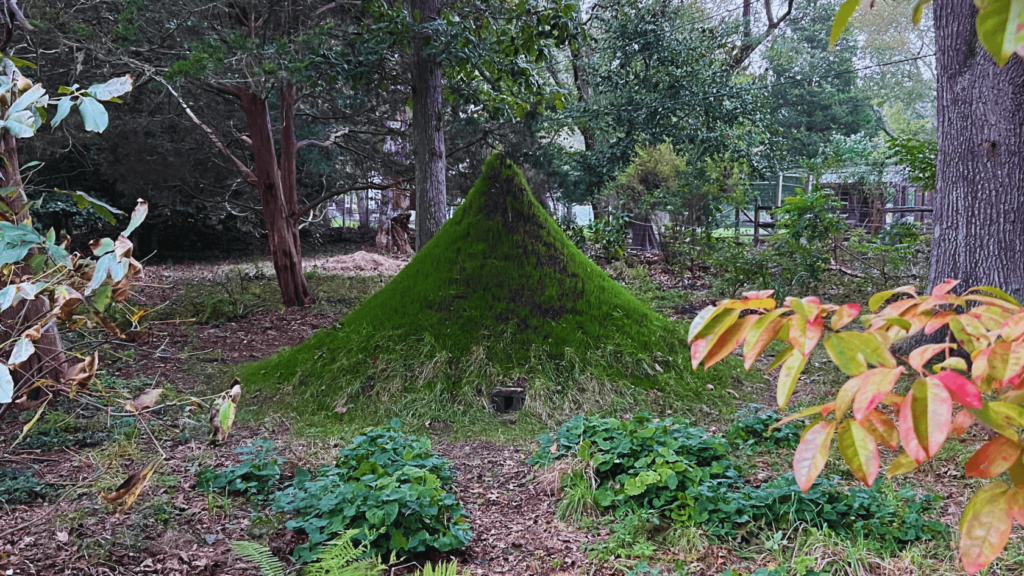
What to do with a large amount of very poor soil that was excavated to make a pond? Make a Hügel! What to do about declining snake populations that have resulted in more voles and mice? Turn that Hügel into a hibernaculum where snakes can overwinter in the garden. (Read how Edwina built her hibernaculum.)
Habitat Piles
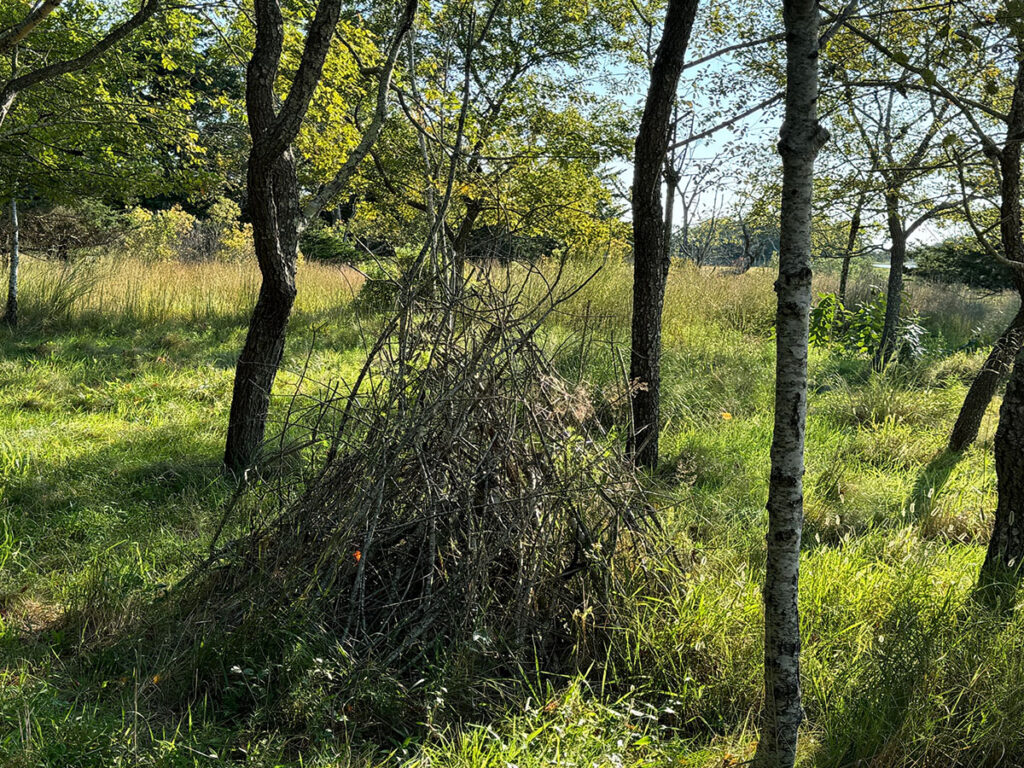
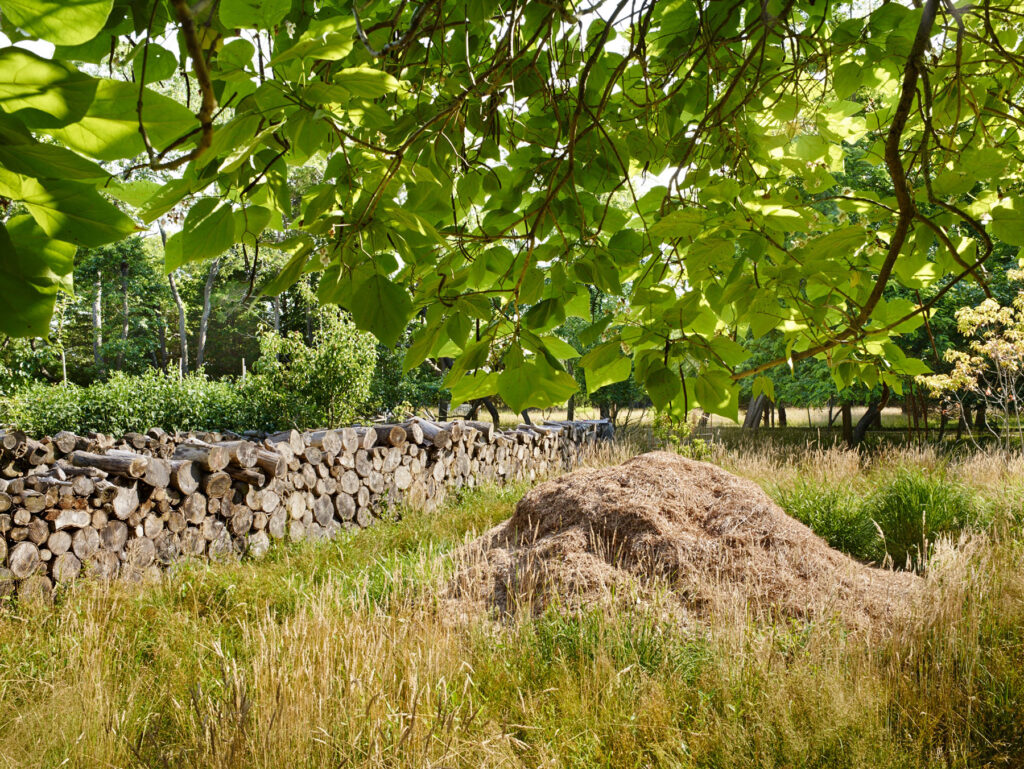
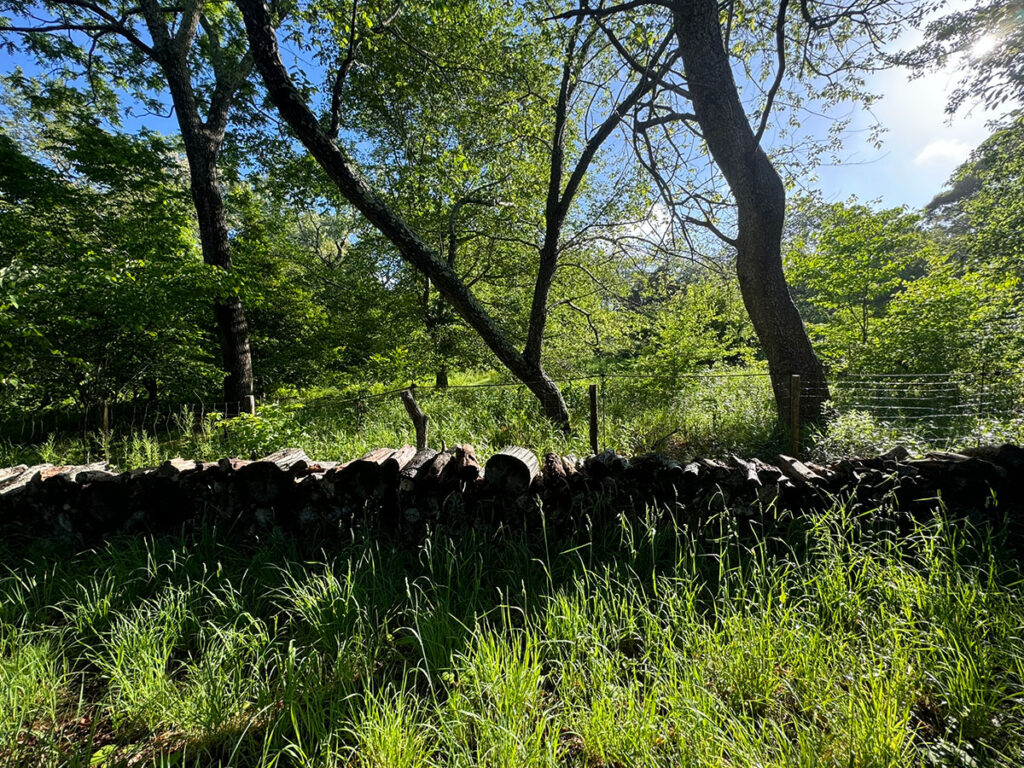
You will see various habitat features scattered around the property, including haystacks, wood piles, dead hedges, and leaf baskets. They serve to conserve and decompose the biomass produced here in inventive ways, smother invasives, and provide shelter for wildlife. (See more examples of ways to close the loop.)
The Hut Beds and Hummingbird Beds
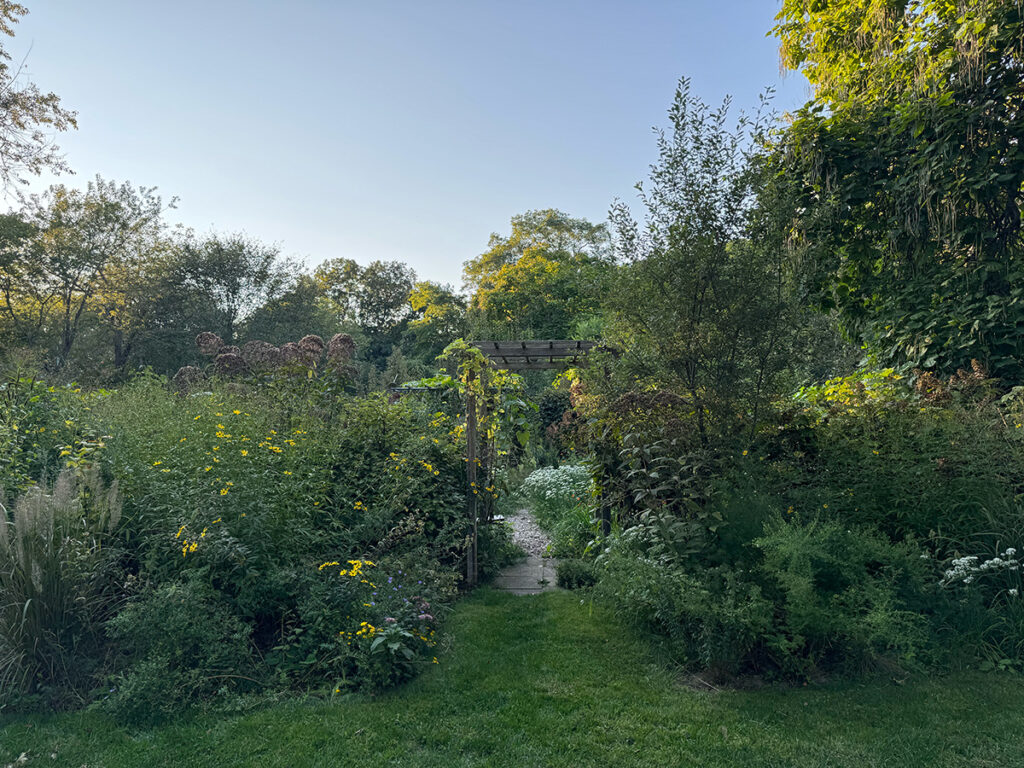
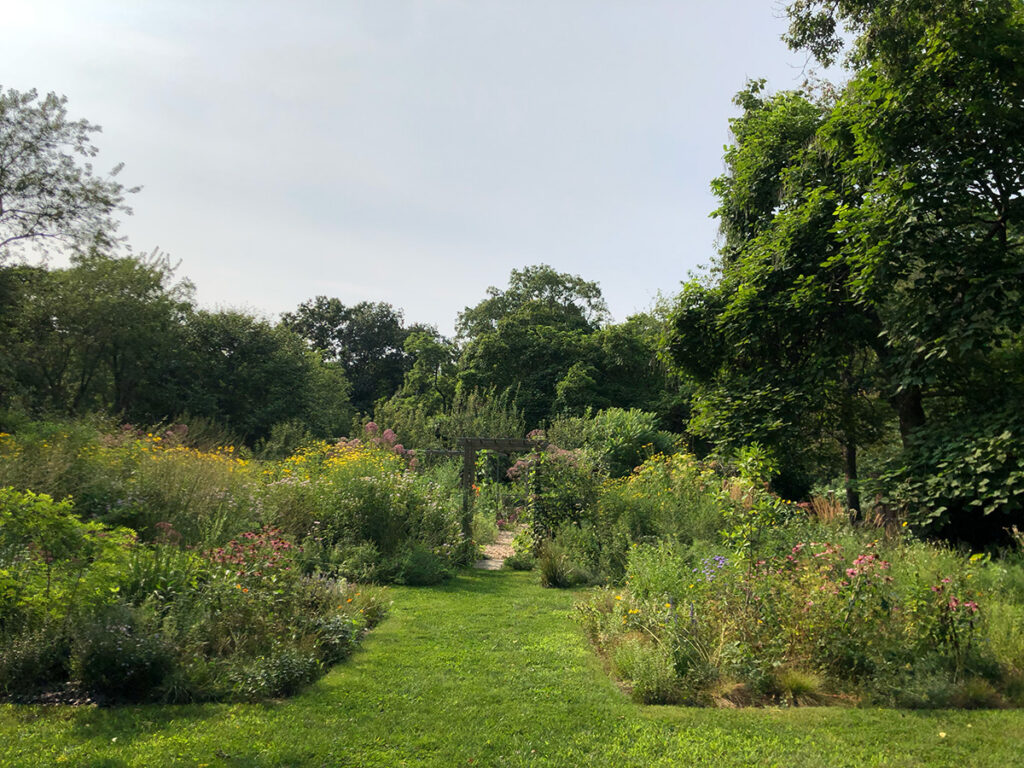
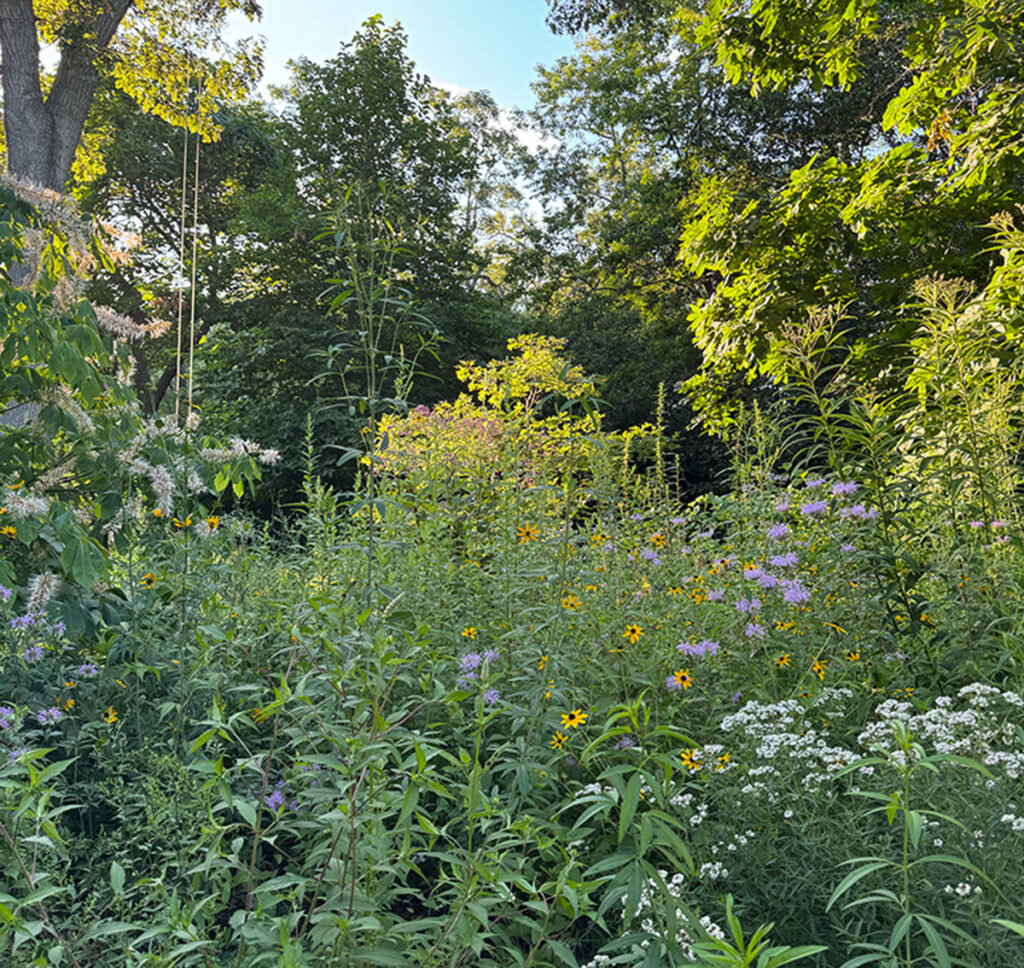
This is an example of a meadow-type garden. It has a higher percentage of grasses than forbs (flowers). Over time it requires less and less maintenance. I try very hard not to control what lives, thrives, and fails here.
Marsh Meadow
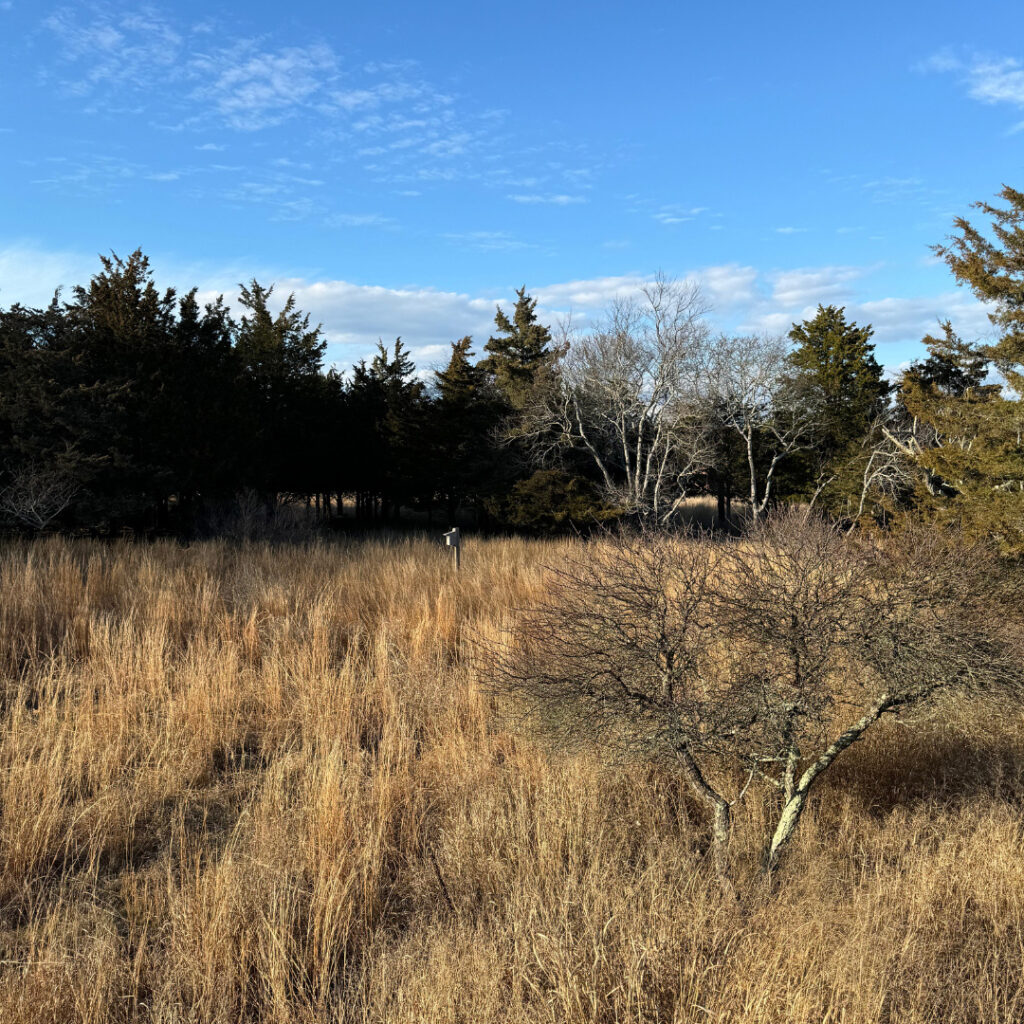
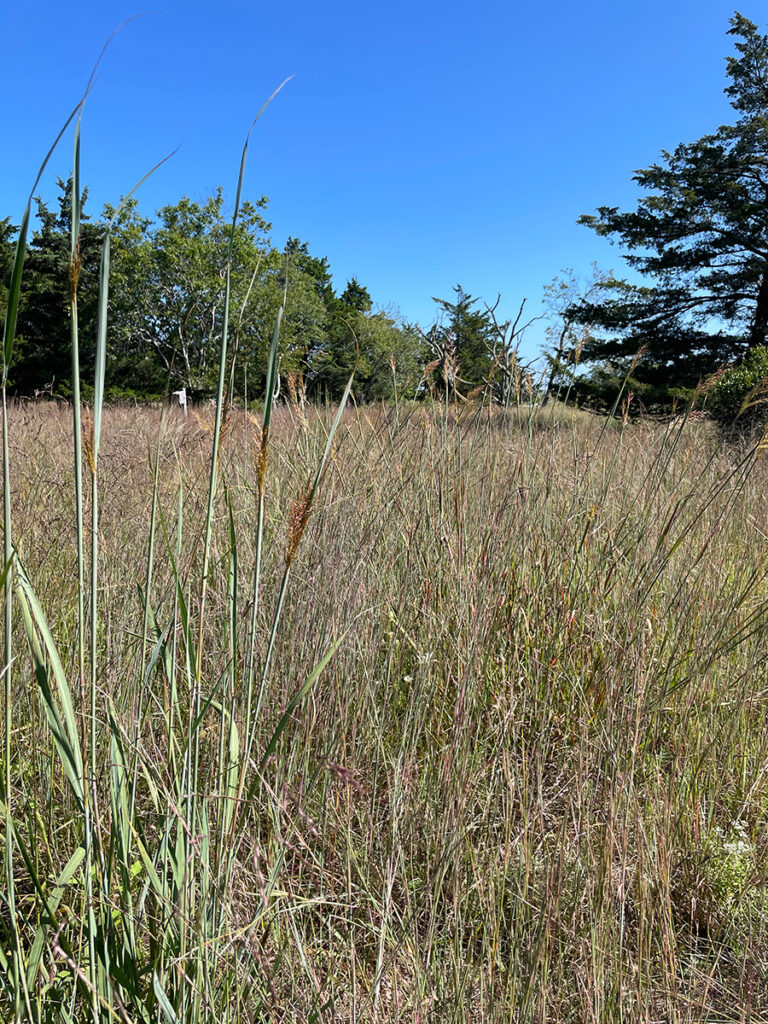
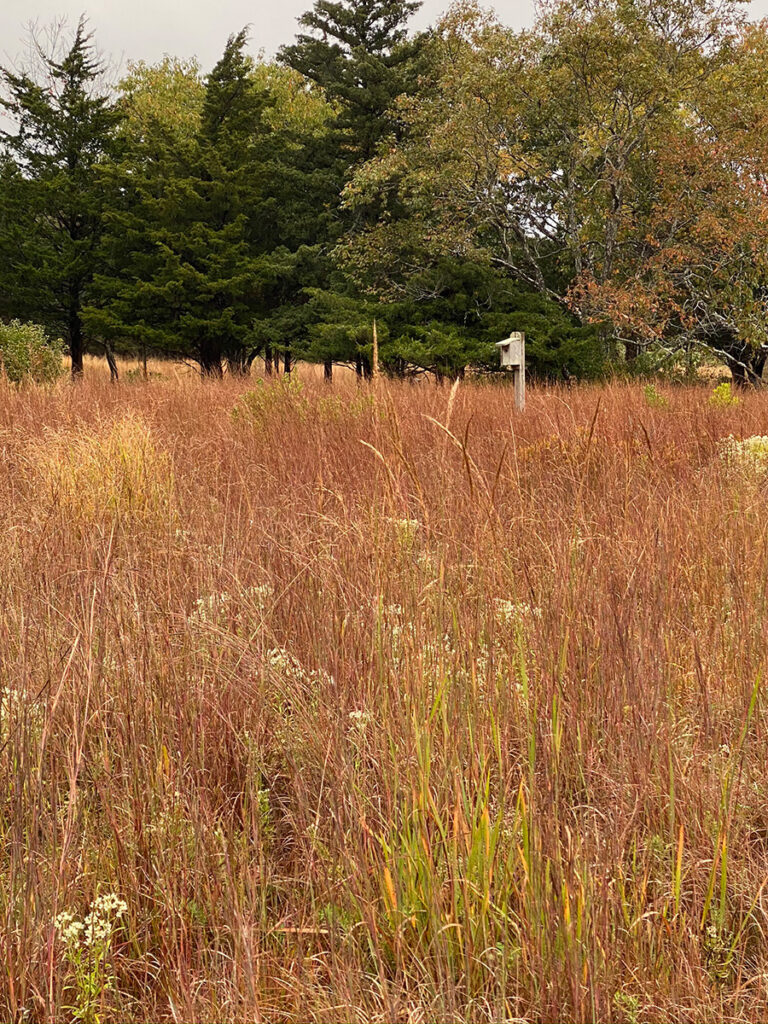
Created by simply stopping the mowing. Happily, all of these wonderful native grasses were waiting in the soil. It is cut once a year at 12” high in the spring. The grass is raked off and piled on the haystack.
Salt Marsh
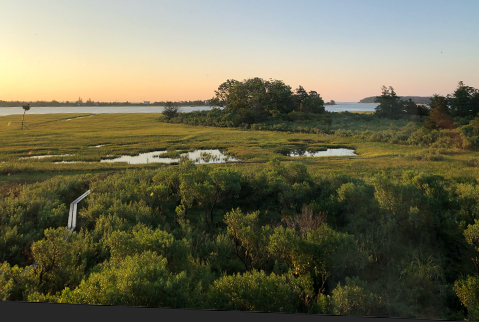
The marsh here, one of East Hampton’s most scenic and diverse tidal marsh ecosystems, is part of 29 acres of Accabonac Harbor that was donated to The Nature Conservancy in 1968. I especially love it because I am not allowed to touch it. Home to nesting ospreys, piping plovers, least terns, red foxes, and breeding populations of vulnerable saltmarsh sparrows, the health of the salt marsh is vital to fish, indigenous plants, birds, the coastline, and the water itself. Please enjoy the marsh from the wooden path.
More images of Marshouse