
My Neighbor’s 1/4-Acre Garden Takes the Title for Insect Biodiversity
Many British garden designers and their admirers in the United States claim that plant biodiversity is the key to supporting the most diverse insect populations, and that introduced plant species are as effective or better than locally native ones. A garden up the block from Growing Greener host Tom Christopher in Connecticut suggests the fallacy of that claim.
October 14, 2026
Subscribe to Growing Greener on Apple Podcasts | Spotify | Amazon
Transcript
Growing Greener host Tom Christopher
This is your host, Tom Christopher, and today I am replaying a conversation I had with my neighbor, a physics professor at Wesleyan University and amateur insect photographer, Brian Stewart, back in 2019. I returned to this conversation to rebut a flurry of claims, largely from British horticulturists, that their compositions based on assemblages of plants from all over the world foster a greater insect diversity than gardens composed of locally indigenous plants. As proof of their assertion, the British horticulturists typically point to a biodiversity survey conducted from 2017 through 2019 at the justly famous Great Dixter Gardens and surrounding estate in East Sussex, England, a total area of about 70 acres, which was found to support 1,001 species of insects.
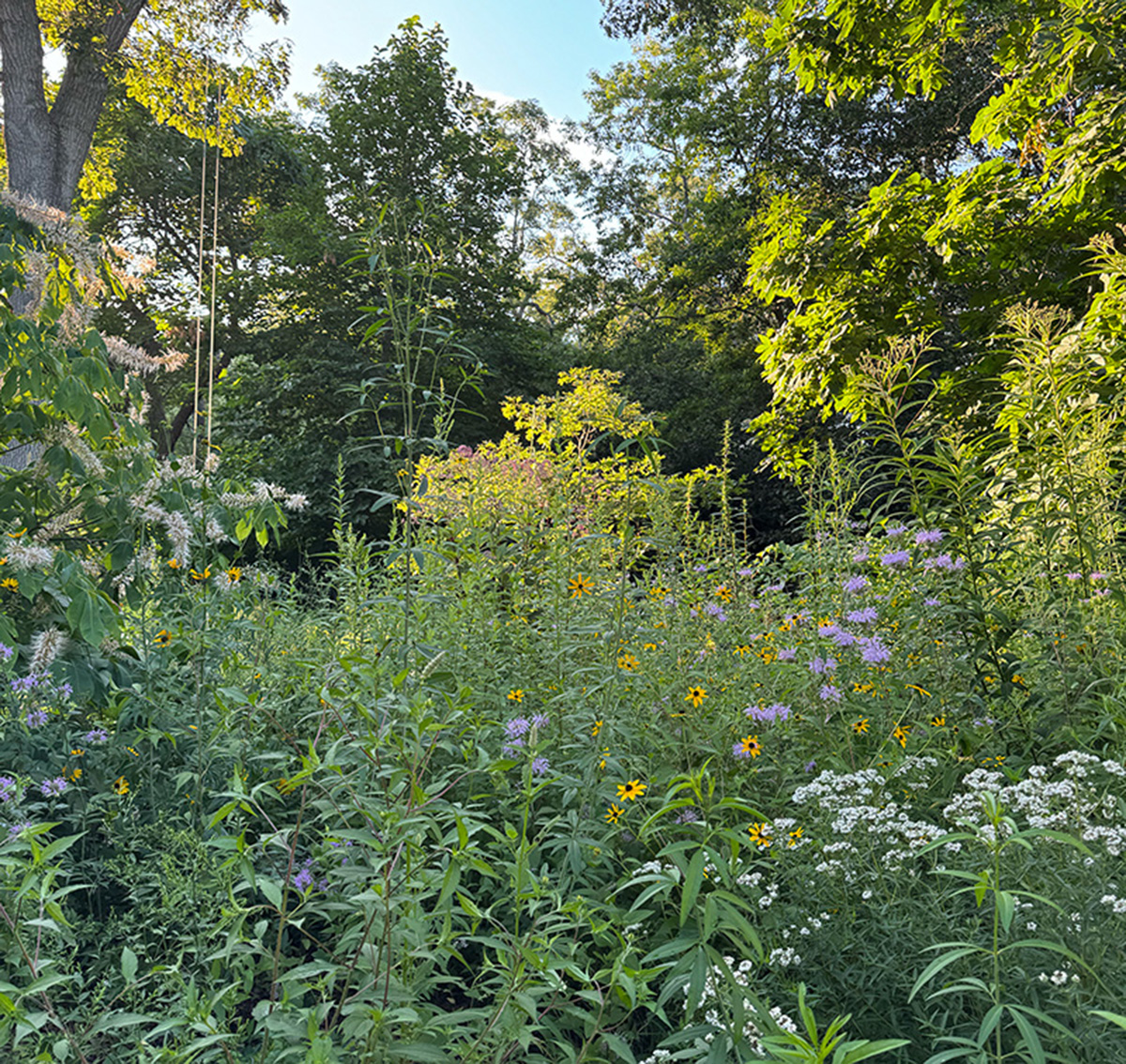
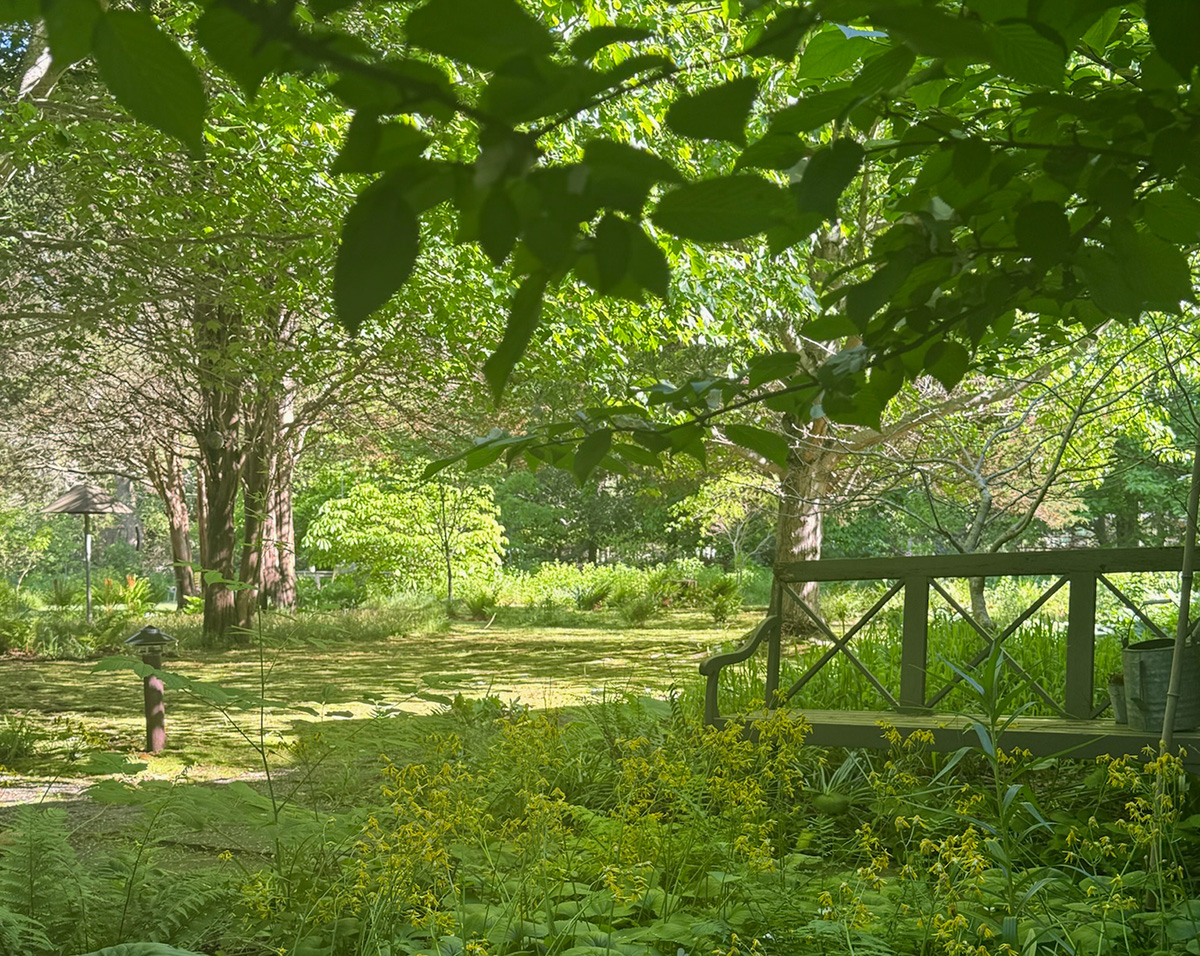
This sounds impressive until you consider that Brian Stewart, when I spoke to him in 2019, had photographed and identified 400 species in his one-quarter acre garden composed mainly of native plants, and that in the seven years since, this total has climbed to 1,022, with new insects posing for his camera almost every time he ventures out his back door.
Before we continue our exploration of insect diversity, however, I want to thank Growing Greener’s sponsor, the Garden Conservancy, a national nonprofit dedicated to preserving, sharing, and celebrating America’s gardens and diverse gardening traditions. Through preservation, education, and public access, the Conservancy helps protect these living works of art for future generations. Learn more and discover gardens near you at GardenConservancy.org.
Hello, Brian.
Brian Stewart
Hi, Tom.
Tom Christopher
So, Brian, can you tell me a bit about your Insect of the Day project and how it got started?
Brian Stewart
Sure. It’s a long story. I’ll try to divide it up into a couple pieces for you. The first part of it is when I started collecting insects, or I should say photographs of insects. I attended a bioblitz in Middletown well over a decade ago.
Tom Christopher
Now, what is a bioblitz?
Brian Stewart
So, a bio-blitz is when a school or other facility in a municipality is taken over for 24 hours by biologists who attempt to enumerate and catalog all the different living things in an area, and this bioblitz was like others, but it was in Middletown, so it was an easy walk for me to get to snow school to participate, and I showed up at the appointed time and went to a big tent, and in the tent were all kinds of biologists, and before I knew it, I was hooked up with a coleopterist, which is a person who studies beetles.
Tom Christopher
I was wondering if it was a medical specialist.
Brian Stewart
Yes, it sounds like that, doesn’t it? And we spent the next 24 hours, or rather he did, I actually got some sleep that night, collecting and identifying and eventually cataloging all of the beetles that we were able to find in Middletown.
Tom Christopher
Cool.
Brian Stewart
It was really, really fun, and it wasn’t too long after that experience that I announced to my wife, Jane, that I would like to start an insect collection, and she said, “No, you’re not going to do that.” And I was kind of taken aback and surprised, and she explained to me, look, you’re just going to lose interest in this, and it’s going to sit around, and eventually the dermestid beetles are going to devour your own insect collection, and it’s going to turn to dust. And I realized that was right, and I decided that, okay, a different approach to collecting insects might be to take their pictures. So, I started photographing the insects in my yard, and I’ve never left my yard. I’m not done yet, so I am still confined to the quarter acre that I call home.
Tom Christopher
Now, when was this that you started shooting photographs?
Brian Stewart
That would have been about 2007.
Tom Christopher
Okay, so a dozen years ago.
Brian Stewart
Yeah, about a dozen years ago, that’s right.
Tom Christopher
And what equipment do you use?
Brian Stewart
I started with a point-and-shoot camera that had a macro feature, and I now use a Canon single reflex camera with a macro lens, but it’s still nothing particularly fancy. And one thing that I do that’s unconventional to some degree is I don’t use a flash. Many insects are quite tiny creatures, and to get a good photograph of them, you need a lot of light directed to them, but a flash for me ruins the natural look of the insect, so I’ve just found ways to make do with whatever light is available. Some of my insect pictures are not particularly well-defined, but I strive for sharpness, and I strive for the best that can be done with the light that strikes the insect.
Tom Christopher
Just working with the natural light.
Brian Stewart
That’s right. I think that the pictures look better. They may not be technically perfect in terms of the crispness of details, but the lighting makes the bugs look more natural. They look the way they do when you see them.
Tom Christopher
So traditionally, collections of insects have involved killing the specimens and pinning them to the board.
Brian Stewart
That’s right.
Tom Christopher
But you typically don’t injure the insects when you take their pictures.
Brian Stewart
I try not to, so I took Jane’s advice pretty seriously, and I do occasionally bring them in briefly. It turns out if they spend a little while in the refrigerator, they’re much more docile, and you can have a photo session with them that doesn’t involve them immediately flying away.
Tom Christopher
Yeah, I was going to ask you how you get them to hold still for you.
Brian Stewart
Yeah, there’s a variety of techniques, and in fact stalking them is one of the great pleasures of this hobby. You get to know the individual insects, whether they’re flighty, whether they’re unworried about humans, whether you can approach closely, whether you have to try to take your picture from a distance, if you can move slowly and get close. All those different things vary by the insect, and to some extent, even different individuals of a species will be more or less inclined to let you take their picture.
Tom Christopher
So that’s fascinating. You actually get to know the insects a little bit.
Brian Stewart
To some extent, I really do. And then you release them again after you take their portraits? With rare exceptions, such as the Allium leaf miners that I have been shooting lately that are a new invasive pest in Connecticut, I usually let them go. I try very hard not to disturb whatever it is they’re in the middle of doing when I encounter them.
Tom Christopher
So how many different insects did you imagine you would find in your yard when you started?
Brian Stewart
Huh, that’s a great question. I don’t think I ever really thought about the number. I just figured that I’d find a few, and having exhausted the specimens in my yard, I’d start going out on forays and begin ranging ever more widely in my search for new insect species.
Tom Christopher
But how many different insects would be photographed to date?
Brian Stewart
When I can make time to identify another 16, and I’m certain I have them and well over that number in my collection, but not yet identified, I will hit 400.
Tom Christopher
Wow.
Brian Stewart
So, I’m closing in on 400 right now. What’s really interesting is that as the years go by, I figured I would start tapering off, and that I’d find fewer and fewer insects. But that’s not really true. I probably photographed as many new insects this year as I did the first year.
Tom Christopher
It’s just this whole rich world out there that most of us are never aware of.
Brian Stewart
It’s amazing. They jump out at me now when I go outside. I’m often deflected from whatever garden task I was setting out to do, because I see an insect that I haven’t seen before. They really do pop out to me now. That’s part of the reason, I think, that I keep seeing new ones. And another part is that there are new ones. Either they’ve moved into the area, or perhaps the great wave of migrating insects didn’t lap over my property in previous years, but this year is. It’s interesting to ponder why populations of insects are where they are and doing what they’re doing.
Tom Christopher
Do you think it may be partly has to do with the individual weather in a given year?
Brian Stewart
It must. It’s very complicated, and I guess I could think of myself as one little insect meteorological station taking data like wind speed and pressure, but only at my home, and to really understand what’s going on. If somebody in every neighborhood did this, then we probably could actually map that out.
Tom Christopher
Are you aware of anybody else doing anything similar?
Brian Stewart
Hmm. There are a few people who post images of insects on the Internet, garden insects, but not a project like this, which is confined to a small geographical region, and to exhaustively catalog all the insects in that region.
Tom Christopher
Yeah, it’s interesting, because the populations of insects are under threat at the moment.
Brian Stewart
Yes.
Tom Christopher
I know, for instance, there’s an amateur club somewhere in Germany.
Brian Stewart
Yes, Krefeld, that’s right.
Tom Christopher
Right, and their data, reaching back many decades, I guess, has become very famous.
Brian Stewart
I think the analysis of their data led to the naming of what’s called the insect apocalypse, the recognition that the numbers of insects worldwide are declining and have done so very fast.
Tom Christopher
Could you tell me a little bit more about that?
Brian Stewart
Well, I don’t know an awful lot about it, except that other measurements in other places have found the same result. In Vieques, on the island of Puerto Rico, the existing catalogs of insects over time are showing similar drastic population declines, and it’s speculated that it’s worldwide, but there’s just rather little data on it, I believe, at this point. So, one wonders what the cause of it is, and it’s probably multiple causes. I think, to some small extent, climate change is already influencing the populations of insects, although it’s probably more responsible for where they live. Although insects can move fast, the plants they depend on don’t move so fast, and that may be a limiting factor. But it’s probably more having to do with our use of insecticides, probably more to do with our extirpation of their habitat. By removing the plants they depend on, and by just eliminating the places where they live, their numbers have declined. It’s a combination of things, surely.
Tom Christopher
You know, so many of us just take insects for granted and sort of ignore them. I mean, not sort of. We truly ignore them, with the exception of entomologists who actually study them.
Brian Stewart
Yes, we do truly ignore them, or despise them, and attempt to eliminate them, and fail to distinguish between quote, good bugs and bad bugs. Although, at this point, my attitude is really that they’re all good, and that some are undesirable to me, and if they are extremely undesirable, I’ll take measures to get rid of them. But mostly, I try to coexist with them, and make it that I’m not so dependent on some particular thing that I can’t live with a bug or two, or fifty, or a thousand.
Tom Christopher
Yeah, I was judging by the numbers you fattened your quarter acre, it’s more than a bug or two. You know, most gardeners just ignore insects in their landscapes, unless they attack the plants, in which case they might take action to kill them. But even more environmentally enlightened gardeners really tolerate insects only as food for birds. So, what are these people missing?
Brian Stewart
Well, it’s funny you mentioned food for birds, as we’ve learned recently the populations of birds worldwide are crashing as well, and I wonder if it’s connected to the decline in the availability of insects, which is a food source for many, many birds. At the simplest level for me, we’re missing things of great beauty. I think that what I had regarded as a single kind of beetle turns upon closer inspection to be a handful of different kinds of beetles, and then when I look more closely at those, I discover other things that I hadn’t noticed before. And so the richness of the world is part of what we’re missing. An understanding of the ecology of our gardens is another thing that we’re missing, because insects are a really integral part of that. They are food for birds, they also feed on the plants that we plant, and of course we tend to fixate on that.
My viburnum leaves are full of holes, but they’re not so holy as to render the viburnum unhealthy, and I’ve grown to kind of like that look, because it means there’s a healthy population of insects living on that plant. And those insects are hosts for other insects who prey upon them, or in some cases are their parasitoids, that is, parasites that live in them and consume them and kill them, and that the balance that is maintained by all of these interactions is fascinating and extraordinarily complex, and far more subtle than just the few plants that I can identify when I look around the garden.
Tom Christopher
Yeah, I envision your expeditions out into your backyard with your camera as something like a backyard safari. There’s a whole ecosystem of insects preying on each other, living together, chasing each other. It’s a big world in microcosm.
Brian Stewart
Absolutely. I think of it that way myself. Any day when it’s pleasant to be outside, I try to make a little time to be out with my camera, even if I don’t find anything. And on weekends, again, if the weather is fine, I’m likely to blow an hour just snooping around, trying to see what there is going on. And because a week goes by between weekends, that’s enough time for the general landscape to have changed. Some things will still be there that I saw the week before, but new things will have arrived. It’s an ever-changing, you know, kind of like bloom times with flowers. Some flowers are around for a week, some more than a week, but other things are coming in and going out, and it adds an incredible amount of richness to the experience of my little garden, such as it is.
Tom Christopher
Brian, I’d like to pause for a moment to remind listeners that this is WESU 88.1 FM, and that they are listening to Growing Greener, a weekly program about environmentally informed gardening. Today we are speaking to Brian Stewart about his Insect-A-Day project.
So, Brian, how do you go about identifying insects in your photographs?
Brian Stewart
Well, I have a couple of field guides. There are several very good field guides, and they’re extremely helpful, and one in particular focuses on insects of the Northeast and has lots of very well done photographs. So that’s a big help and a good start. Interestingly, field guides are really interested with charisma, and so they’ll content themselves with one example of a particular family, rather than noting the half dozen that I find in my yard. So, I need another source to go a little deeper, and that usually is bugguide.net, which is an online assembly of photographs taken by amateurs who send in their photographs for identification. And then a variety of volunteers, some of them themselves amateurs, some professionals, look at the photos and attempt to identify them. And that can’t always be done. Sometimes it’s almost necessary, it is necessary, to have the insect in hand to examine very closely to figure out what species it is. But in every case, you can figure it out up to some degree, and I try to identify each insect I photograph as far as I can.
It’s quite a project sometimes if I decide I’m going to sit down with my crane flies, as I did last weekend, then a couple hours can easily go by and I’ll still have a couple crane flies whose identity I don’t know, but I’ll have two or three that I’ve figured out.
Tom Christopher
You know, you spoke a moment ago about the richness of your habitat and your backyard that you’ve recognized through this project, and that’s what strikes me. Backyard birders might find a couple of dozen species, if they’re lucky, passing through their backyard, and the discovery of a new species is a big deal. Here are these just hundreds of things.
Brian Stewart
Yes, I think that most yards have that richness to some degree. I benefit from a couple of things. I’m at the end of a dead-end street that’s on the edge of a wooded ravine with a creek at the bottom of it, so I’m quite sure that some of the creatures that come into my yard come from there. I use no pesticides of any sort, manually destroying insects that are on my vegetable crops, which means my vegetable crops are not cosmetically perfect. We’ve learned to enjoy kale that’s quite perforated, and frankly the deer are a far bigger menace than the insects when it comes to the kale crop.
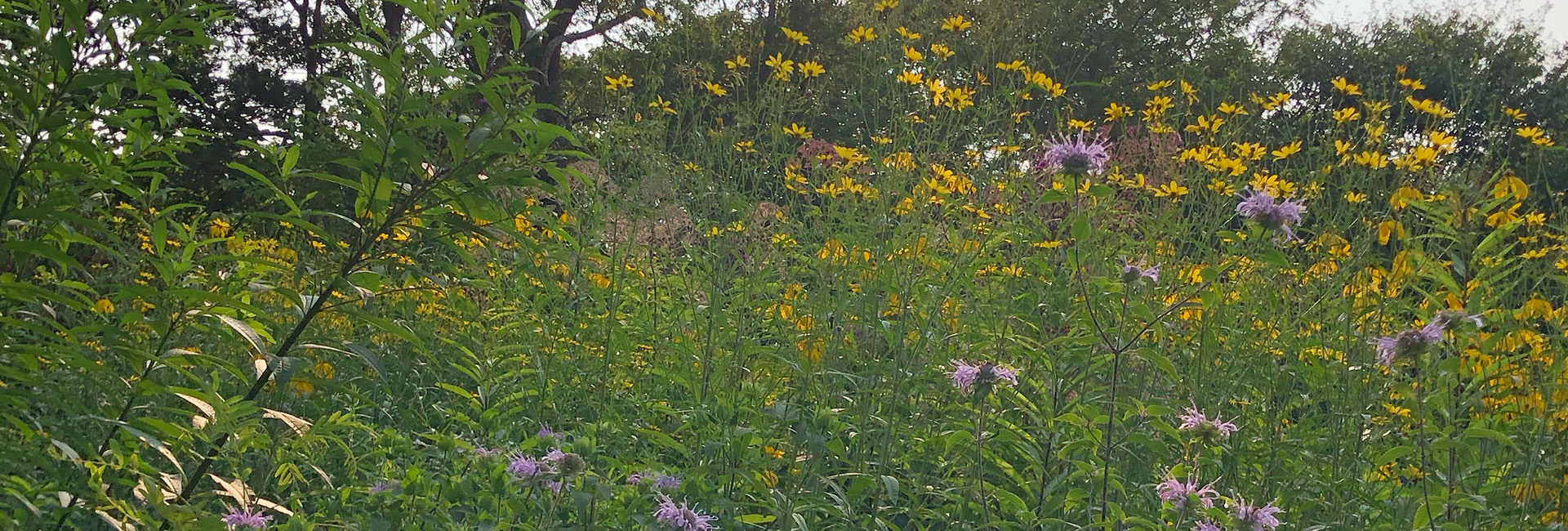
And I’ve also let my garden go. I mean, part of that is because I’m busy and lazy and now spending a lot of time with my insects that I used to spend gardening, but what happens when you do that is that instead of having a monoculture of, say, grass, the grass gives way to some daisy fleabane and maybe some goldenrod, if you tolerate it getting that tall. I try to keep the center of the grass whacked back enough that I can walk on it, but on the sides, I have goldenrod and other plants that are host to an amazing variety of bees and wasps and flies. And during the months when goldenrod is blooming, we have several species that spontaneously spring up where I live. They’re fed for almost three months of the late summer and early fall. So, I can walk out on any particular day and just look at what’s going on in the goldenrod and spend an hour with that if I choose.
Tom Christopher
Just giving up on your lawn had a huge impact.
Brian Stewart
I think it probably did, although, you know, giving up on the lawn took a progression. We bought our home almost 30 years ago. I’ve never really maintained the lawn as lawn, but I did mow it for a number of years. And I still mow it, but in a different sense. It gets, you know, the electric scythe taken through it a couple times a summer, and some parts of it I don’t mow till the end of the season when everything is dormant.
One problem I now understand is that even the dead plants are themselves homes for overwintering pupae or adults or larvae, and it makes it a real problem. If you want to have a garden and you want to make it a really hospitable place for insects, those things do conflict a little bit, especially if your vision of a garden is, you know, discrete plantings and flowering shrubs and things that are pleasing to the eye. And so, my vision of what is pleasing to the eye is changing a little bit, I have to say, and I’m tolerant of things that I wasn’t tolerant of before, such as horse nettle, a pretty uncharismatic weed that does have a quite pretty flower. It’s kind of like a potato flower since it’s a nightshade, and otherwise it’s just a rather thorny, low-growing forb. But the false Colorado potato beetle likes it, so I like it. Although, ironically, I let it go last year because it was covered with them, and this year I have twice as much horse nettle and I didn’t see a single false Colorado potato beetle, so there’s another of the mysteries of the insects. I can’t tell you why that is.
Tom Christopher
Huh. I think there are hints, though, for the rest of us if we want a rich landscape habitat in what you found in your own yard. One thing I’ve taken up is I no longer do the fall cleanup I was taught to pursue, you know, chop everything back down to the ground and clear away all the debris before, you know, putting the garden to bed for the winter, we’d call it.
Brian Stewart
Right.
Tom Christopher
And now I let it overwinter and I do what chopping back down to the ground I do in spring after things have had a chance maybe to pass through the winter.
Brian Stewart
That’s exactly what I do. I mean, you can’t let a tinder pile build up indefinitely, but you certainly can take steps to harvest that detritus at a time when the insects have established themselves and can move on to other places when you remove it. And you do have to put something eventually into your compost pile, I suppose. I certainly do have plenty of compost.
Tom Christopher
Yeah. Brian, tell me about some of your more exciting finds or finds that you, discoveries that you found exciting.
Brian Stewart
I think that exciting takes a bunch of different forms as I’ve gotten more acquainted with the insects. Just the other day I had a very exciting find, and I found it only because I was able to see it after I took the picture. My old eyes don’t pick up tiny details as quickly as they used to and I took a picture of a wasp that was sitting on a plant that was well under a quarter of an inch in size, so it was a tiny thing. And when I blew it up, it was brightly colored and had a stripe on it and had all of this interesting detail. I still haven’t identified it, but it reminded me of earlier this year when I had another even tinier wasp on the glass door to the, on the front door. And it just sat there so I took some pictures of it. And I was astonished when I blew up the pictures to see that it was gold and green and had red eyes. And this tiny little parasitic wasp, because I had detailed enough pictures, could be identified to genus at least, which is not a complete identification. And it turns out this little tiny wasp is just one of hundreds of that particular family of wasps, Eulophidae, that are hyperparasites of some other wasps even at times.
Tom Christopher
Now I know you circulate some of your photographs to, to friends.
Brian Stewart
Right, you mentioned my Insect of the Day project. So, I try once a week, and that means maybe once a month, to send an email to people on my list with the most interesting insects that I’ve either seen recently or thought about recently from my collection. So, at one point this summer I realized I had three different psychedelic striped leafhoppers all living in my yard, all in the same genus. So, I collected my pictures of them and sent them out. And in fact one, one person wrote me back and complained that I was at risk of triggering flashbacks in some of my readers.
Tom Christopher
Yeah, these things are, many of them are just vividly colored and boldly patterned.
Brian Stewart
Yes, absolutely. And for every leafhopper that’s psychedelic there’s another one that is so perfectly camouflaged it’s almost impossible to notice. It’s really incredible. I have no idea how this all works, since the ones that are brightly colored are the first ones I see. But once you, once you’ve taken the step of moving your face closer to a leaf to see a small brightly colored insect, then that’s when you’re likely to notice, oh look, there’s another one near it that’s not nearly so obvious. And then you begin to start seeing that incredible world of insects in your garden.
Tom Christopher
You know, I was particularly fascinated by an ichneumon wasp that you showed me on a stump, I guess, in your backyard.
Brian Stewart
Yes, we have two species of Megarhyssa, which is the giant ichneumon wasps. And these things are enormous. And the female, along with her very, very long ovipositor for laying eggs, which is really a modified stinger, they don’t sting, must be three inches long. And the females bend this ovipositor in a great arc and use it to drive deeply into woods to lay their eggs on or near the larvae of other wasps. And it’s quite amazing to watch. They tap almost like with a dowsing rod with their antennae to locate just the right place to drill, and then somehow are able to force this bit of their body into wood quite deeply, an inch deep perhaps. And before they arrive, the males show up maybe even a week before. They’ll hang out all jockeying for position, and then the females arrive. I guess they mate at that time. I haven’t seen that happen. But I’ve watched the egg-laying process, and it’s extraordinary.
Tom Christopher
Yeah, I was describing this to someone, and I said they look like a cross between something that Dr. Seuss would have come up with if he’d been into science fiction. These long, slender, etiolated wasps with very, very strange configuration.
Brian Stewart
And then when you take their pictures, and especially if you take a portrait, big insects that are large enough, you can actually get close to their faces and take their portraits. And they’re astonishing. One of these Megarhyssas is a shiny black but decorated with yellow in a striking and really amazing way. And the next one you see will be a different species with some other amazing decorations, either a camouflage pattern that is intricate that would make a beautiful textile pattern, or something that’s boldly striped. It’s just incredible out there. Every pattern that you can imagine, and many you haven’t imagined, are out there in the garden on these insects.
Tom Christopher
Brian, I want to close by asking you how your study of insects has changed your appreciation of gardening.
Brian Stewart
Well, could you wait to ask me that till I can get back to gardening?
Tom Christopher
Wow.
Brian Stewart
Between the insects and a hardscape project that has dragged on for years, I have not done as much gardening as I would like to in recent years. But I’ll tell you what my plan has been, and which has been partially executed. I want my front yard to be ornamentals, and those can be introduced plants. They are, in fact, in general, introduced plants. And my backyard to be entirely native Connecticut plants. And I’m hopeful that when I finally get to the landscaping project that I’ve dreamed of, that planting more different Connecticut native plants will bring even more insects to my garden than I’ve seen already. And that will make me very happy, and it will certainly have been worth it.
Tom Christopher
Well, thank you very much, Brian.
Brian Stewart
Thanks. It’s been fun.
Finding new specimens is only half the challenge of insect watching, according to Brian Stewart. There’s also the challenge of identifying your finds, so that you learn how the various insects function in the garden ecosystem. Brian recommends two field guides as his favorite tools for insect identification.
The Kauffman Field Guide to Insects of North America, by Eric R. Eaton and Ken Kauffman, offers thumbnail photographs of over 2,000 insects, which makes it a great place to start your research. For a field guide that focuses specifically on the Northeast, Brian recommends Insects of New England and New York by Tom Murray. This innovative guide is filled with larger, better photographs of insects found in our region.
Finally, an invaluable tool for identifying insects is the website bugguide.net, a gathering place for amateur and professional insect experts. When Brian is stumped, he will submit a photograph to this site and has been rewarded with many identifications. That’s all for this week’s Growing Greener.
That brings us to the end of this week’s Growing Greener. Please join us again at the same time next week on this radio station, WESU 88.1 FM for another episode, or listen to Growing Greener as a podcast at www.thomaschristophergardens.com. If you have comments or suggestions, please share them with me, Tom Christopher, via the same website, www.thomaschristophergardens.com. Growing Greener is produced as a community service in partnership with the Perfect Earth Project, a nonprofit dedicated to educating, engaging, and inspiring individuals, land care professionals and decision makers to adopt toxic-free, nature-based, and climate-responsible landscaping practices.
Transcribed by TurboScribe.
About Growing Greener

In 2025, Perfect Earth Project partnered with Thomas Christopher’s Growing Greener podcast. Tune in every week to listen to Tom talk with gardening experts and leaders, who are working and living in harmony with nature. They share their different perspective on how to make your personal landscape healthier, more beautiful, more sustainable—and more fun.

Support for Growing Greener comes from the Garden Conservancy, a national nonprofit dedicated to preserving, sharing and celebrating America’s gardens and diverse gardening traditions. Through preservation, education, and public access, the Conservancy helps protect these living works of art for future generations. Learn more and discover gardens near you at gardenconservancy.org.
Share