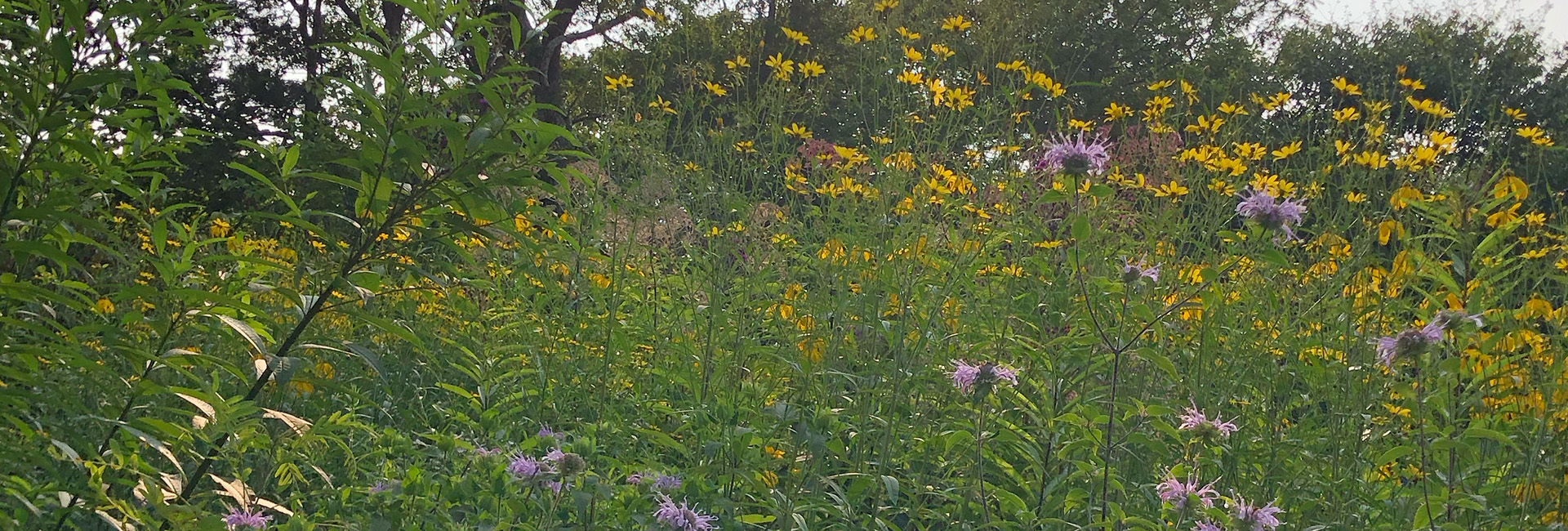

A Sustainable Supply Chain for Plants that are Truly Native with Uli Lorimer
Ecological gardeners and restorationists have long relied on seed collected from wild populations to supply the need for locally adapted, genetically diverse planting material. As the enthusiasm for native plants has exploded, though, this practice has begun to threaten the continued vitality of those wild populations. In this episode of Growing Greener, Uli Lorimer, Director of Horticulture at the Native Plant Trust describes Restoration Accelerator, that organization’s initiative to coordinate a new and sustainable supply chain.
Read more about native seed banking, including what they’re doing at the Native Plant Trust, and learn how to grow native seeds at home.
September 23, 2026
Subscribe to Growing Greener on Apple Podcasts | Spotify | Amazon
Transcript
Growing Greener Host Tom Christopher
Welcome to Growing Greener, your guide to environmentally informed gardening. Produced in partnership with the Perfect Earth Project, this program brings you each week some expert who puts you in touch with a different aspect of gardening in partnership with nature. Our goal is to make your personal landscape healthier, more beautiful, more sustainable, and more fun.
This is your host, Tom Christopher, and today I will be talking to Uli Lorimer, Director of Horticulture for the Native Plant Trust. The Native Plant Trust is an old organization, but it has managed to remain at the cutting edge of conservation for more than a century, meeting evolving challenges with imaginative and effective strategies. Today, Uli will tell us about its newest initiative, Restoration Accelerator.
Before we go to the conversation, though, I want to thank Growing Greener’s sponsor, The Garden Conservancy, a national nonprofit dedicated to preserving, sharing, and celebrating America’s gardens and diverse gardening traditions. Through preservation, education, and public access, the Conservancy helps protect these living works of art for future generations. Learn more and discover gardens near you at GardenConservancy.org. Welcome back to Growing Greener, Uli.
Uli Lorimer
Pleasure to be here.
Tom Christopher
Uli, for those who haven’t been following your work, you are the Director of Horticulture for the Native Plant Trust, which is based in Framingham, Massachusetts, and is the oldest plant conservation organization in the United States. It was founded as the Society for the Protection of Native Plants 126 years ago. The Native Plant Trust also remains one of the nation’s most progressive plant conservation organizations with lots of innovative programs, including the one we’re going to talk about today. Finally, it’s one of the most horticulturally expert of native plant organizations, I think, and has been the outstanding center for understanding the cultivation of the native plants of the northeastern region for decades. So much of the knowledge about propagating and growing native plants in this region that gardeners like me now take for granted was developed by experts at the Native Plant Trust.
Uli Lorimer
Yeah, we’re very proud of our legacy, and I think it really shows how deeply passionate we are about the subject.
Tom Christopher
You know, I mentioned all these capabilities because now the Native Plant Trust is building a new initiative, Restoration Accelerator, on that foundation. Can you share with me and my listeners what the goals of this program are and why it is needed?
Uli Lorimer
Sure, I’d be happy to. So, the program was born out of an analysis of the native plant supply chain in the northeast and looking a little bit more specifically at seeds, not just plant material, but with the understanding that seeds are the genesis of future plant material and excluding propagation techniques like cuttings and cloning and other things like that. We started this program with two broad goals. One was to build a regional seed partnership, and to achieve this goal, we really wanted to enter into conversation with a variety of end users of native plant seed as well as growers of native plant seed to get a better and more nuanced understanding of what people need, what they’re looking for, where are they buying their seed currently, and what would they like to see more of available in the market.
The second part is then to support the growth and development of the supply chain by encouraging more growers to get into the market and by leveraging the things that Native Plant Trust does well, which is wild collecting seed, cleaning, seed banking, and propagation. And so those are the major goals that we set out to enter into this program. We also started with an assumption that people couldn’t find seed.
And it turns out after about a year of conducting surveys and having conversations with people that the issue is actually a lack of choice and not a lack of access to seed. There are plenty of seed producers in the United States, and people can purchase the seed. But what’s lacking is what we call source-identified seed, in particular seed that originated from the Northeast or in New England itself.
So, that sort of broad strokes what the program is looking to achieve. And we’ve been doing this for about, I don’t know, about two, three years now, quietly building our facilities out at Nasami Farm in Western Massachusetts and beginning to build relationships with end users. And that includes organizations like the Trustees of Reservation, Mass Audubon, state agencies, smaller land trusts, as well as commercial Native Plant producers.
Tom Christopher
I’d like to touch on the advantages of growing Native plants from seed, the challenges, and also using seeds that are sourced locally. And the advantage is if you’re growing from wild-type seeds, there’s much more diversity in the plants you raise as a grower or in the plants that come from seeding in an area if you’re a restoration person. That genetic diversity enhances the ability of the population to withstand different challenges. It’s very important in that respect.
Uli Lorimer
It is. The word that comes to mind is resilience and adaptability. Those are actually two words. And I think that in order for natural ecosystems to be able to adapt in an uncertain world, in an uncertain future, they need to be able to rely on the genetic diversity that is here within the region. And it’s one of the core tenets of ecological restoration is to use material that has been sourced as closely to the project as possible.
I want to make an important distinction for your listeners, however. The demand for seed materials, if you combine horticulture demand as well as ecological restoration demand, is at such a scale that it cannot be supported by wild collecting alone. And one of the reasons that this is important is that we don’t want to actually damage the natural resource that is here by over-collecting seed because that also diminishes those plants’ possibilities to intermingle with themselves and continue to adapt.
So, the important part of the Restoration Accelerator Program and general scaling of seed availability is what we call seed increase. So, this is an important step for people to understand that you take a representative collection of a wild taxa, let’s say a goldenrod, for example, and you want to collect from as many distinct populations as possible. And then you mix all those seeds together, and then you plant them into essentially row crops is the most popular approach, but they don’t have to be rows. They can be part of landscape plantings as well. But the intention here is that once you bring all of those genetically diverse sources together, they can intermix with one another, and then you can harvest all of the seed, as opposed to the general approach when it comes to collecting wild species is to take no more than 15-20% of the seed that’s available.
Through this process, you can take a relatively small collection of maybe a couple of ounces and begin to scale it to pounds and to have a product that is, as best as we know, about equivalent to the genetic diversity that you would find locally in the broader region. And so that process of scaling it in these increase plots is really what allows the creation of seed mixes. It allows us to work with some of the larger seed users, like a DOT [Department of Transportation], for example, that’s literally looking for hundreds, if not thousands of pounds of seed every year to put out onto roadsides and revegetation projects.
Tom Christopher
I view this as a great index of how far ecological restoration and ecological landscaping has come in this country, because it wasn’t so long ago it was a tiny niche market, and people were just fine with going out and collecting a couple of handfuls or a couple of pounds of seed from the wild, and it didn’t put a lot of pressure on the wild plants. I think even the Native Plant Trust involved itself in that activity at times. But now the fact that we can no longer supply what is needed through that is a sign of just how far the interest in these plants and this vegetation has grown. So that’s great.
Uli Lorimer
It is a good thing. And I think that as someone who’s very much involved in ecological horticulture, you’re also seeing this increasing overlap between the approaches and protocols of restoration and how we’re approaching making gardens. And I do want to say that not everything always applies, nor is every context appropriate for maybe a more restrictive approach that you would see in ecological restoration. But there is sufficient overlap that it creates more demand for this kind of material.
And I think this is why programs like Restoration Accelerator are much needed, because not only do they feed into the really important work that restoration practitioners are carrying out, but it also provides a consistent stream of source material to feed into the nursery industry for those folks who are looking for that kind of plant to put into their gardens.
Tom Christopher
I think Restoration Accelerator is also important because we’re facing a huge challenge from climate change. And it’s a challenge in all kinds of ways. But it’s going to have a very definite impact on native floras, native ecosystems, and also we’re continuing as human beings to degrade ecosystems. And if we’re going to meet these challenges, we need a lot more seed than is available at present.
Uli Lorimer
Yes. And we also need to support research efforts that can really help us understand the importance of local adaptation and the use of source-identified seeds, and really to try to do everything we can to support the relationships that remain. I don’t think it’s a stretch to suggest that ecological restoration is a form of conservation in a larger sense, either repairing or supporting ecosystems and other types of systems that have become strained or broken.
But I would also argue that ecological horticulture as an approach is a form of conservation in the sense that you’re looking to make those intentional choices in your own backyard that will help support local ecosystems and local pollinators and try to keep those relationships together. And it really is born out of the increasing recognition on the public’s part that gardens don’t exist in a bubble. They interact with each other and they interact with local wild spaces. So, all of these reasons, I think, are what has motivated us to say now is the time to try to get into this.
So, when we spoke to end users, they almost all universally say they would love to have a source identified option. So, as I said at the top of the show here, they want choice. They also all say they want more diversity. So, they want more options of diverse things to choose for their projects. But when you actually ask them a little bit more specifically, well, which species are you looking for? It turns out that it becomes very much project dependent.
What was kind of interesting out of all of this is that for the most part, forested, aquatic, and riparian systems where there’s maybe a closed canopy to some extent, they’re not doing a lot of seeding projects. Whereas dry meadows, open meadows, wet meadows, particularly down on the coast where you have more intact coastal sand plain grasslands is really where the majority of the seed use is currently in New England. And these are important things to know because it helps us to direct the kinds of plants that are needed and to get that information into the hands of our growers so that they can produce those plants.
The other piece is what we’re hoping to do in the long term is to begin to push the industry to do more advanced planning. What this does is that allows you to essentially get into a situation where you can contract grow specifically what you want for a project if you know in enough time in advance what the end user needs. Short of that, and this has been an issue that many seed growers have faced, is that they grow based on speculation. And then sometimes they end up sitting on really good seed because nobody wants it or people aren’t aware that they have it for sale. So, there’s a disconnect there that I think these relationship building pieces of the network and the regional seed networks can help to smooth out a little bit. And I think that’s really also important looking at the long term of like where is this project headed in the next five, ten years.
Tom Christopher
Uli, I need to pause here for a moment to remind listeners this radio station is WESU 88.1 FM and this program is Growing Greener, a weekly conversation about gardening in partnership with nature. This is your host, Tom Christopher. And today I am speaking with Uli Larimer, Director of Horticulture at the Native Plant Trust, about that organization’s pioneering new initiative, Restoration Accelerator.
So Uli, it strikes me that in the past, this has been kind of a do-it-yourself field to a degree. And as it’s grown, we’ve developed an increasing need for a real supply chain. I think that’s part of what you’re talking about because as you say, it’s going to be very hard to convince more growers to get into the field if they hear too many stories of, ‘Oh yeah, I produced all this seed, but then it turns out the market didn’t want it and I just had to eat the cost.’
Uli Lorimer
Yeah. Let me provide a little historical context. These kinds of seed networks exist in the western part of the United States and they’ve been really well developed in the past 20, 30 years, primarily because of investment through the federal government, through Bureau of Land Management, Park Service. And they were created in response to the natural disaster pressures that are much more prevalent. The other fact is that there are millions of acres of federal land out west. When you contrast that here in the northeast, it’s something like less than 2 or 3% of the total landmass here is federally owned, which means that the level of coordination, and I also think that the role that states have to play, becomes that much more important in a landscape that is dominated by much smaller parcels of land and ones that are managed through state agencies and land trusts and land stewardship groups and to some extent even private ownership.
Because of that mix of stakeholders, we just haven’t seen the large-scale investment in the infrastructure or the coordination that has happened in the west. But I think that’s beginning to change now, not just with what we’re doing here at Restoration Accelerator, but you can sort of think of us as a regional seed partnership, and then similarly ones that have already organically formed are happening in Maine, they’re happening in Connecticut, they’re happening down in Maryland and Delaware and Virginia, and then the Mid-Atlantic. And that constellation of regional seed partnerships is what makes up the Northeast Seed Network.
So, we’re also thinking of this as a regional effort that nestles within a larger coordinated effort for the whole Northeast. It makes this a lot easier and a much more attractive funding partner for what we hope will be the return of federal dollars for this kind of work.
Tom Christopher
I could envision the Native Plant Trust becoming a kind of broker for putting people together within this emerging industry of locally sourced native seed, and also providing information and expertise. Because one of the things that’s held some growers back from tackling native plants, and particularly in growing them from seed rather than cloning them, as the nursery industry likes to do with its domesticated plants, is that it’s not as simple, often, starting native plants from seed as it is from starting other types of plants from seed.
Uli Lorimer
Yeah, no, you’re absolutely right. I think that there’s a lot of barriers to propagation, propagation challenges. With agricultural seed, people come to expect 98%, 99% germination rates for your corn and your wheat and your alfalfa and the things that have been really heavily bred to do that. But we have to adjust expectations when it comes to wildland seed. Some species where you might get 30% germination is fantastic. Others have double dormancy. So, there’s a lot of things that are certainly barriers and challenges. But one of the core tenets of the Northeast Seed Network is knowledge sharing, and that’s certainly something that Native Plant Trust also loves to do.
And it’s one of the facets of this program where I think we have a real strength, which is drawing on the decades of experience in how to propagate these plants is going to help others become more successful and get into this market.
Tom Christopher
Uli, I want to circle back for a minute to something that you described earlier, but I have a question about, which is the importance when you’re planting or trying to restore areas with native plants of using populations of the plants that evolved in your area, what we would call local ecotypes. I’ve often heard back from people who say, well, you know, with climate change, how is that relevant? I haven’t had a really good answer, and I’m hoping you can give me one.
Uli Lorimer
Well, I’ll do my best. I would frame this as a very open-ended question because I don’t think we have all of the information, particularly for science to inform us about what the best practices are. I also think to some degree it’s contextual. So, some of the conversations we’ve had with foresters, for example, and I’m zeroing in on trees because they are organisms that have a very long lifespan. Climate-adapted species is a phrase that I hear a lot or the practice of what are called admixtures. So, you can, if you’re sourcing within a particular ecoregion, then include some material from the adjacent ecoregion further south with the idea that you’re trying to introduce what we think of as beneficial adaptations, either to more drought, disease resistance, whatever that may be.
There’s a whole canon of literature around what are called seed-sourcing strategies, and it really depends on your project as to what fits you best. Some projects may want to source from only within a certain ecoregion. So, let’s say you’re doing a project on the Cape and you want to have everything that’s in ecoregion 84, so all of your plant material should be sourced from 84, but 84 stretches from the Cape to Long Island to South Jersey. So, maybe there’s a range of choices there where you might be able to introduce something from further south with this climate-change idea in hand.
Other projects where maybe you’re mixing adjacent ecoregions, so maybe ecoregion 58 and 59 are the ones that are in central Massachusetts and then into the western parts of New England. The missing piece here is the source-identified piece. So, by providing source-identified seed, then it allows the end user to make the decision about whether they need something that’s specific to an ecoregion, if it’s something that’s blended together, or if it’s something where they wish to, in the context of their project, factor in climate change. I will say that I’m a big proponent of preserving local adaptation as much as possible because I believe very firmly that there is sufficient diversity within local populations here to be able to allow them to keep pace with the change. I want to keep coming back to the point that it’s the choice.
I don’t want to appear prescriptive in saying you can only use locally adapted species and that’s what’s best for the planet and you can make arguments that support that, but it also turns a lot of people off when you tell them this is what you have to do and then you were doing it wrong before. I find it’s much more effective to present your arguments than also say here’s a choice. It also recognizes that people have different reasons for why they make those decisions.
This project is really aimed at giving people the choice of source-identified seed for both garden use through nurseries and so forth as well as for all of the different facets of ecological restoration that are happening.
Tom Christopher
We’ve been focusing an awful lot on the genetics of the plants and the seeds, but there’s other things involved in scaling up this industry and the seed supply. Storage, for instance. The Native Plant Trust has a lot of experience with that because you’ve been running a seed bank for some time.
Uli Lorimer
Wonderful question. I think of this as a real feather in our cap. We have a rare plant seed bank that we established in the early 1990s and has been the centerpiece of our New England plant conservation program where we’ve been able, with the help of literally an army of trained plant conservation volunteers, to monitor populations of rare plants across New England and, where appropriate, collect seeds and bank them. Those seeds are sort of an insurance policy, but we also actively use them.
Case in point, a really wonderful project we did last year where the state of Vermont was looking to reintroduce sundial lupine into the state where the natural populations had dwindled to maybe one or two in the whole state. We had seeds that we had collected from Vermont in the early 1990s and our team out at Nasami was able to coax them back to life and produce plants that then were planted back out into the state. For me, it really highlights the power of seed banking and having that resource available for when you need it.
We’ve also long had another collection within our overall seed bank, aside from the rare plant collections, of what I call a working collection that has fed into a lot of the plants that we sell at Nasami and at Garden in the Woods. With Restoration Accelerator, and I should have mentioned this in the beginning, but one of the other goals of this program is to build a seed bank of wild collected material. This is a way for us to sample the genetic diversity that’s out there to get as many different kinds of species banked, so to try to represent some of the species diversity that exists, and to have sufficient collections of each individual taxa in order for us to be able to establish increased programs and increased plots. This is important because it feeds back into the advanced planning that I was talking about earlier.
If you want to have a particular species that is source identified from New England, and you don’t have it available in a seed bank, you have to spend the first year with seed collectors scouting and collecting the seed, and then you need to clean it and store it and get it into whatever dormancies needed to break it, and then you can produce plants, and then the next season you plant out your plots. So, the timeline between I’ve identified what I need to the first harvest of the seed is extended out quite a bit. By having a robust seed bank, you cut that timeline by at least a season, which is a big deal when you come with plants, and that allows you to, you know, you can draw the seed bank, you can produce plugs, and you can get plants in the ground right away, and then over the course of three to five years, you can harvest literally pounds and pounds of this seed for whatever project might need it.
Tom Christopher
I think any gardener, more like me, who’s tried to grow native plants from seed, has experienced the frustrating situation of getting a seed packet and nothing germinates, because storage of these plants can be almost as demanding as germinating them. There are an awful lot of them that are just great. You just put them in cool, dry conditions, and they’ll persist for a long time. Their viability will persist for a long time. But there are others which, unless you treat them in very specific ways, the viability, the germination rate of the seed goes down very fast. I think producers need to have that information too.
Uli Lorimer
Yeah, absolutely. Again, the conditions in the Northeast, we have hot, humid summers, we have very cold winters, and so you need what amounts to a walk-in cooler where you can keep temperatures consistent and humidity levels low in order to stave off the loss of viability over time as these seeds sit in storage. And so, there aren’t very many seed banks like that in the Northeast. There just hasn’t been a need for it. Some of the places out West, for example, where it’s never any more humid than 10%, they can store seed in big open-air warehouses and not have to worry about it. That’s another one of the pieces that I think Native Plant Trust is really well suited for is that at Nasami we built a large-scale walk-in cooler where we can keep temperatures around 35, 40 degrees. We can keep relative humidity below 30%, 35%. We also constructed a dedicated seed cleaning building. What used to all be done mostly with hand and sieves and folders and other sorts of winnowing kinds of activities, we can now scale the cleaning of seed by the use of equipment, vibratory separating tables and winnowers and other sorts of things that make the cleaning process much more efficient, and that, again, helps us take another step towards more scaling of this much-needed resource.
Tom Christopher
Well, thank you, Uli. This has been really interesting and, well, at least for me, inspiring. If listeners want to learn more about the activities of Native Plant Trust and maybe support this wonderful organization, how would they do so?
Uli Lorimer
You can visit our website at Nativeplanttrust.org, and there’s information there about Restoration Accelerator Program and the different facets and seed banking information, as well as links to support the organization financially.
Tom Christopher
Well, thank you very much. This is great.
Uli Lorimer
Thanks for having me on again, Tom. Really enjoyed it.
Tom Christopher
That’s all for this week’s Growing Greener. Please join us again at the same time next week on this radio station, WESU 88.1 FM, for another episode. Or listen to Growing Greener as a podcast at www.thomaschristophergardens.com. If you have comments or suggestions, please share them with me, Tom Christopher, via the same website, www.thomaschristophergardens.com. Growing Greener is produced as a community service in partnership with the Perfect Earth Project, a nonprofit dedicated to educating, engaging, and inspiring individuals, land care professionals, and decision makers to adopt toxic-free, nature-based, and climate-responsible landscaping practices.
Transcribed by TurboScribe.
About Growing Greener
In 2025, Perfect Earth Project partnered with Thomas Christopher’s Growing Greener podcast. Tune in every week to listen to Tom talk with gardening experts and leaders, who are working and living in harmony with nature. They share their different perspective on how to make your personal landscape healthier, more beautiful, more sustainable—and more fun.
Support for Growing Greener comes from the Garden Conservancy, a national nonprofit dedicated to preserving, sharing and celebrating America’s gardens and diverse gardening traditions. Through preservation, education, and public access, the Conservancy helps protect these living works of art for future generations. Learn more and discover gardens near you at gardenconservancy.org.
Share