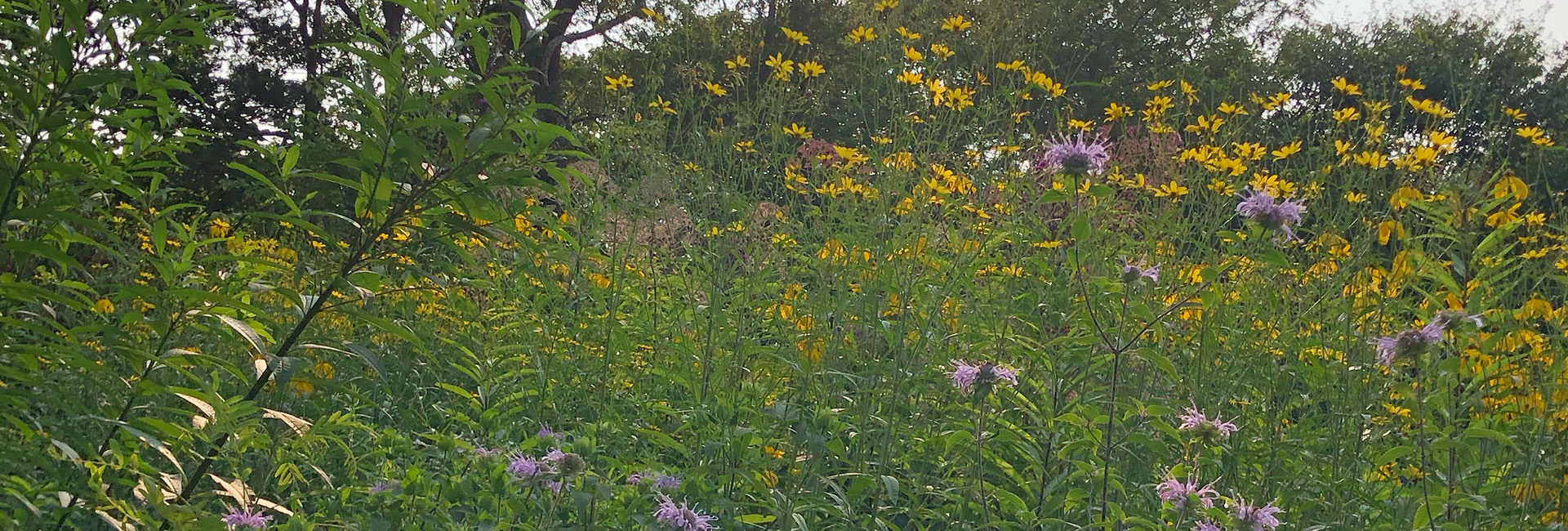

Still Life: A Photographer’s Journey through Grief and Gardening with Jane Fulton Alt
Growing Greener speaks to photographer Jane Fulton Alt about her new book, a gallery of stunning images taken in her late husband’s native plant garden, and how this immersion reconnected her with nature, its cycle of life and death, and with the gardener as well. With essays by Douglas Tallamy, James Baraz, and W. M. Hunt.
November 11, 2026
Subscribe to Growing Greener on Apple Podcasts | Spotify | Amazon
Transcript
Growing Greener host Tom Christopher
Welcome to Growing Greener, your guide to environmentally informed gardening. Produced in partnership with the Perfect Earth Project, this program brings you each week some expert who puts you in touch with a different aspect of gardening in partnership with nature. Our goal is to make your personal landscape healthier, more beautiful, more sustainable, and more fun.
This is your host, Tom Christopher, and today I will be speaking to Jane Fulton Ault, a photographer who was pitched into native plant gardening by the sudden death of her husband, Howard. Howard, a Harvard graduate who completed his medical training at Northwestern University Medical School and pursued a long career in private practice as well as serving as a teaching faculty member at Northwestern, had been occupied for several years before his death at age 75 in 2019 by transforming the yard around the family’s Evanston, Illinois, home into a certified wildlife habitat and native plant pollinator garden. He left Jane a vibrant and extensive complex of trees, shrubs, and flowers that she, who had not been involved in the garden’s creation, initially found overwhelming.
This year, she published a book, Still Life, a collection of photographs and reflections that chronicles the way the garden guided her through her grief and how it changed her life. Still Life captures not only the beauty of the flowers she came to love, but also how the experience of them brought her into harmony with nature’s cycle of life and death.
Before I go to my conversation with Jane, though, I want to thank Growing Greener’s sponsor, the Garden Conservancy, a national nonprofit dedicated to preserving, sharing, and celebrating America’s gardens and diverse gardening traditions. Through preservation, education, and public access, the Conservancy helps protect these living works of art for future generations. Learn more and discover gardens near you at GardenConservancy.org.
Welcome to Growing Greener, Jane.
Jane Fulton Alt
Thank you. It’s so nice to be here, Thomas.
Tom Christopher
Jane, I asked you to join me on this program after I explored a copy of your really wonderful book, Still Life. I love that title, by the way, which has, I think, a dual meaning. It refers, of course, to the extraordinary photographs with which you filled the book, still lives of flowers. But Still Life also refers, I suspect, to the role these flowers and the garden they came from have played in your finding an ongoing connection to your late husband, Howard.
Jane Fulton Alt
Absolutely, yeah.
Tom Christopher
So, this book isn’t just a celebration of the beauty of native plants, but also the story of how the garden helped you navigate deep grief.
Jane Fulton Alt
Indeed, it did. I feel that the garden was really my lifeline to being able to grieve my husband and reconnect to the natural world and reconnect to him. And I feel like the garden gave me life after he passed away in a way that I just, I had no idea because I wasn’t a gardener. I didn’t know the first thing about gardening, you know, that was his thing. It was his canvas. And what I’ve realized is that it’s often in marriages, somebody does a certain part of the garden and maybe the other person does the other part or not at all. You know, it’s a creative endeavor and how that person envisions it. And so when my husband passed away, he hadn’t completely finished the removal of the grasses. And he was really dedicated to creating a native garden. I mean, he was planting trees and he was 75. It was actually very terrifying to me because, you know, he was up there and I just didn’t know what was going to happen once he was gone because it was a big piece of property. It’s a corner lot. But he never said anything other than he just kept plowing away.
He said, it’s always easier to ask for forgiveness than permission. That’s what he was like. So, he just did it and it was unbelievable because the day shortly after he passed away, he spent a lot of time at the Lurie Garden in downtown Chicago. And that was all native. And they knew him pretty well. And my kids decided to start a fund in his name at the time. And so, the director was in touch with my daughter and said, tell your mom we’ll help her with her garden. And that was like the kindest thing anybody could have said. And I was just overwhelmed with gratitude and was so touched. And what I realized is that I just needed somebody to give me permission to garden. The plants would tell me what they needed if I paid attention. As you probably know, because you’re a gardener too, right?
Tom Christopher
Yes. Yes, very much so. Jane, I want to insert a note about the Lurie Garden because it was part of Howard’s inspiration. And non-Chicagoans may not know about it, although they should. It’s a three-acre naturalistic composition of perennials, bulbs, grasses, shrubs, and trees that Dutch designer Piet Oudolf created in Chicago’s Millennium Park on the largest green roof in the world. Oudolf’s emphasis was on plants native to the area and creating a sustainably maintained landscape that serves birds, insects, and human residents alike. Since opening in 2004, it’s attracted international praise and attention and has changed the course of American landscape design.
So, if you could share a bit more background on the garden, the home you shared with Howard is in Evanston, Illinois. And that’s a community on the shore of Lake Michigan, I guess, about 12 miles north of downtown Chicago, am I correct?
Jane Fulton Alt
Yes, yeah. It’s right on the Northwestern University campus.
Tom Christopher
And the landscape around the house was a pretty conventional setting of lawn, I think, before your husband took it in hand.
Jane Fulton Alt
It was. It was. And you know what happened is he read Doug Tallamy’s book, Bringing Nature Home. And Doug Tallamy talked about how grasses [lawns] are really dead zones. They don’t do anything for the biodiversity. And that people need to start thinking about their green space as a way to support other life forms. So, he just heard the call. Actually, he started on the parkway, which wasn’t even our property. It’s public property. And we couldn’t see that. I didn’t understand what he was doing. We couldn’t see that bed from the house. But that’s where he started. That’s the oldest bed. And, you know, the whole thing is brilliant because it is like a public garden right now. It’s just amazing. People are so appreciative to be able to walk by kind of a wild space as opposed to manicured lawns. They’re sort of dead spaces. So Doug Tallamy had a lot to do with his inspiration and how he was going to try to transform our yard.
Tom Christopher
But, you know, it’s a long step from reading Doug Tallamy’s book to redoing your whole yard. It sounds like Howard didn’t do things by halves.
Jane Fulton Alt
No, he didn’t. Not at all. I mean, he was out there like for eight hours a day. You know, he would collect cardboard boxes from Trader Joe’s and open them up and flatten them out on the grass. And then we had a huge truck that had this organic mulch that drove up one day. And this was like a year before my daughter got married at home. And I just was horrified. I thought, oh, my God, what is this place going to look like for the wedding? But it didn’t matter. You know, it looked just fine. Yeah, yeah.
Tom Christopher
You’re a photographer, and you most definitely were not a gardener when, as you say, when Howard was redeveloping the yard. And in fact, if I understand correctly, you voiced a concern to him about his project.
Jane Fulton Alt
Oh, yeah. Oh, yeah. You know, I was just concerned. Well, I don’t know. He was very bullheaded in a way, and I just, I guess I gave up. You know, at some point, he just, he does what he needs to do. But I actually was a social worker first, and then I became a photographer. So, I was photographing the garden before he passed away, just because it was so beautiful. And, yeah, I mean, there was so much beauty in the light, and also seeing the progression of the plants. It’s just, it’s miraculous. It’s just miraculous, the whole thing.
And it just gives you more insight into the cycles of life. It kind of reinforces the sense like it’s never really over. Things just cycle through. And that was very comforting to me.
Tom Christopher
Yeah, because, I mean, speaking of the cycles of life, Howard died in September of 2019, I think. That must have been devastating, especially since he sounds like he was such a remarkable, vital person.
Jane Fulton Alt
Yeah, he was. And, yeah, you know, it’s interesting, because that was right before COVID hit. And in hindsight, I mean, I was in such deep grief, but then everybody else was, too. Nobody was going out. And then I had opportunities to spend longer chunks of time with my children, none of whom lived near me. So, it wasn’t all a loss. But then, I think it was in July, after COVID started, we had this 150-year-old horse chestnut tree, and a limb fell, took out all the electricity in my neighborhood. And I was out on the East Coast. And I said, oh, that’s Howard telling me to get back home. The garden. So, I got in the car and drove back.
Tom Christopher
You know, grief is a topic that, really, you take up in this book. And while I’d say the conventional wisdom in the United States treats grief as almost an illness, you work your way through the five stages to acceptance, and eventually your less sensitive friends and acquaintances start telling you that you need to move on, you know, as if the hole in your heart and your life that your loss has made is something you can just walk away from. But it’s not that simple, though, is it?
Jane Fulton Alt
No, it’s not that simple, and it never goes away. It’s always with you. But I think that what I’ve learned is that I just feel like I’ve incorporated Howard into my being, my bones. And a lot of that is through the garden. You know, I spend half my year in New Orleans. I’m down here now, and he put a garden in here, and there are lemon trees and satsuma trees, and I have lemon water every morning. And every morning, I think about how I’m being nourished by him. And these trees are so miraculous. You know, it’s just like, oh, my God, is this for real? It’s just so beautiful. And he planted those, like, 14 years ago. You know, it’s like a gift that keeps on giving.
Tom Christopher
What I find so powerful about your story is that you found a way to turn your grief into something positive in your life. And I’m sure you still feel a lot of pain, but you’ve chosen to honor Howard by celebrating his garden, and not only by perpetuating it, but also by making it a focus of your own art, of photography.
Jane Fulton Alt
Yeah. Well, and he was always very supportive of my work and my art. And you know what I really love about the garden the most? I don’t know about the most, but my neighbors now have, you know, they take seedlings, or they’ll take, you know, give them plants where I’m pulling out stuff that’s just, you know, I have to thin out. And so, I feel like the garden has seeded so many other gardens. And then with this book, I ended up, you know, I had a launch last spring, and then summer, and September. And in the book signings, I ended up putting seeds from the garden into the book in a little envelope. So, you know, you just never know where anything goes, right?
Tom Christopher
That’s lovely.
Jane Fulton Alt
Yeah, the idea of seeding things is just so potent and powerful. And I don’t know, I just think life, it’s so tenacious in a way. I have a patio here in New Orleans, and there are, Howard had bought these wooden barrels for some of the plants. So, some of the plants, the roots went down, and somehow, they managed to get through the brick patio. And there is an oak sapling that has rooted itself underneath the patio. And I just can’t get over that. It found the soil, and it’s thriving, and it’s just so tenacious. And I think, you know, I feel like the best way to honor, to have honored him was to be fully engaged in life. And of course, I didn’t feel that at the beginning. I was lost. I was really hurting, as most people are when they lose a loved one. But it’s such a common thing.
And, you know, there’s a book that James Barrett mentions in the Still Life book. In one of the essays, he mentions The Wild Edge of Sorrow by Francis Weller. And that book was, I had never heard of it, and I ended up buying it. And he talks about how important it is to have grief be a community, a communal kind of thing. You know, it really needs to be done in community and with ritual, and it helps.
And I feel like I was able to do that with the garden, because I’m on a Northwestern campus. These kids would walk by, and, I mean, people just would share with me how important that garden was to them. It certainly was to me, is to me.
Tom Christopher
And Howard had been, oh, I think in a gentle, quiet way, a bit of a proselytizer for native plants, too. I mean, he had a brochure, for instance, that he put out at the edge of the garden for passersby to take if they wanted to learn more about it.
Jane Fulton Alt
He did. He shared all of the information that he had, all the YouTube, you know. He used to watch a lot of YouTube videos on gardening and the books and, you know, where he got his compost from and everything. And he felt like if anybody was interested, he was really interested in educating people about, you know, the importance of native gardening. And this was another way for him to do it. And those sheets still exist on the side of the fence in the yard.
Tom Christopher
Aha. Oh, wonderful. Yeah, so that’s something you’ve continued, I understand.
Jane Fulton Alt
Yeah, yeah.
Tom Christopher
Jane, I need to pause here for a minute to remind listeners that this radio station is WESU 88.1 FM, and this program is Growing Greener, a weekly conversation about gardening in partnership with nature. This is your host, Tom Christopher, and today I am speaking with Jane Fulton-Alt about her beautiful and inspiring book, Still Life, A Photographer’s Journey Through Grief and Gardening.
So, Jane, supporters of gardening with native plants, such as myself, commonly talk about how that work can help to support wildlife and heal the ecosystem. But you don’t hear about how this activity can also heal a gardener. Can you share how you discovered that?
Jane Fulton Alt
Well, there’s something so healing in being a steward of a garden, planting seeds and seeing them start to flourish, and then, yeah, I mean, it just, it made me feel alive. And it made me feel connected to the natural world in a way that I don’t think I ever had felt before. I feel like there’s just something so much bigger than what I had known, and I discovered it in the garden.
I think about Robin Wall Kimmerer, and she’s written Braiding Sweetgrass, and she talks about how a part so many of us have felt for so long from our nature, which is part of the natural world. And I don’t think I realized the extent to which I didn’t have, I didn’t have the intimate contact with the natural world. And it just has loved me. The more I’ve loved it, I feel like it’s loved me back tenfold. And I feel pretty fierce about it now. And I’m so grateful that so much of what was happening politically, I think, is going to be reversed, you know, that I think there’s some hope for climate change and our being better stewards of the Earth. And that’s all there. And, I mean, what Howard left behind was such a gift. It’s unbelievable. I couldn’t have imagined it. I just couldn’t have, you know? Yeah.
Tom Christopher
You know, your book, Still Life, has had a huge impact on me personally.
I’ve been a gardener since I was a teenager. But the impact came from a very hard loss of my own, the sudden and unexpected death of my only child. And it was in my garden that I found a way to carry on. I garden in New England, a region notorious for its rocky landscapes. And after my son’s death, I began collecting stones and using them to frame my garden with walls and to create a cobbled courtyard in front of the house. In a period of three to four years, I figured hundreds of tons of rocks. And the features I built with them, the walls and the courts, you know, really helped to integrate the garden into the surrounding landscape. It made it of the landscape. But it also helped to integrate me into that natural cycle of death and birth.
Jane Fulton Alt
I just get goosebumps thinking about you moving those stones. And I think about how powerful stones are, too, in ritual, you know, and creating that. I can see how comforting it would have been to have done that. Wow. Yeah. Yeah, it’s a way to kind of, it’s like kneading bread in a way, you know, when you’ve got this grief and you’ve got to figure out some way to work it, to knead it, to move it through your body.
And the garden and what you did is so physical. I just think it really, really helps to work with our hands and to work in nature and work with these stones that are probably so old and ancient and will be there long after us, right?
Tom Christopher
Mm-hmm.
Jane Fulton Alt
Yeah. You know, there’s something about the continuity of all that, which I think is really powerful.
Tom Christopher
I was fortunate I was able to hire a couple of my son’s friends and an acquaintance of his to help me with it and work with these young men on the walls and the gardens. You know, the connection to my son wasn’t explicit.
I mean, I didn’t talk about him to them, but nonetheless, it was wonderful sort of reconnecting to these young men and seeing how they were growing up.
Jane Fulton Alt
Oh, yeah, completely. And I’m sure that they appreciated being there too because death affects so many people. It’s got so many ripples. What a gift for them to be able to come and help with that.
Tom Christopher
Anyway, I so admire your elegant and succinct treatment of this subject in your book, Still Life. The stunning photographs speak for themselves. I’m curious, though, a lot of the photographs towards the beginning of the book, which I think maybe you were inspired to pursue by Dutch still lives, but they are not native plants.
Jane Fulton Alt
No, they’re not. And what happened, you know, after Howard died, I thought, I have another book in me. I’ve done two other books. And my first thought was just anything that was plant-related I put together, and that wasn’t right. And then we kind of narrowed things down. And those photographs were actually taken the spring before he passed away. And they were taken because I was given these incredible peonies for Mother’s Day that I just fell in love with. So, I used those and some plants from the garden and then some peonies from the garden. And I started photographing them through the kitchen window early in the morning. And so, I had this body of work, and it just fit in with the narrative of this book, where you think about how flowers are just so soothing. They just, they’re so beautiful. They just take your breath away. And I think one of the lines was, flowers soothe a broken heart or something. I can’t quite remember what it was. But anyway, yeah, but those were taken before he actually passed away.
Tom Christopher
So, the main body of the book is this gallery of photographs, of your photographs, which are wonderful and speak to each other as well as to the onlooker. But you frame them with a touching foreword that you wrote and short but insightful essays by Douglas Tallamy, James Baraz, who you mentioned, a longtime leader in the field of meditation and who maintains a website devoted to a Buddhist response to climate change, and then W. M. Hunt, a nationally recognized photography collector, curator, and consultant. I thought that was very interesting, the way you tied up all those different ends together.
Jane Fulton Alt
Yeah, well, Doug Tallamy, he was inspirational for Howard. It was such a gift that I was able to reach him, and he was willing to write an essay. James Baraz is, I actually, I was pretty lost after Howard died, and somebody recommended taking a course called Awakening Joy, and James Baraz leads that course. And so I took it, and then I took it again two years later and became certified to teach it.
So, I was actually on a silent meditation retreat, and the book was almost all wrapped up, and I thought it would be so nice to have him write something. And, oh my gosh, my publishers made room, they added more signatures and all that, and his essay, it’s sort of like, oh, is that what happened to me? It sort of put a whole different frame around it. And Bill Hunt, he’s a collector, and he just knows so much about photography, and I think he was the first person that ever bought one of my pieces, and so he’s sort of seen me grow throughout time, and I thought that he’d be a good person to ask, you know, kind of a different slant, you know, more of the art world slant. So yeah, it rounded out so beautifully. I just, I can’t even believe it. I mean, there’s so much that goes into a book, so many decisions, and I just feel like things are just guided in a way that boggles my mind.
Tom Christopher
Hmm, and these are all aspects of gardens. I mean, gardeners tend to focus just on the flowers, and the color of the flowers, although Piet Oudolf, the great Dutch designer, who designed the Lurie Gardens that so captivated your husband, he says that he chooses plants, the color of flowers is the last thing he considers, that he looks at the structure of the flower because he wants them to look good when they’re dead in the wintertime, too. So, he’s got quite an insight. But there’s, anyway, there’s the visual of the flowers, but there’s a spirit, a very strong spiritual aspect to gardening, and it’s a way of interacting with nature, and then, in your case, it draws on your interactions with your art.
Jane Fulton Alt
Yeah, yeah, you know, I feel like I don’t quite know how it happens, except that when I get out of the way of, you know, when it’s almost like there’s nothing between the camera and the plant, like it’s, I’m not even there. I don’t really know how some of those pictures came about because, you know, those pictures don’t exist anymore. Those plants are, they’re not in the same condition, and the light has to be just a certain way, and it’s just like, oh, my God, I just can’t even get over the fact that I was able to capture that particular moment in time that doesn’t exist anymore. But the beauty of it, the beauty of it, is that at that moment, I would just get lost, and I’d really, I’d lose myself. You know, I’d either be in the garden actually gardening, or if I was kind of tired, I’d, you know, go back in the house, and then I’d see the sun coming through the window, and it would be a certain way, and I’d say, oh, I should go back out there, and I would with my camera, and that was a whole other thing, and that was always so soothing.
I mean, it was like, it’s like a meditation to be able to use the camera in that way. It really, the camera was just a really good companion for me. It has been throughout many situations in my life where I’ve had profound loss, yeah, and the other, and I didn’t realize this until more recently, but all three books that I’ve done have all been about profound loss, and I think the camera has helped me to process that.
Tom Christopher
Very interesting. So Still Life is currently in its second printing, and I strongly encourage listeners to pick it up and learn from it about this overlooked but very consequential aspect of native plant gardening.
Jane Fulton Alt
Thank you so much, Thomas, yeah.
Tom Christopher
And Jane, I want to close with a brief summation that you included towards the end of the photographs in your book, and this is a quote. Howard’s love will continue in many forms, some of which we may not be aware. He will continue to nurture us in life if we just pay attention.
Oh, that goes right to my heart. It absolutely does. So, thank you for that.
Jane Fulton Alt
Thank you. Yeah, mine too. Thank you.
Tom Christopher
Well, do you have anything you want to add?
Jane Fulton Alt
I don’t think so. I think we’re all in this together, in this life together, and we all have losses, and if this book helps anybody to deal with the loss so that maybe they don’t feel so alone or whatever it is, I’m grateful for that. So, thank you so much for having me on your show.
Tom Christopher
Well, thank you for finding time for this. I appreciate that too.
Jane Fulton Alt
Okay. Thank you.
Tom Christopher
Thank you for joining us for this week’s Growing Greener. Please join us again at the same time next week on this radio station, WESU 88.1 FM, for another episode. Or listen to Growing Greener as a podcast at www.thomaschristophergardens.com. If you have comments or suggestions, please share them with me, Tom Christopher, via the same website, www.thomaschristophergardens.com. Growing Greener is produced as a community service in partnership with the Perfect Earth Project, a nonprofit dedicated to educating, engaging, and inspiring individuals, land care professionals, and decision makers to adopt toxic-free, nature-based, and climate-responsible landscaping practices.
Transcribed by TurboScribe.
About Growing Greener
In 2025, Perfect Earth Project partnered with Thomas Christopher’s Growing Greener podcast. Tune in every week to listen to Tom talk with gardening experts and leaders, who are working and living in harmony with nature. They share their different perspective on how to make your personal landscape healthier, more beautiful, more sustainable—and more fun.
Support for Growing Greener comes from the Garden Conservancy, a national nonprofit dedicated to preserving, sharing and celebrating America’s gardens and diverse gardening traditions. Through preservation, education, and public access, the Conservancy helps protect these living works of art for future generations. Learn more and discover gardens near you at gardenconservancy.org.
Share


