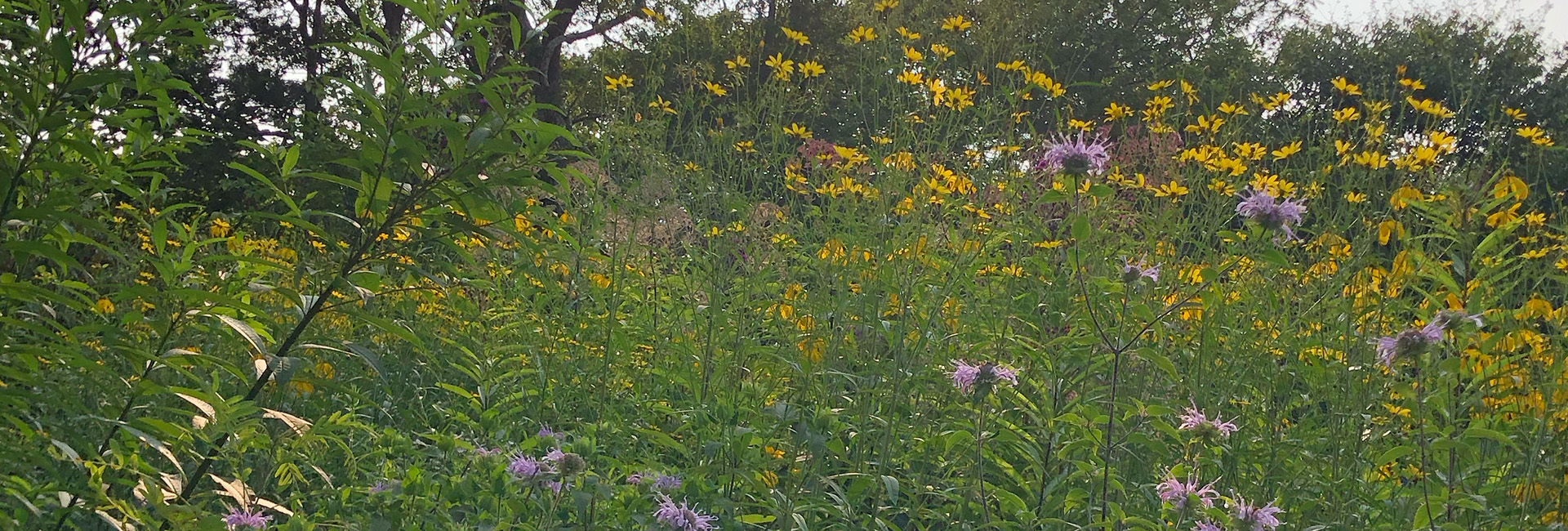

Declaring Peace with Pocket Gophers with Shawn Maestretti
Shawn Maestretti, principal of Studio Petrichor, a celebrated landscape design and installation firm in Altadena, California, describes his “conversation” with pocket gophers, generally reviled as a pest in western gardens, and how he has come to respect not only this native creature’s right to share the landscape but also the invaluable role it can play as a soil engineer.
October 7, 2026
Subscribe to Growing Greener on Apple Podcasts | Spotify | Amazon
Transcript
Growing Greener host Tom Christopher
Welcome to Growing Greener, your guide to environmentally informed gardening. Produced in partnership with the Perfect Earth Project, this program brings you each week some expert who puts you in touch with a different aspect of gardening in partnership with nature. Our goal is to make your personal landscape healthier, more beautiful, more sustainable, and more fun.
This is your host, Tom Christopher, and today I will be talking to Sean Mastretti, a principal of Studio Petrichor, a landscape and garden design firm based in Altadena, California. Sean’s creations integrate a devotion to nature and ecology with a talent for aesthetics and attention to the needs and desires of the clients, resulting in landscapes that are as sustainable as they are delightful. I discovered Sean’s work during a quest for information about pocket gophers, a small but active native plant-eating and burrowing animal that is regarded as a nemesis by many Western gardeners who hunt it with traps, poisons, and smoke bombs. I came upon an article Sean had posted about the need for coexistence with this ecologically important creature and a description of how a different perspective could make it an asset to the landscape rather than an adversary.
Before we continue our exploration of gophers, however, I want to thank Growing Greener’s sponsor, the Garden Conservancy, a national nonprofit dedicated to preserving, sharing, and celebrating America’s gardens and diverse gardening traditions. Through preservation, education, and public access, the Conservancy helps protect these living works of art for future generations. Learn more and discover gardens near you at GardenConservancy.org.
Welcome to Growing Greener, Sean!
Sean Mastretti
Thank you!
Tom Christopher
Sean, I want to begin our conversation by giving credit to your studio’s design work. On Studio Petrichor ‘s website, it makes reference to transformational and environmentally aligned landscaping practices, and judging from the gallery of project photos, I think that’s a fair statement. You and your partner, Lee Adams, clearly have a gift for recognizing and working with the intrinsic nature of each spot and enhancing it with imagination, but also sensitivity to create landscapes and gardens that serve the human inhabitants while also respecting the natural dynamics.
Sean Mastretti
Thank you. It’s been a long journey.
Tom Christopher
Yeah, I imagine it has. Well, landscape design is a field that’s been, I think, changing very fast in the United States.
Sean Mastretti
Yeah.
Tom Christopher
So, I contacted you because of an informal series I’m pursuing on Growing Greener to feature garden wildlife that can make coexistence challenging. Gardeners in general have awakened to the need to coexist with wildlife in their landscapes, and that’s often easy and gratifying. Planting some milkweed to attract and support monarch butterflies, for instance. What could be easier or more enjoyable than that? Or planting berry-bearing native shrubs to attract and support songbirds. That’s an unmitigated win, too. But what about creatures such as woodchucks here in the east that can devastate your vegetable and fruit plants? Or slugs? Both have important ecological roles to play, but coexisting with them involves special measures. And I got in touch with you when I found an article you had posted on the Studio Petrichor website that addresses probably the most problematic species of wildlife in the West.
The title of the article you posted is Learning to Live with Gophers. Does it have to be us versus them?
Sean Mastretti
I can’t believe how long I wrote that, too. And it always seems to resurface. If there’s any blog that I’ve written or anything that I’ve written that one keeps coming up.
Tom Christopher
I’m not surprised, having educated myself a little bit in the last few weeks about pocket gophers in gardens. But could you give us a bit of background on pocket gophers and the challenges they can pose to gardeners in much of the western half of North America, plus Florida, I might add?
Sean Mastretti
Yeah. Well, first I want to give thanks to a previous employee teammate, Linley Green, who was a student at Cal Poly who helped me work that article out and did some excellent research for me and helped me to explore my reality with gophers. It was easy to try and stick whatever those dynamite things are in the ground and poison them or trap them or whatever it was. I had a moment of realization that there’s something larger going on here, which just, well, ultimately took me on a journey of looking at every relationship.
But the gopher happens to be, I’m just going to call him gopher as an ally because they’re soil engineers. Whether they realize it or not, they’re harvesting water and they’re part of the soil food web. So thank you, Linley, for helping me realize that and begin the journey of expression through this experience of looking at the world from a much more relationship-based lens.
Tom Christopher
Pocket gophers, so how big are they?
Sean Mastretti
Well, the ones I’m not seeing in my garden, but I see traces of them, I think they’re about seven to eight inches long at adulthood. I rarely see them. I see the soil moving. I see their mounded tracks in the soil after a good rain. And I see little mounds of soil that they push out. And I see where the holes are. They’re ventilation holes. But I don’t really ever see them.
Tom Christopher
Interesting. They are tireless diggers, though.
Sean Mastretti
They are more prevalent right after the rains. The activity that I see is more prevalent right after the rain. I notice that they’re digging and they’re moving around. And after a while, I started to notice that they’re not really doing anything but perhaps worrying me or maybe creating a little bit of anxiety that I might lose plants or they might mess up my garden. But after years of just choosing to be in relationship with them and having a few conversations here and there, maybe putting some dog poop down a hole just to say, hey, could you not over here? I realized that they weren’t really damaging our garden. It was mostly native plants. I’ve come to realize that when I am consciously in conversation, whether it’s mental or verbal, that it just shifts the relationship. And I barely see them. And yet I have a wonderful garden that harvests so much water and is rich. The soil is so rich. And I believe that that’s because I’ve shifted that relationship with these supposed destroyers of gardens.
Tom Christopher
So, their tunnels obviously help the water to reach down into the soil. But in tunneling, they also bring up soil from below and bring it up closer to the surface, I guess. Plus, they enrich the soil with their excrement. Is that correct?
Sean Mastretti
Sure. Yeah.
Tom Christopher
How long can these tunnels get and how deep do they go?
Sean Mastretti
You know, I can’t tell you how deep they go, but they travel all around the garden. And we work a lot with Hügelkultur, which is that practice of mounding log soil and mulch in strategic ways to increase water-holding capacity. And sometimes they make it into one of those. They’re a lot less destructive as a ground squirrel, which one has moved into the garden ever since the fire. But I’m not too concerned about that because everything seems to be growing just fine. The tunnels can move across the 30 feet of the backyard, again, causing no issue other than building soil.
Tom Christopher
I’ve heard descriptions of one possible symptom of their presence in a garden that makes a horticulturist’s blood run cold, that you’ll be looking out at a plant and it’ll start to quiver and then disappear down into the ground as they pull it down into their tunnel.
Sean Mastretti
Yeah, I actually experienced that. I had gotten a bunch of new lupines from Annie’s Annuals and planted them in my fresh new hugel in the front yard in the early garden at our home. And one morning, I just sat there at the window looking out the garden and saw the little lupine moving and just get sucked into the ground. It was pretty awesome. There goes $9, but, you know.
Tom Christopher
Right. A gopher with expensive taste.
Sean Mastretti
Yeah, yeah. There seemed to be a difference. I mean, for me, I realized that the lupines that reseeded in the garden weren’t as bothered as, say, a plant that was in a different soil type. And maybe they’re very selective about that. I don’t know. That’s something to consider. But if I got it from the nursery versus, did it germinate on its own, did it develop its own roots, or maybe there’s a signal that the gopher understands as fresh meat, maybe it’s a fresh nursery plant.
Tom Christopher
Well, you know, I wonder if it’s at all like deer, who apparently can tell when plants have been fertilized and irrigated heavily and they’re soft and lush and higher in nutrients.
Sean Mastretti
Sure.
Tom Christopher
And they preferentially eat those. So maybe the gophers are smart enough to go for something that’s just arrived in the peak of fertilized perfection from a nursery.
Sean Mastretti
I can speak to our native plant palette, the artemisias, and anything in the mint family, anything with tannins, that the gophers just don’t seem to bother those. I mean, they may tunnel around them, but for the most part they don’t seem to bother them.
Tom Christopher
So, gophers are really hated by a lot of gardeners, however. There’s all kinds of advice online about elaborate ways to shut them out of your garden, like burying all kinds of steel netting and that kind of thing to keep them out of your beds. So, a lot of gardeners clearly find it very upsetting. What do you think is upsetting to them about the gophers?
Sean Mastretti
Look, once we stop making it all about us, things might shift, but ultimately that’s what it comes down to. This is my land. This is my territory. This is my garden. And that’s just, it’s just an is right now. It’s what is for many people. And I suppose when you go out and spend $500 to $50,000 on a new landscape and a deer or some gophers come in and do some damage, it can be pretty upsetting. But when I begin conversations with clients about, you know, coyotes are going to pass through, bears already do pass through. Do we feel like we need to get rid of them? Or is there something larger at work here that we could be tapping into? And I’m, you know, I’m reading this book right now. It’s got a lot of great information and it’s called Animistic by Gordon White and it’s encounters with the living cosmos. And it really dives deep into relationship. And in such a way that it, it goes back to, we have issues with invasive species, right? We, we call these plants or animals or whatever invasive species and gophers are not, they are not invasive species. They have been here. They were here from the beginning. And we, or I’m sorry, my ancestors, maybe our ancestors, you know, came to this land and decided gopher bad, right. Amongst any, many other things. But there were many explorations in this book of Polynesian islands that were rocks in the middle of the ocean that were colonized by boat travelers. And when colonized, they brought their plants. They brought their food. They brought their animals. And these Polynesian islands were created by a quote unquote invasive colonizing species, indigenous or not. So, I try to keep a very neutral and curious frame of mind when it comes to everything these days, as much as possible.
Tom Christopher
Interesting. So, I wonder if what upsets a lot of gardeners about gophers is that they’re kind of a natural enemy of the sort of meticulous order in the landscape that gardeners will often insist on. They want everything lined up or carefully arranged or a smooth lawn and to see a creature tunneling under the surface of the lawn and a ridge in the soil appearing or a plant disappearing from where they had placed it is kind of traumatic to that. But as I said, they do provide benefits to local ecology. They’re a prey animal for predators such as owls and hawks. And then you talked about infiltration of water into the garden, which is a big issue in Southern California where you design and garden.
Sean Mastretti
Yeah. I mean, look, in many parts of the world, water gets pushed away from properties and water wants to infiltrate where it lands. It just does. And when we push it away, when water gets pushed away, we give away a resource that could be vital to the health and the vigor of our landscape. And you brought up the word order. We have this notion that things need to be in order, and that’s a product of the left-brain dominant culture that we are witness to today. And boxwoods and rows and lawns are pretty. They’re nice to hang out on. They are. I just find myself more interested in let’s get 50 different species here, annual, perennial, shrub, tree, like spaghetti on the wall, throw all these plants at it. Of course, well curated, most of them hyperlocal or at least indigenous to the region, support pollinators and habitat, and attempt to mimic or honor how nature natures in nature. You know, like it’s all diversity.
It’s all community. Trees didn’t evolve in four-by-four concrete boxes in streetscapes. They evolved in community. And that’s our attempt at Studio Petrichor, and my attempt is to see what happens. And it doesn’t always end up being beautiful within the first three years because it takes time for communities to grow and establish and certain plants will let us know. We don’t love it here. Certain plants will show us where they want to be, like their seeds will sprout in other parts of the garden. And that’s what’s fascinating. And what we do in the beginning conversations with our clients is that the garden is going to show us what it wants to become. We’re going to do our best to lay the foundation, if you will, and focus on water and soil and carbon and health and the function of the landscape and the form we’ll follow.
Tom Christopher
Sean, I need to pause here for a moment to remind listeners that this radio station is WESU 88.1 FM, and this program is Growing Greener, a weekly conversation about gardening in partnership with nature. This is your host, Tom Christopher, and today I am speaking with Sean Mastretti of Studio Petrichor in Altadena, California, about coexisting with pocket gophers.
So, Sean, in your article about gophers, you suggested that we need to learn how to share our territory with these animals, and I think some of the projects pictured on your website illustrate a way to do that. For example, I’m thinking of a naturalized landscape of native plants Studio Petrichor created at the La Canata Flintridge Country Club adjacent to its golf course. Could you describe that project?
Sean Mastretti
Well, the La Canata Flintridge Golf Course is one of the only Southern California golf courses that’s on fully reclaimed water. The owners of the club are doing their absolute best to be as quote-unquote sustainable and regenerative as possible. They’re really taking the lead on what golf courses could become. And we were invited to establish a native landscape on this hillside that surrounds the putting green like an amphitheater.
In the conversations, they went from, well, we want it to look neat and orderly to, well, let’s just turn our gaze to the San Gabriel Mountains right over here and just look at that plant palette. And what it looks like naturally is somewhat of a mosaic. You’ve got your California buckwheats and your toyon and sugarbush and salvias, sages, a beautiful chorus of shrubs and perennials and annuals and maybe a few trees because this is a very windy area, so the plants generally grow lower. I asked her if we could consider just repeating that here. It’s just an extension of that. And there would not be the need to manicure it as much, you know, a yearly or twice a year pruning to just keep a more of a compact form. But let’s repeat that palette down here and see what happens.
The beautiful part of that project is there was never the need for irrigation. Even though we installed an irrigation system, there was water naturally in the ground. Sometimes springs show up and the soil just generally stayed moist. So, it’s a very happy garden. And there isn’t an issue with gophers in that very wild area.
I did notice in their parking lot where there isn’t relationship, where there isn’t activity, there isn’t a garden tended to that the gophers are very prevalent. So, where people aren’t is where they can just kind of take over. These little observations just bring me closer to realizing that when we’re in relationship and tending to and in conversation with our gardens and land, we have an opportunity to be in conversations with those that might annoy us, might give us a hard time. They’re just doing what they do. Gophers are just gophering. Just like a tree is treeing, just like a shawn is shawning. That’s really ultimately what this comes down to is they’re doing their job. They have a role just like I have a role and you have a role. There’s a profound moment of acceptance in that because we can cherry pick all we want. Okay, gophers, yes, but earwigs, no. Put down poison. But again, it’s a conversation. It’s a shift in the mindset. What do I really know about this creature and how can I support by not interfering as much, but tending?
Tom Christopher
It strikes me that if you have a landscape composed of locally adapted, often native plants and not too highly groomed, I understand the studio does all kinds of different landscapes. It’s not just naturalized landscapes, but there’s also one of the projects that was pictured was a very beautiful cottage garden. But if you’re not doing a highly formal structured display, then there’s room for wildlife to be in there without being an obtrusive element.
Sean Mastretti
Here’s where I believe our perception of a space gets muddled, and that is the architecture and whether it’s a straight line or a curvy mulch path, like a straight line with a brick line path. We feel that that’s more formal and controlled when, in fact, you look at the pockets of landscapes within those axial lines and the reimagined colonial revival. It is wild. It is absolutely, oh, let’s see what happens. Let’s throw a few seeds down here. Let’s add a perennial over here. Let’s see what happens. That garden happens to be one of the most heavily visited on the Theodore Payne garden tours. Because of that, it’s got very formal straight axial lines, but the planters are chaos. I mean, they’re kind of curated, yeah? The architecture has a lot to do with how a garden is perceived. I find that fascinating, but a whole other conversation, right? I’m more interested in the infrastructure of soil and how water gets in the soil. The water harvesting doesn’t become an element in the landscape. It is foundational to the landscape. It is essential that we follow the water first. And in order for the water to stay in the soil, we have to understand or have a better relationship with the soil. And, well, the key to water staying in the soil is carbon. So, where there’s carbon in the soil, there’s water. Where there’s water in the soil, there’s life. That’s the foundation. The beautiful garden or whatever it becomes, whether it’s boxwoods and lawns or a mosaic of native plantings, that’s all the foundation.
But as far as garden style, a lot of ours really begin with a lot of uncertainty. And it’s not uncommon for clients to have a freshly new planted garden and go wondering, Oh, my God, what did I just pay for? Because they see these tiny little plants and a sea of mulch and these big mounds of logs and boulder or recycle concrete rain gardens. And then after a year or plus, the garden starts to respond. And, well, it carries a vibration that when people visit the garden, they are impacted from a feeling standpoint. What’s happening here? Or when we hear them say, well, this just makes sense, that’s when we feel like, oh, winning. You know, we’re having that moment. Okay, yeah, okay. Now we’re going to keep doing what we’re doing because when you hear a few people say, well, this just makes sense. And it both intentionally and unintentionally goes against what we’re taught, how we’re conditioned.
The water harvesting doesn’t become an element in the landscape. It is foundational to the landscape. It is essential that we follow the water first. And in order for the water to stay in the soil, we have to understand or have a better relationship with the soil. And, well, the key to water staying in the soil is carbon. So, where there’s carbon in the soil, there’s water. Where there’s water in the soil, there’s life. That’s the foundation. The beautiful garden or whatever it becomes, whether it’s boxwoods and lawns or a mosaic of native plantings, that’s all the foundation.
And gophers play a very important role in that, whether they’re there or not. Why do we take it out on them? Why are there little vans driving around town with little cute pictures of gopher faces with Xs in their eyes? I find it fascinating.
Tom Christopher
You know, I found it a bit ironic looking at views of the country club and the golf course that was so environmentally sensitive because all that most Americans like me know about pocket gophers is Bill Murray’s crazed pursuit of a gopher on a golf course in the movie Caddy Shack.
Sean Mastretti
You know, I can’t speak to what happens on the golf course, but knowing the owners, and I hope I can, yeah, Pamela. I love Pamela. And knowing her, she’s always going to be very sensitive about that. Whether the golfers appreciate it or not, I don’t see her out there with dynamite sticks.
Tom Christopher
Right.
Sean Mastretti
I see her doing her best to shift the perspective of her members. And I love that about that place. She’s got her newsletter, and she’s just very active. And it’s so nice to know that there are fellow cohorts out there doing the work with us.
Tom Christopher
So, designing a garden, you’re designing not only for obviously the needs of nature, but also for the needs of the clients. Does that ever create situations in which maybe gophers really would be a problem in a particular area of the landscape? And if so, how do you cope with that?
Sean Mastretti
Those clients don’t usually come to us. If I can feel on an intake collar, I’m just going to give away a little secret here. When I can feel someone’s need for control, if I feel like it’s potentially not going to be a fit, I lay on the woo even more so. I like extra frosting. I get more descriptive in our approach and in such a way that it’s I get super excited about the magic we create and our approach so heavily that they often self-select out. And those who have decided to have me out for a consultation, there’s already, I like to say, like a 50% vibration. There’s already a 50% alignment. And that’s just something that’s taken many years to work on and hone is to get very clear about we are entering a business relationship together and we are offering a quote-unquote landscape design service, but our work is ultimately about healing relationships.
That’s what it is. And there are people who are just not ready for that. And there are folks that that’s precisely why they hire us, whether they say it or not, it’s what we’re doing. And so far it’s been working.
We’re running out of time. I want to thank you, Sean, for sharing your insights with us today.
If listeners want to learn more about Studio Petrichor, how would you suggest they do that? Yeah. Studio hyphen Petrichor, which is the scent of rain after a long dry period, spelled P-E-T-R-I-C-H-O-R, studio-petrichor.com. We’re on Instagram and there’s a Facebook page. Everyone’s allowed to do some fun TikTok videos, but you just look up Studio Petrichor and you should be able to find us. We also have a nonprofit, so if you’re local and you want to come to some really cool workshops, you can find out all if you just sign up for the newsletter and go to the website. Everything’s there and will lead you to where you’re curious about, and that’s where you can find more about us.
Tom Christopher
Well, thank you very much.
Sean Mastretti Thank you.
Tom Christopher
Before we finish, I want to include a note about a scientific report published in 2024 relating an experiment conducted with pocket gophers on the barren ash and pumice-covered plain formed on the northern side of Mount St. Helens during its 1980 eruption. This deposit, which measured 4 to 10 inches deep, was biologically sterile and without nutrients, so that only a scattering of wild lupine plants had taken hold by 1982 when scientists began transporting 10 individual gophers to 1-meter-square enclosures around single, isolated lupine plants. The gophers were left in place to tunnel for just 24 hours before they were returned to their original homes. During their time on the pumice, they brought soil from below the volcanic deposit to the surface and deposited mycorrhizal fungal spores they had brought with them on their fur and in their excrement. Scientists had expected this area’s revegetation to take centuries.
When they checked back in 1989, however, they found islands of mixed vegetation spreading from the gopher enclosures, already including, in total, some 40,000 plants. The debris from these plants decomposed to become a layer of fertile soil that fostered a variety of other seeds carried in by the wind. Today, this area has become a rich meadow, a favored grazing ground for the local elk.
That brings us to the end of this week’s Growing Greener. Please join us again at the same time next week on this radio station, WESU 88.1 FM for another episode, or listen to Growing Greener as a podcast at www.thomaschristophergardens.com. If you have comments or suggestions, please share them with me, Tom Christopher, via the same website, www.thomaschristophergardens.com. Growing Greener is produced as a community service in partnership with the Perfect Earth Project, a nonprofit dedicated to educating, engaging, and inspiring individuals, land care professionals and decision makers to adopt toxic-free, nature-based, and climate-responsible landscaping practices.
Transcribed by TurboScribe.
About Growing Greener

In 2025, Perfect Earth Project partnered with Thomas Christopher’s Growing Greener podcast. Tune in every week to listen to Tom talk with gardening experts and leaders, who are working and living in harmony with nature. They share their different perspective on how to make your personal landscape healthier, more beautiful, more sustainable—and more fun.

Support for Growing Greener comes from the Garden Conservancy, a national nonprofit dedicated to preserving, sharing and celebrating America’s gardens and diverse gardening traditions. Through preservation, education, and public access, the Conservancy helps protect these living works of art for future generations. Learn more and discover gardens near you at gardenconservancy.org.
Share