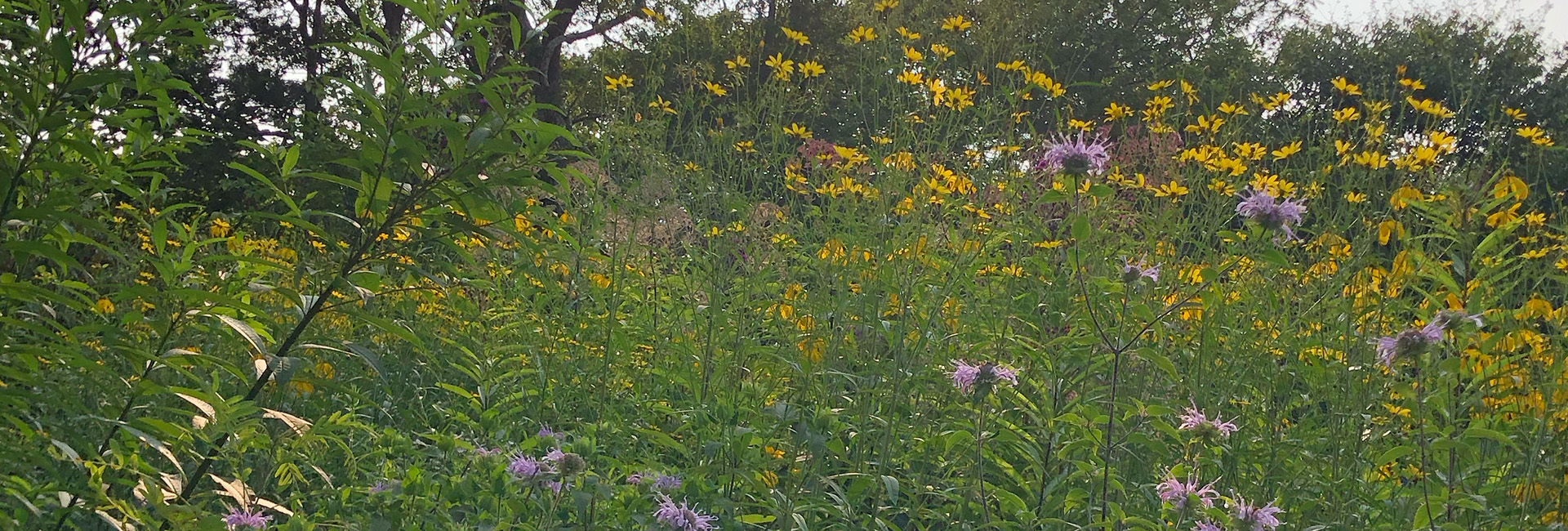

Garden Journal 2.0 with Claire Davis
That classic horticultural memoir, the published journal of a gardener’s daily activities, has taken on a new life with the advent of online media; Claire Davis, a very talented ecological gardener, discusses how Instagram has become her favored platform for communicating her experiences and reflections, and its unique capabilities. Learn more about Claire’s work at Starflower-Gardens.com or email her starflowergardens.ny@gmail.com.
September 16, 2026
Subscribe to Growing Greener on Apple Podcasts | Spotify | Amazon
Transcript
Growing Greener Host Tom Christopher
Welcome to Growing Greener, your guide to environmentally informed gardening. Produced in partnership with the Perfect Earth Project, this program brings you each week some expert who puts you in touch with a different aspect of gardening in partnership with nature. Our goal is to make your personal landscape healthier, more beautiful, more sustainable, and more fun.
This is your host, Tom Christopher, and today I will be talking to Claire Davis, an exceptionally talented, younger, ecologically oriented gardener, about the version of garden journaling practiced by her and many of her contemporaries, an online social media account or Instagram feed. I have long enjoyed the informative and often idiosyncratic print versions of garden journals by my own contemporaries and gardeners of older generations. I contacted Claire to hear about how the shift to a different medium, one that integrates visual and verbal, and that offers an immediacy that traditional written journals cannot match, has changed and in some ways democratized the process of journaling.
Before we go to the conversation though, I want to thank Growing Greener’s sponsor, the Garden Conservancy, a national nonprofit dedicated to preserving, sharing, and celebrating America’s gardens and diverse gardening traditions. Through preservation, education, and public access, the Conservancy helps protect these living works of art for future generations. Learn more and discover gardens near you at gardenconservancy.org.
Welcome to Growing Greener, Claire!
Claire Davis
Thank you so much for having me here.
Tom Christopher
Claire, I want to discuss what I am thinking of as Garden Journaling 2.0 with you. But first I want to hear from you about your involvement with gardening. And I looked at your business website, starflower-gardens.com, and I was struck by the array of great gardens you’ve worked at or been associated with. Not only my own alma mater, the New York Botanical Garden, but also Wave Hill, that fabulous public garden in the Bronx; Stonecrop, which is a wonderful former estate in Dutchess County, New York; Locust Grove, a historic Hudson River estate with a complex of gardens; and Longue Vue, an extraordinary house and garden landscape in New Orleans. That’s quite a resume.
Claire Davis
I’ve been really lucky to work at all those gardens. Right after I graduated, what I knew was that I wanted to work under the umbrella of plant stuff. And that meant that I worked at a New York City park, and it meant that I worked at flower shops. I had taken ecology classes as an undergrad, and I think that was my real starting point.
I had always loved being outside, but I hadn’t considered that as a career. And so once I graduated, I sort of understood that I wanted to be working in a really hands-on way. But it was really great to have the opportunity to be at all these different places and work with so many great gardeners and just see that there were many, many different approaches to gardening.
Eventually, I started my own business. And yeah, I’m just really grateful for all those work opportunities and just the breadth of exposure to gardens that I had during that time period when I was working as an early career gardener.
I think one of the great things about gardening as a profession is that if you’re enthusiastic and dedicated, I didn’t have any formal background in gardening until I went to the New York Botanical Garden. But I think if you’re enthusiastic and dedicated, established people in the field will sense it. They’ll pick up on that, and they’ll give you a chance because that’s really the two, I think, basic requirements for being a good gardener is to be enthusiastic and dedicated.
Claire Davis
Yeah, I think that’s true. And I think it’s one of the reasons that there are so many people in horticulture for whom it’s been a career change. I think that is a really great thing about the field. So, I think you’re right about that. I think it gives people an opportunity to get into the field, even if you don’t have formal training, which is just something I really value about it. It’s really nice to work alongside people who are coming to gardening from very different perspectives and backgrounds.
Tom Christopher
They often bring very fresh and original perspectives on gardening and help to change it, which I think is great. So, now you’re in business for yourself, creating and nurturing ecological gardens for private customers. I really urge listeners to look at your website, which is starflower-gardens.com. I think it provides a great introduction and lots of beautiful projects that you’ve worked on. Thank you.
So I want to add one more personal note that’s pertinent to this conversation. You studied literature as well as ecology at Bennington College, correct?
Claire Davis
I did. I did. From high school, college on, I had sort of expected to do something more closely related to writing and reading as a career, not gardening. When I started taking science classes, it was a big change.
Tom Christopher
Anyway, to set the stage for our conversation, I’ve been thinking for a while about devoting a program to garden journaling, collections of personal reflections and observations gardeners often keep about their landscapes and sometimes publish. I was thinking in terms of written journals, the ones that keep appearing on the scene even now. I got in touch with a friend, though, Duncan Brine, who’s a great naturalistic gardener, who’s much more literate than I am and up to date, and asked him which author he would suggest I contact. Duncan said, don’t do that. Those books are old school. He said that he thought that the more interesting journaling that was going on among younger gardeners these days was to be found among the personal feeds online. And Duncan suggested that I start following you on Instagram.
Claire Davis
That’s really kind of him.
Tom Christopher
Well, it’s been fun, I have to say. So, how will listeners find you on Instagram?
Claire Davis
My handle is @snaptyrurtle, and I have thought about changing it. It was just when I made quickly when I joined Instagram, which I think was in like 2016 or 2017, and I thought about changing it, but I figure I’ve been on there as that for a long time.
Tom Christopher
And so, I have just kept it. I’m going to make it clear here, though. When I did start looking at your work on Instagram, I found myself out of my depth technologically. I am what Duncan criticized, old school. And I’m pretty stuck still in print reporting, although I really enjoy the live conversations I share here on this radio show and podcast. But I found myself really enjoying the spontaneity and flexibility of your posts as @snaptyrurtle?
Claire Davis
@snaptyrurtle, yeah.
Tom Christopher
Tell me about them. What inspires you? I mean, how often do you post and what prompts you to put together a post?
Claire Davis
I mostly just share things to stories these days. I did used to write longer posts. So, when I worked at a historic house museum, I think partly because I was one of the younger staff members and partly because I already had an Instagram account and knew how it worked, I ran the Instagram account there. And when I did that, I was much more deliberate about posting. I was writing things in advance, and I was doing research and talking to staff people.
And I loved doing that. It let me learn about all these different things. And it also let me show visitors things that they wouldn’t necessarily know if they were just there for a house tour or they were just seeing the gardens.
Like, we had this really wonderful archive, so I could go down and pull a nursery catalog from the 1890s and write about that. Or I could ask about the history of the really beautiful linoleum floor in the kitchen. So, that was really fun.
But then, when I started my own business, I had a sense of how much time it took to do that. And I felt, honestly, kind of relieved to go back to posting irregularly, only when I had something to say, or saw someone else’s post that I really wanted to share. And so, I don’t have these super strict parameters around what I share. I try to keep it loosely and mostly related to plants and the natural world. But there’s definitely things that fall outside of that. If I find really amazing ice cream somewhere, I will always share that. But I would say that I use it as a place to think out loud, both about the work that I’m doing and about things that I’m seeing in the larger gardening world. And while I think that the things I share do tend to sort of fall into categories, I do really appreciate the looseness and the informality of it and the fact that it’s not part of my job anymore. So, it can be casual. But in thinking about it for this podcast, I realized that some of the garden books I have that I really love and that I return to the most are also pretty conversational in tone.
And as much fun as I have with Instagram, I have a ton, a ton of garden books.
And I really love historic garden books. And I like having a really wide range. And I think of something like Katharine White, who was the editor of The New Yorker, I think they started as columns, and then her husband E. B. White compiled it into a book [Ed note: Onward and Upward in the Garden] after she died. But she wrote these reviews of seed catalogs that are very funny and very opinionated. And they would totally be useful as well, but they ran in The New Yorker. And I think she would hate Instagram, potentially. Maybe not. Maybe that’s not right. But I think she would have been really good at it.
And so, I think even though the video component is new, and the density and the speed of information is very different, I do think there are some precedents in the world of garden writing.
Tom Christopher
So, tell us about a recent post. And what prompted you to talk about or post about this subject? And what was it about? What form did it take?
Claire Davis
So, I think a recent story that I made, I saw a reel that a designer had made about legibility in gardens. And I think that person was asking people who garden with only native plants to show some examples of gardens that were more legible, because he was sort of struggling with seeing them. And he was maybe a little bit skeptical about the aesthetic of it. And my reaction to that was not that it’s not a fair critique, but that limiting gardens to legibility, I don’t think that’s just a native versus ornamental plant issue. I think that gets at a much older tension in horticulture. And so, I was maybe a little bit frustrated by that post. I didn’t totally agree with it. And I think social media in general can be a place where things can get very tense. People have very strong opinions. And I do try to engage in a way that’s not mean or too harsh.
But I do think it’s a great place to be direct and honest and to have a reaction when you see something that you maybe feel differently about. And so, I shared some images of [Frances Benjamin Johnston], a photographer, a woman photographer in the early 1900s who had taken pictures of estate gardens in Long Island and gardens around New York City, that, to my eye, look quite messy compared to even native plant-focused contemporary gardens. And so, I just wanted to give a little bit of context to that and say that this issue of legibility and focusing on native plant gardens as being particularly messy, I think doesn’t do justice to the full history of wild gardens. And also, just note that there are many other reasons aside from legibility to make a garden. So, there are people who really want to focus on ecological function, but there are also many, many very strong different cultural traditions of gardens. And so, it just felt to me like that should be a bigger conversation, that it needed more context. So, I wanted to add to it.
Tom Christopher
To clarify the term legibility, for those who maybe aren’t familiar with it, I would say fundamentally it’s just the ability for an onlooker to perceive some kind of order or structure in the garden. And it’s something that a naturalistic gardener does struggle with, particularly if you don’t have a background in ecology, because the plants tend to sort themselves out. And there’s a certain legibility in the ecology, but there’s also the aesthetic designed element, and that complicates it.
Claire, I need to interrupt for a moment to remind listeners that this radio station is WESU 88.1 FM, and this program is Growing Greener, a weekly conversation about gardening in partnership with nature. This is your host, Tom Christopher, and today I am speaking with Claire Davis, a very talented ecological gardener, about garden journaling and the feed she contributes to Instagram.
Claire, a lot of your posts on Instagram seem to be just inspired by you come upon a scene or a spot or a detail that just takes your breath away, and you’re going to share that, which is great, because that’s, I think, what inspires most of us about gardens.
Claire Davis
Yeah, I think that’s very true, and I think, to me, I know I’ve mentioned this, but I do have pretty mixed feelings about social media and Instagram, but I have ended up staying on it anyway. I can get really sucked into scrolling, and so sometimes I feel I would like to be on it less, and I do try to be on it less. But I think one of the main motivations for continuing to use it is just being able to share those moments or those images more publicly, especially things that I think other people might not see, either because now I’m working at people’s houses and so those aren’t places where people can see the gardens, and I always make sure to not include people or houses or anything like that. But yeah, for me, it’s an opportunity to share the garden work that I do, but I also have a real love for home gardens, and I love to take pictures of those, and I find them often just as inspiring and sometimes more inspiring than professionally designed gardens, because sometimes they’re just really surprising. So, I think Instagram can be a really good place to share those things.
Tom Christopher
You know, in preparation for this conversation, I did some research. So, I started looking at garden journals, and there’s a long history of them, even in the United States, and it goes back, I think, longer in Europe. I’m currently reading My Summer in a Garden, which was published in 1870 by Charles Dudley Warner, the editor of The Hartford Courant, which is the oldest continuously published newspaper in the United States, and he was a friend and collaborator with Mark Twain. He lived in the same neighborhood in Hartford, and they co-wrote The Gilded Age together. Anyway, My Summer in a Garden, I’m finding it interesting for what it reveals about the state of American gardening and society back then. For instance, Warner apparently came from a Massachusetts Puritan family, and he fills the text with humorous references to biblical texts of preachers. I doubt that would have pleased his parents. But he’s broken with his religious background, but he hadn’t left it behind either. On the whole, the book is introspective and reflective in tone, and that tone and the kind of self-absorbed spirituality that tend to go with it is pretty typical of written garden journals, I think. The online posting, I’m finding, can be reflective. Your posts often are, but they’re far less self-absorbed, I would say, and more spontaneous, which for me makes them more fun. And I suspect that that different reflects the differences in the media. When you’re writing, he wouldn’t even have been typing. Warner would have been writing out longhand and crossing things out, moving things around, maybe literally cutting and pasting. And that’s not the case with Instagram so much, I’m wondering.
Claire Davis
No, I do think it reflects a difference in the medium for sure. But I also wonder, you know, that sounds like someone who understood that he was an important figure, an influential figure, and that therefore his garden is important too. And I think on Instagram, on social media, there’s just a much wider array of people posting and writing. I think there is the sense that it’s not permanent. I know that when I’m posting, I’m not thinking about it as writing for the ages or that I’m trying to leave a legacy. I’m just trying to be useful and hopefully interesting and to be maybe like a square in a patchwork quilt. And I do think that’s very different from traditional publishing. I’m happy with that position. I wouldn’t know what to do with a journal where my expectation was that it would be published. I think I would be really intimidated by that. And so, I think it does lower the barrier for what people are willing and able to share.
Tom Christopher
And of course, the fundamental difference is the much bigger role that visuals play in online posts.
Claire Davis
Yeah.
Tom Christopher
And also the ability of the online audience to post comments and responses. I wonder if that quick feedback is mostly fun for you.
Claire Davis
Yeah, it is. It’s really fun for me. And I think even when it is sharply critical or someone’s sending me a direct message to disagree, I think something that’s happened . . . I’ve been focusing on trying to learn sedges and grasses for the past couple of years, and sometimes I’ll share something, and it’s just not right. And someone will weigh in and say, that’s not what that is. But it’s really helpful to be corrected, I think. Social media definitely . . . People talk about it as a place where people have fewer boundaries in terms of what they say to one another, and I do think that can be true. But I will say that after having worked at public gardens and in a flower shop and in settings with lots of volunteers, it just feels to me like a slightly amped-up version of the kind of harsher things that people are likely to say or the disagreements that happen in those kinds of settings. It feels to me not so different from having an angry customer or trying to navigate volunteers having a disagreement about something. So, I don’t mind that.
I do feel like if I am going to disagree with people about things, there are boundaries, that it shouldn’t be personal, that it shouldn’t be mean or hateful, obviously. But I think also that if I am going to publicly weigh in on things, that I also have to be very open to accepting criticism and some back-and-forth with people.
Tom Christopher
Yeah, although it can be really brutal. I mean, people can be really brutal. I had a Facebook post about a recent program about tolerating rabbits in the garden. The program was about rabbits, and I admitted that my impulse as a young person . . . I grew up, I had a grandfather who was a native westerner and a hunter and taught me to hunt. There were a number of rabbits who I couldn’t keep out of the garden who ended up in the pot. And somebody wrote back, and I said, but I would not do that anymore. And somebody wrote back in and said, you know, a comment said, finally you’re becoming human. And, you know, it’s like, okay, well, you know, I was human before, and we can get into that, but I don’t think this is going in a good direction, so we’re not going to talk about it.
Claire Davis
Yeah, I think that’s the best way to handle it. You know, if it seems like you are just not going to see eye-to-eye with someone, it’s better to just sort of let that conversation not continue.
Tom Christopher
Yeah, because it escalates pretty quickly.
Claire Davis
It does, yeah.
Tom Christopher
Are there other people’s feeds that you follow? Can you recommend any specifically that you like?
Claire Davis
You know, I was thinking about this, and I realized that a lot of my favorite accounts are actually, like, set to private, or they’re quite small. They’re like other gardeners or arborists, and so I’m a little bit hesitant to share that, because I think they don’t want more followers, and I would really encourage people to find people who are sharing things on Instagram, not to become content creators, but just because they, like, enjoy being on Instagram a little bit. But I would say, recently, some of the bigger accounts that I’ve been following that I really appreciate, I think I mentioned @kojobirder. This was the person who made a reel about loudly failing at bird identification, like failing in public, and I just really love that perspective, and he is a much more knowledgeable and committed vulture fan than I am, but I was so excited to find someone who was posting about vultures, so I think that was really fun.
I really enjoy @flora_of_the_american_interior, and that person is located in Texas, and he is talking about native plants and remnant prairies, and I just find it really engaging. I follow an account called @plants.and.culture that I really love. I know that my own garden training and classes tended to lean in a direction that was quite Eurocentric. I learned so much, but I didn’t learn a ton of information about the cultural or economic or labor-related ways that people related to plants, and so I love this account for deep dives into all of those things. And then the other account that I’ve been following more recently is the union at the Lewis Ginter Botanical Garden (@lgbgworkersunited). I think working at public gardens can be challenging as a career, you know, and I think people deserve to be compensated well. I want gardening to really be a solid career for people, and I think they are raising a lot of great points. They’re on strike right now, and I just have loved seeing accounts of their day-to-day work and their experiences at that place. So those were what I thought of.
Tom Christopher
Okay, well, perhaps you could send me information about how people can find these, and we’ll put it with the transcript, which is available through the Perfect Earth Project, my partner. So, in closing, I think you’ve kind of answered this, but given your educational background, have you ever considered composing a written journal?
Claire Davis
I hadn’t thought about it in a long time until you reached out, and I think some of the points that you raised about Instagram being really visual, I would have to find a way to make a journal also visual, which I think is a really great project, and I will try to do it because there are moments where I would like to be more offline. I think there are things that would really benefit from more consideration before I share them, and I just think it would be a fun and interesting project, and mostly I think I haven’t done it because I feel unsure of my drawing skills, but, you know, it’s a journal that no one else will see. It’s a great place to start.
Tom Christopher
Well, that’s for the future, but in the meantime, Claire, you know, we’ve run out of time, but before we sign off, I’d like you to tell listeners how they can find your feed on Instagram. Maybe spell out your handle, and also how they can contact you for gardening help and advice.
Claire Davis
Sure. So my handle is @snaptyrurtle, and it’s S-N-A-P-T-Y-R-U-R-T-L-E. I think that’s right.
Tom Christopher
It is, it is, yes.
Claire Davis
Okay, great. And you can contact me via my website, and I will also send you my work email, and maybe that could go in the transcript notes as well. But, yeah, I love hearing feedback from people either on Instagram or email, so if people have resources in terms of things that I should be reading or accounts to follow or anything, just thoughts, I am always interested in hearing them. Good, and one more time, the address of your website is? It is starflower-gardens.com.
Tom Christopher
Okay, well, thanks so much for taking time to speak to me this morning. It’s been really fun, and I think really interesting.
Claire Davis
Thank you so much. I really appreciate it. Glad to be on here.
Tom Christopher
As I noted at the beginning of this week’s episode, in addition to my recent interest in online garden journals, I remain an enthusiastic follower of traditional print versions. I recently discovered one published in 2022 by the Irish author, sculptor, and rewilding enthusiast Owen Dalton. It’s an account of how he rebirthed 73 acres of ancient Irish rainforest on an old, degraded farm by fencing out the voracious wild goats and introduced Japanese sika deer, removing invasive rhododendrons, and nurturing the native plants still surviving in remnant specimens and the seed bank. Titled, An Irish Atlantic Rainforest: A Personal Journey into the Magic of Rewilding, it is a perceptive account of humanity’s impact on the ecosystems of Ireland with detailed insights drawn from historical and paleontological research. It also offers a deeply informed and practical view of how Ireland’s lost forests and their rich complex of plants, animals, and people can be reborn.
That brings us to the end of this week’s Growing Greener. Please join us again at the same time next week on this radio station, WESU 88.1 FM for another episode, or listen to Growing Greener as a podcast at www.thomaschristophergardens.com. If you have comments or suggestions, please share them with me, Tom Christopher, via the same website, www.thomaschristophergardens.com. Growing Greener is produced as a community service in partnership with the Perfect Earth Project, a nonprofit dedicated to educating, engaging, and inspiring individuals, land care professionals and decision makers to adopt toxic-free, nature-based, and climate-responsible landscaping practices.
Transcribed by TurboScribe.
About Growing Greener
In 2025, Perfect Earth Project partnered with Thomas Christopher’s Growing Greener podcast. Tune in every week to listen to Tom talk with gardening experts and leaders, who are working and living in harmony with nature. They share their different perspective on how to make your personal landscape healthier, more beautiful, more sustainable—and more fun.
Support for Growing Greener comes from the Garden Conservancy, a national nonprofit dedicated to preserving, sharing and celebrating America’s gardens and diverse gardening traditions. Through preservation, education, and public access, the Conservancy helps protect these living works of art for future generations. Learn more and discover gardens near you at gardenconservancy.org.
Share