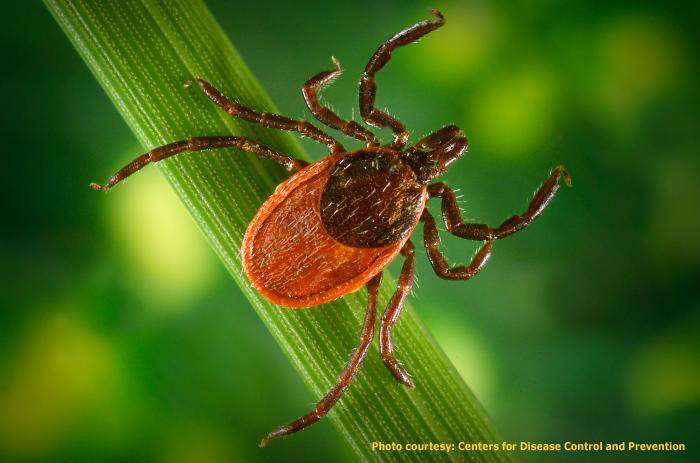

Ticks: Facts and Common Myths
What’s fact? What’s not?
To learn more about how to protect yourself and your family, click here.
Not True
- Ticks can jump or fly. (They only crawl.)
- Ticks fall on you from trees.
- All ticks are infected with disease and can infect you.
- Chickens, turkeys, guinea fowl, and possums are effective tick population controls.
- Ticks die in the winter.
- “Organic” tick sprays are harmless. (Perhaps less harmful to humans, but they are insecticides and will kill insects, including butterflies and bumblebees.)
- Leave a tick attached until you can have it removed by a doctor. (It is important to remove a tick as quickly as possible. Use tweezers and pinch as close to the skin as you can.)
True
- Ticks need cool damp places for refuge and shelter. They cannot spend much time in the sun. The amount of time varies with the type of tick.
- Ticks “quest” for hosts by climbing up on grasses and low twigs and waving their “arms” to latch on.
- Tick Tubes and boxes are primarily effective for deer or blacklegged ticks only, not for lone star or dog ticks.
- A good and easy way to safely dispose of a tick after it is removed is to wrap it in Scotch tape.
- Seresto dog collars contain Imidacloprid, a neonicotinoid (systemic pesticide). Special cautions are recommended for use in homes with pregnant women and children under 6 years old.
- Newly hatched ticks are called larval ticks, not chiggers (which are mites in the Trombiculidae family). Larval ticks are almost invisible and their bites produce tiny, red bumps, which are very itchy.
- Alpha-gal syndrome is carried by the lone star tick.
- Larval lone ltar ticks are not likely to carry Alpha-gal.