
In our last story we shared Landscaper Language, our guide to help you speak with your land care team to get the help you need to be PRFCT. Now what? Once you’ve made the PRFCT promises, communicated your plan with your landscaper, and are about to start converting your practices from conventional methods to nature-based ones, what can you expect to happen as you cease using chemicals, stop over watering, and start incorporating native plants? “Fall is an ideal time to begin the transition to rebuild your yard’s long-term health,” says Perfect Earth’s Living Lands Director Tim Wheeler. Once you make the switch, your yard will be so much healthier—and so much more alive. Landscape designer and Perfect Earth Project founder Edwina von Gal and Wheeler share what you can do for a smooth transition.
Rejuvenate your lawn in fall.
One of the best things you can do for a healthy lawn is to overseed your lawn every year—ideally in the fall, but it’s fine to do any time to fill in bare patches. Lawn grasses are cool season grasses. They prefer cool temperatures to germinate, typically when the lows dip below 65 degrees at night, says von Gal. Ask your landscaper or your local nursery to recommend a blend suitable for your property. “A good rule of thumb for people living in the Northeast is to start overseeding around Labor Day,” says von Gal. “We recommend a tall turf-type fescue mix that has only 10-20% bluegrass.” Tall fescue produces deep roots making it drought tolerant and resilient, while fussier bluegrass will spread easily and green up quickly. “Keep seeding until the ground freezes,” says von Gal. “You can repeat the process in the spring if you have patches that need attending.” Then mow it high and frequently with sharp blades. Grow to 3.5 inches and cut to 3 inches. And never irrigate on mow day. And the other best thing to do is to leave the clippings—Free food for your lawn!
Water wisely.
If you water your lawn every day for a short period, the moisture remains close to the surface, which is where the roots will stay. Shallow rooting makes them susceptible to drought. Frequent watering also means the grass never dries out, which can lead to fungal problems and grubs. “So many landscaping issues that people use chemicals to treat are caused by improper irrigation,” says Wheeler.
Before you start your transition and begin cutting back on irrigation, give your lawn a long, deep drink and then taper down to twice as long and half as often as you had been, says von Gal. Keep reducing it until you’re watering only when needed (when soil is dry 3- to 4-inches down) and deeply (for at least 30 minutes, depending on your soil type). In the spring, when cool season grasses are most actively growing roots, hold off irrigating until the soil is dry (generally June in the Northeast), which encourages the roots to grow deep, looking for moisture away from the hot sun. Then you are ready for a PRFCT watering program of seldom and deep.
Everyone wants us to give them a prescribed irrigation plan, but prefer that you water according to need, which depends on the weather, the amount of sun you’re getting, and your soil type. Not every part of your property is going to be the same. “You’ll know when your lawn needs water when you leave footprints when you walk across it,” says von Gal. That said, a healthy lawn with good roots should be fine with watering once or twice a week in hot weather. We recommend using a soil probe for checking moisture levels and root health plus a phone based irrigation clock for easily managing your irrigation settings. No more “set it and forget it”! Watering infrequently for long periods promotes deep root growth which helps your lawn during periods of no rain.
Watch for invasive plants.
Invasive plants can be a headache in your garden. They grow too well and can escape into the wild where they can overwhelm more ecologically valuable species. Learn to recognize the common the invasive plants in your area. Ask knowledgeable friends, use iNaturalist, talk to your local cooperative extension, seek out your local invasives management group to know what to look for at all different lifecycles, says Wheeler. Be vigilant about removing them (without dangerous chemicals) before they go to seed and spread. If you remove a large patch at home, replace them with native plants as soon as you can to prevent another invasive plant from moving in. (Read more about how to manage invasive plants without chemicals here.)
Manage expectations.
In early spring, conventional lawn care companies douse lawns with chemical fertilizer so that the lawn will turn artificially green artificially quickly. But in nature, cool season turf grass doesn’t start sending up new growth until the weather is right, generally late spring. Pumping the lawn full of chemicals makes it more susceptible to disease because it’s pushing unnatural growth at the wrong time of year. The first bright green lawn on your block is no longer a badge of honor! Instead, allow your lawn to green up naturally.
If you’ve been using a lot of herbicides and fertilizers, your soil might not have much life in it. It can take some time before it comes back to life. But it will. Feed your lawn by leaving mulched grass clippings after mowing. Ask your landscaper to use a mulching mower to chop them up finely or run the lawn mower over clippings twice to cut them up into tiny pieces. And make sure your irrigation is not running on mowing day and the lawn is dry before cutting.
“If your lawn has developed thatch, it is not the fault of leaving the clippings but the chemicals—herbicides (which are acidic) and fertilizers (which are salts),” says von Gal. “It’s like it’s been pickled.” Scratch the patch and overseed it with a fescue blend.
Embrace a new aesthetic.
Nature dislikes a monoculture. And, besides, who wants a lawn that looks as artificial as astroturf these days? Why not go wilder and encourage a wonderful mix of clover, a nitrogen fixer, and wildflowers like violets, pussytoes, and spring beauties, to grow in your lawn. They will support the ecosystem, boost biodiversity, and will adorn your lawn with jewels. Bonus: some of these plants might move in on their own when you stop using (toxic!) broad leaf killers.
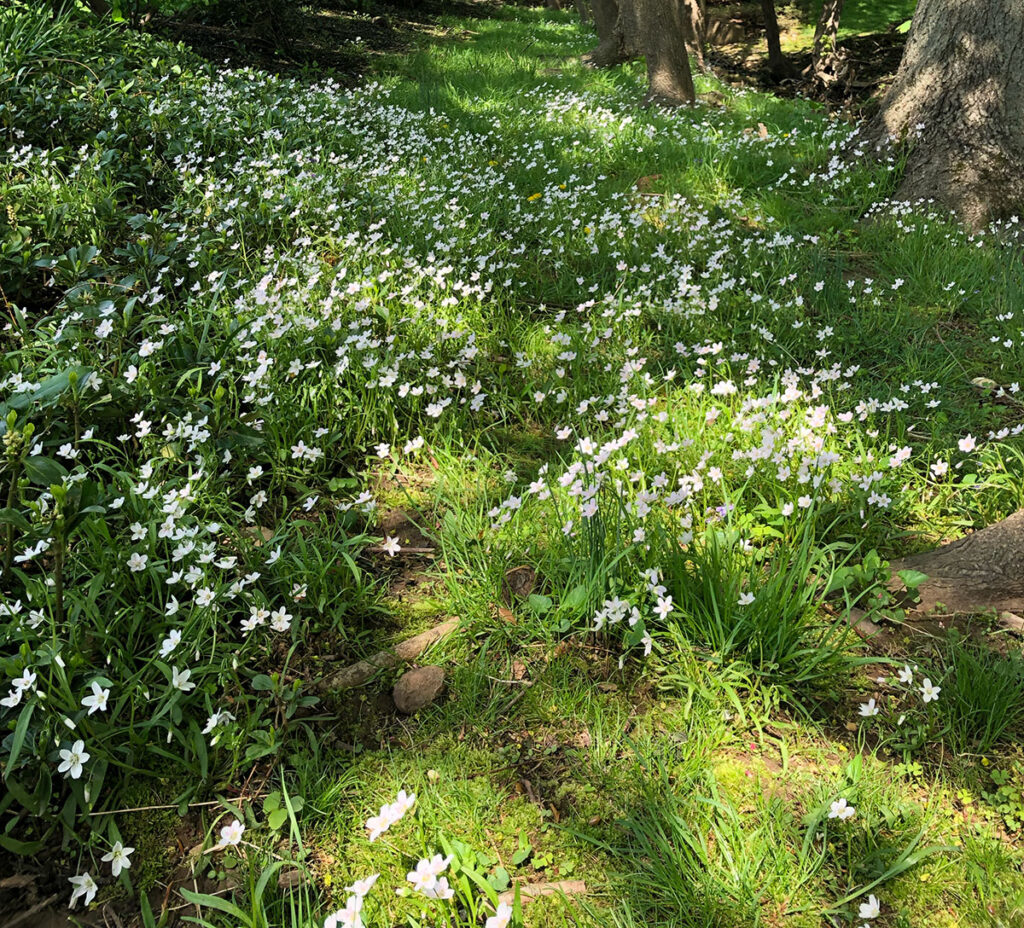
Encourage biodiversity in your lawn like these adorable spring beauties (Claytonia virginica) wildflowers, which attract native bees, flies, and wasps.
Let your garden relax and breathe. Put down the loppers and put away the blowers. Plant shrubs and trees so they have the space to grow freely (no “lollipops” or tightly shorn edges). Don’t worry about shrubs intermingling. You’re creating what song birds love best: thickets! Leave dead wood and stems for habitat. And let insects eat what they need. They won’t do any real harm—think monarchs on milkweed. “Don’t kill it if you can’t name it,” says von Gal. “Starting in mid-August, leaves on trees have done their job. They’re no longer adding value to the tree. It is the tree’s gift to the insect world.”
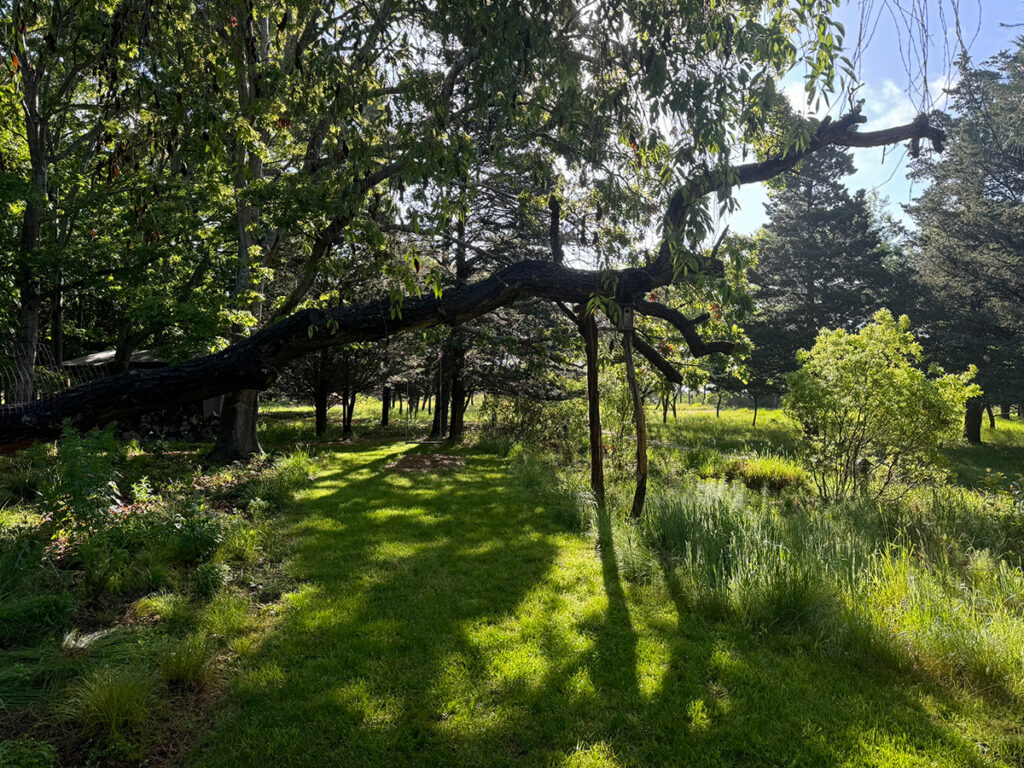
Get creative with fallen branches on your property. Weave “baskets” for attractively saving excess leaves, craft habitat stacks, and build dead hedges. Use what your land gives you to beautifully close the loop.
Leaving deadwood is important for wildlife like woodpeckers, insects, and other animals.
Be patient.
“Before you panic about what could go wrong, know that every ‘bad’ thing that might happen to your property is usually a symptom of a problem, or the start of something positive,” says von Gal. If insects are eating leaves, wait for a natural predator to appear. If a plant is struggling, investigate the cause and figure out a solution. Put your finger in the soil. Has it been over or underwatered? Is the soil compacted around it? Are the roots themselves hard and dry? Are they still trying to recover from being pot bound? Would it prefer a different place in your garden? Give a plant some time to respond to your attention, but if it isn’t happy, maybe it never will be. Let it go and try something new—a native plant, of course! And always choose the one that is best for your conditions—right plant, right place.
Welcome wildlife.
And that means not just monarch butterflies and chickadees, but also all kinds of caterpillars (who become the butterflies and moths, we love not to mention provide birds with food), predators like snakes, foxes, owls, and hawks (which eat voles and mice), and yes, even deer. (Read more about how to live in harmony with deer.) A biodiverse yard keeps the ecosystem healthy, which means fewer pests and an infinitely more vibrant garden.
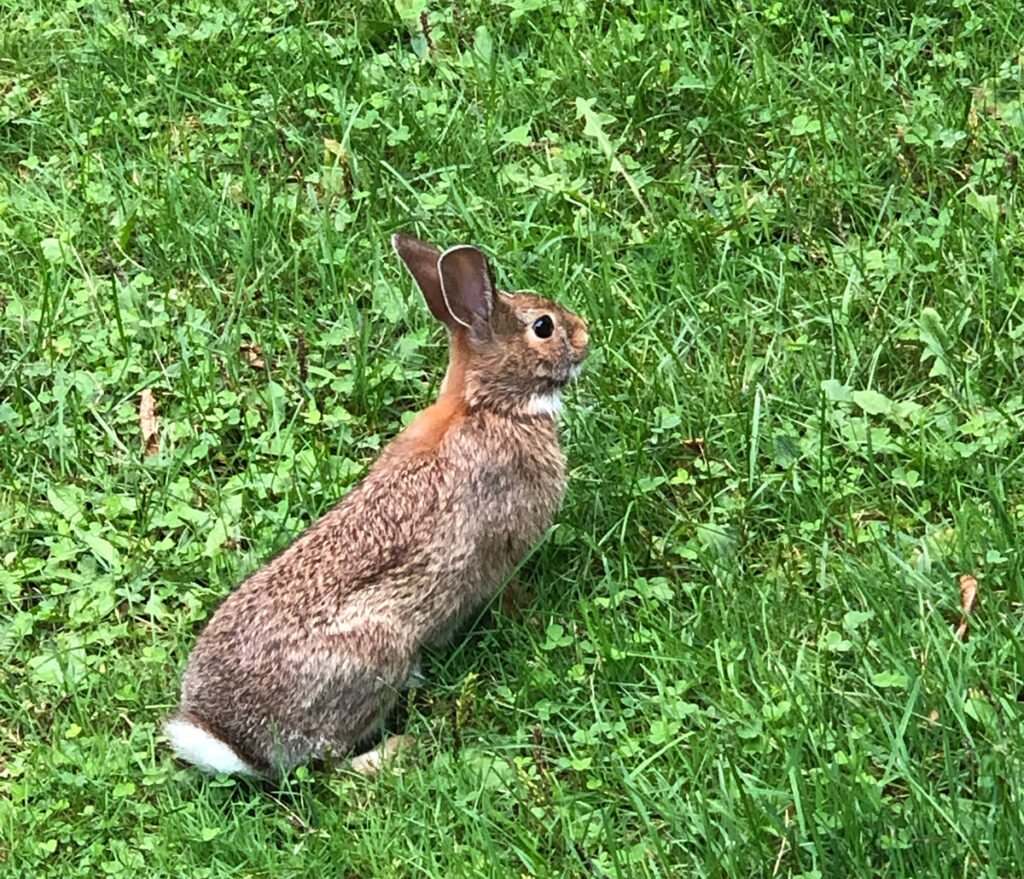
Eastern cottontail bunnies can get a bad rap for the voracious appetites but when you have a diverse landscape and a lawn full of tasty clover, they won’t eat too much of any one thing. (Learn more by listening to this Growing Greener podcast with anthrozoologist Amy Free.)
When you make the transition from conventional landscaping to nature-based practices you’re welcoming nature back into your yard. As Gary Snyder wrote in his essay “The Etiquette of Freedom,” “Nature is not a place to visit. It is home . . . ”
by Melissa Ozawa
Share