
Updating Our Attitude Toward Insects
Gardeners habitually distinguish between “bad bugs” who feed on their plants and the “good bugs,” the predators who feed on those herbivores. As Aaron Anderson of the Xerces Society points out, you can’t have one without the other and the goal should be encouraging a functioning, well-rounded insect community in your landscape.
October 21, 2026
Subscribe to Growing Greener on Apple Podcasts | Spotify | Amazon
Transcript
Growing Greener host Tom Christopher
Welcome to Growing Greener, your guide to environmentally informed gardening. Produced in partnership with the Perfect Earth Project, this program brings you each week some expert who puts you in touch with a different aspect of gardening in partnership with nature. Our goal is to make your personal landscape healthier, more beautiful, more sustainable, and more fun.
This is your host, Tom Christopher, and today I will be speaking to Aaron Anderson, an educator with the Xerces Society for Invertebrate Conservation. In recent years, the promotion of pollinator gardens and butterfly habitat has helped to moderate gardeners’ traditional suspicion of insects. However, we still tend to divide insects into the categories of good bugs and bad bugs. Promoting the first as a way of hitting back at the second. This discrimination demonstrates that we need to expand our understanding of the invertebrate world further.
Before I go on to my conversation with Aaron Anderson, though, I want to thank Growing Greener’s sponsor, The Garden Conservancy, a national nonprofit dedicated to preserving, sharing, and celebrating America’s gardens and diverse gardening traditions. Through preservation, education, and public access, The Conservancy helps protect these living works of art for future generations. Learn more and discover gardens near you at GardenConservancy.org.
Welcome to Growing Greener, Aaron!
Aaron Anderson
Well, thanks so much for having me, Tom. It’s a pleasure to be here.
Tom Christopher
Aaron, for listeners who aren’t familiar with the Xerces Society, could you describe what that organization is and what it does?
Aaron Anderson
Yeah, so we’re an invertebrate conservation organization. We’ve been around since 1971. We work to protect invertebrates, insects, lots of pollinator conservation. We have people working on freshwater mussels. So, we really work in all sorts of areas, and we have people doing on-the-ground conservation work. Like what I do, I work a lot in urban, suburban areas. We have a lot of team members who are working in agricultural areas, working to add habitat to working farms and change practices. We have people working in communities, doing outreach. So , we kind of work in a lot of different areas. But our goal is to conserve invertebrates through conserving their habitat.
Tom Christopher
What specifically is your role within the organization?
Aaron Anderson
So, I’m on the pesticide reduction team, and I work in residential landscapes, I guess I would say, in suburban and urban landscapes, working to reduce pesticide use and encourage pollinator-friendly gardening practices. So, I kind of dabble in a lot of different things. I do some outreach, do a little bit of research sometimes when the opportunity pops up. I get to do a lot of outreach with home gardeners as well as occasionally parks departments, different places within kind of our urban and suburban landscapes where we can work to conserve pollinators.
Tom Christopher
Well, that sounds perfect for what I want to talk about today. I got in touch, Aaron, because I think there’s a change that gardeners need to make in their terminology and in their attitudes with respect to insects. And it’s a change that, in my view, is long overdue. So, I’m old enough that I can remember the era when gardeners’ immediate reaction to any perceived problem with some insect was to reach for the insecticide. In fact, the general attitude when I started gardening was that a garden was best with no insects at all. That era has passed, thankfully, although insecticide use is still much too prevalent, I think. I’m sure you would have things to say about that. But most gardeners are now aware of classes of insects, such as the pollinators you mentioned, that benefit their garden plants, and that’s great. But too many of us are still stuck in a “good bug, bad bug” pattern of thinking. And that is we define insects that feed on our plants as bad, and insects that prey on these herbivores as good. And we want to beat back the so-called bad ones and promote the so-called good ones. And that’s a simplistic attitude that doesn’t reflect what’s really going on in the garden, does it?
Aaron Anderson
Yeah, this is such an excellent question, Tom. And I really love this reframing of this good bug versus bad bug dichotomy. And you mentioned that in the past, the idea of a good garden having no insects at all is so kind of horrifying to me thinking about that, because insects do such amazing things both for ecosystems and for us. Yeah, I think, as you were mentioning, this kind of good bug, bad bug breakdown really oversimplifies both ecosystems themselves and also the organisms themselves. I think taking a step back on this topic, a fact that I like to share a lot is that only about 2% of insect species are what we would even consider pests, species that cause economic or health damages to people, and the rest are actively beneficial to us or to ecosystems. And as you allude to as well, pests do play ecological roles often as well.
And I think that’s another really important thing to touch on, is the idea that a pest really is the human construct and it is context dependent. So, if you take mice, for example, you know, mice in the woods are great. They’re living their little mice lives. But in our house, we don’t like that as much. That’s not as great. So, that context really is important when we’re talking about pests in gardens.
So, I think your point about reframing that view, just because an insect is an herbivore doesn’t mean it’s a pest. You know, often these populations of herbivores are kept in check by the predators and the parasitoids that will live in our gardens. And these herbivores themselves are really essential and foundational parts of our ecosystems. They’re fed on by all sorts of other insects that are really important, but they’re also eaten by other wildlife, birds, for example. About nine in ten bird species feed on insects at some point in their life. And this can be a really, really huge number of insects. For example, Doug Tallamy, who many of your listeners might be familiar with, calculated that a clutch of chickadees needs to eat almost 10,000 caterpillars to fledge a nest, which takes place in about three weeks. So that’s up to 450 caterpillars a day, which is really an astounding number.
So yeah, herbivorous insects can be really numerous. And because of that, they’re really important as a food source. I just would add on at the end here, too, another common misconception with this good bug, bad bug, hard delineation is that natural enemies, so these are insects that are predators or parasitoids that consume pests and herbivores, I should say. A lot of our predators and parasitoids are actually omnivores. There’s many species of predators that will supplement their diets with nectar or pollen or can eat those things when suitable prey isn’t around. So, the whole thing is complex. Ecology is complex. It’s not easy to put things in boxes. And I think it’s good to take that step back and think about how can we support this diverse and robust garden ecosystem. That’s kind of the best way to look at this holistically.
Tom Christopher
Just for starters, I want to point out that you as a gardener won’t have a healthy population of predacious insects in your garden if you somehow manage to deplete their food source, the plant-eating insects.
Aaron Anderson
Exactly.
Tom Christopher
So, if you do figure out a way to wipe out all the plant-eating insects, you’re not going to have what you consider good bugs. The whole thing is contradictory.
Aaron Anderson
It really is, yeah.
Tom Christopher
And in any way, the plant-eating insects, as you say, are essential to the garden ecosystem because they’re a foundation of the food chain that feeds birds, amphibians, and ultimately all the rest of our wildlife.
Aaron Anderson
All sorts of other amazing creatures and wildlife that you can see in your garden. Exactly.
Tom Christopher
My experience as a gardener has taught me that what we’ve actually got in the garden is an ever-changing community of different insects that interact in all sorts of ways and that the less we intervene, the more likely it is that these different insects will establish a more or less self-regulating balance between themselves. Would you agree with that?
Aaron Anderson
Yeah, that’s really, I think, the goal, I would say, in our garden ecosystems is this kind of more balanced, self-regulating ecosystem, and I think it’s really neat that you’ve observed that in your home garden. I’ve had similar experiences.
I think lots of times just taking that step back and letting nature take that first step and do its thing is often a great solution as opposed to rushing to try to solve some sort of pest issue. Just this past year, I had a bunch of aphids on a few plants, and instead of trying to do something right away, I just waited, and sure enough, lady beetle larvae showed up, chowed down on those aphids. One lady beetle can eat up to 5,000 aphids in its lifetime, and it took care of that issue.
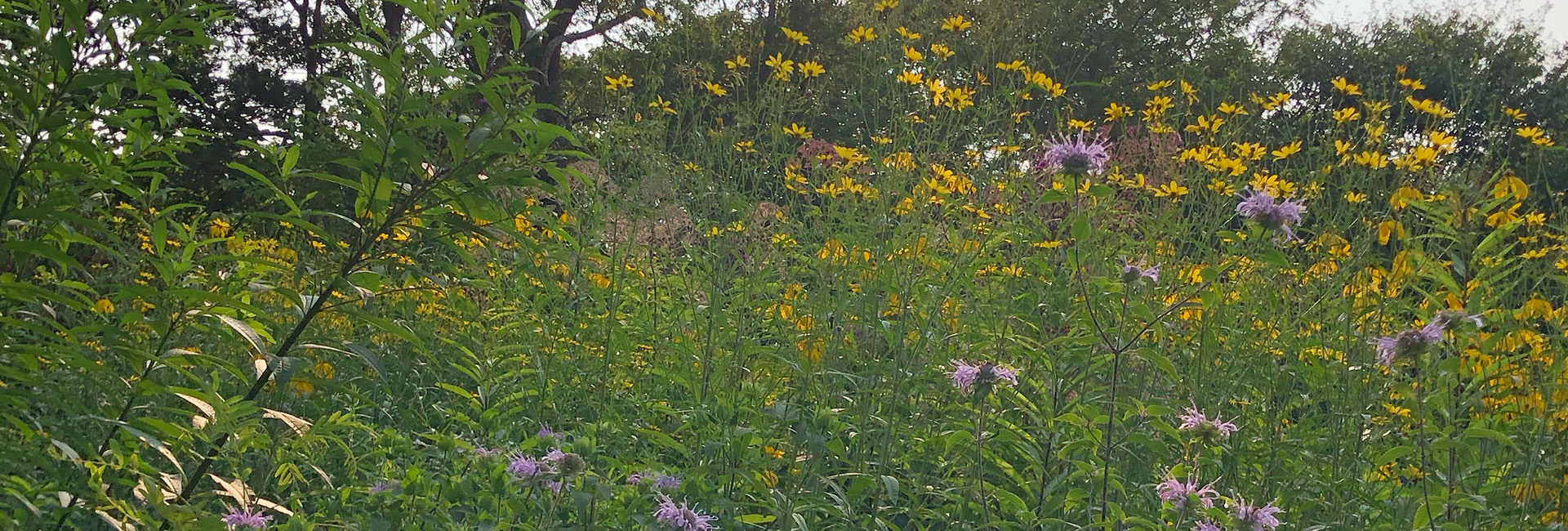
I think, in general, ecological systems, including our garden ecosystems, are just more and more resilient the more diversity you include. My focus is obviously native pollinator gardens, and if you’re including a diversity of plants, plants that bloom at different times, have different sizes, different structures for microhabitat for all sorts of different insect species, you’re really going to support this really robust community of invertebrates, including, yeah, those predators and parasitoids that will help keep any potential pests in check. So, just trying to build that robust garden ecosystem is such a wonderful way to both provide the habitat for these species that we want to conserve, but then also it will help keep pest insects in check as well.
Tom Christopher
I also want to add that my understanding that it isn’t just our use of insecticides that can upset this balance of population. It can be just poor gardening too. If, for instance, we add too much nitrates to the soil and irrigate really heavily so that you get this flush of soft new growth on your plants, that’s likely to bring a proliferation of aphids, because they will come to sip the sap, drain the sap from these soft, lush leaves. And so if you’re constantly having problems with aphids in your plants, well, maybe you need to think about how you’re doing things and dial back on that too.
Aaron Anderson
I think that’s a really great point, Tom. I think that one of the things we talk about a lot is this idea of preventative practices, right? And I think what you were just saying fits right into that, where you’re making sure that you’re having, as people say, right plant, right place. You know, the plants are in the right conditions, but then you’re also watering and fertilizing appropriately for that plant and its needs. And again, I am often encouraging people to garden with native plants for wildlife in particular. And a lot of those species, once they’re established, they really don’t need much supplemental irrigation or fertilization. You can let them just do their thing. So, I think that’s a really great point, that making sure that the practices you’re using aren’t ones that are potentially causing pest issues.
Tom Christopher
Aaron, I need to pause here briefly to remind listeners that this radio station is WESU 88.1 FM. And this program is Growing Greener, a weekly conversation about gardening in partnership with nature. This is your host, Tom Christopher. And today I am speaking with Aaron Anderson of the Xerces Society about the need for gardeners to take a more inclusive view of insects in their landscapes.
So Aaron, I rarely use actually the word pest with regard to insects anymore, but I will apply it actually to some of the introduced herbivorous insects, such as Japanese beetles and spongy moths that lack effective predators in North America. So, they’re liable to just proliferate out of control and cause serious problems. Attacks by them may force the gardener to take control measures. But even then, the control measures should be carefully focused and avoid causing collateral damage to other insect bystanders. I’m thinking specifically of when I had an explosion of Japanese beetles in my garden in rural southwest Massachusetts. And I’m pretty sure that I must have introduced them on plants I brought in because the garden is, oh gosh, about a mile from the nearest neighbor out in a forest.
Anyway, I was able to reduce them to negligible numbers by spreading milky spore disease granules over my lawn and watering them in. That’s a bacterial disease, milky spore, that attacks the larval form of the Japanese beetle, the white grubs who burrow down into the soil. So, the disease kept the Japanese beetles from reproducing.
And this disease is specific to Japanese beetle grubs, so it doesn’t have a negative impact on other insects. So that’s, I guess, an example of what I’m talking about, trying not to cause collateral damage. Because if I’d gone through and sprayed the garden with some sort of insecticide that would kill the beetles, I might have caused so much damage to the other populations and thrown everything out of whack that the whole insect community would have taken a long time to recover any sort of balance. And I’ll include that a lot of the organic insecticides are offenders in this regard too. And in fact, some of them are really broad spectrum and kill a lot of things.
Aaron Anderson
That’s a really great point, Tom. And that’s actually really neat to hear that you had success with milky spore for Japanese beetle. You make a great point about invasive species like Japanese beetle, which can kind of complicate this a little bit. But, you know, I think I would say trying to include that diversity in your yard with that wide range of different natural enemies, it’s not going to solve the issue, but different wildlife, like birds, will feed on things like Japanese beetle.
But then, yeah, trying to find solutions that are targeted, like you said, like in your case, milky spore worked for you, which is wonderful because, yeah, a lot of the other solutions will also be toxic, unfortunately, to the broader insect community in your yard. And one thing I would say too, taking a step back, thinking about, you know, insecticides, not only are they harmful to wildlife, they’re often not the most effective solution. You know, one of the issues with pesticides is they only address the symptom of the pest, the outbreak, not the cause of the outbreak.
So, one of the things we like to say a lot is, you know, this is like, you know, taking Advil for a headache when really you need to stop staring at computer screens as much or get new glasses. And, yeah, kind of to the point you were making, the insecticides that are often used to kill pests in yards are broadly toxic. They’ll kill the target pest, but also everything else in your yard that comes in contact with them. So, this is why in residential gardens in particular, we really encourage people to, yeah, try to find those other solutions. Pesticides are recognized as one of the leading causes of insect declines. And even if you’re following the label on a bottle of pesticides, these products really can still cause harm to beneficial insects.
And, yeah, a lot of our natural enemies are very susceptible to these insecticide applications, and to your point, you know, organic products, yeah, you know, they can still cause harm, you know, depending on the ingredient. Like you said, many of them are broad spectrum. Some of them are much lower risk, but you shouldn’t assume just because something is an organic approved pesticide that it’s risk-free.
For example, pyrethrum is an organic approved pesticide, but it is highly toxic. You know, it will break down much faster than the synthetic pyrethroid insecticides, but it’s still, you know, if a bee comes in contact with it, it’ll kill or harm it. There are some lower risk organic options like horticultural oils, for example. But again, if you do apply them directly to a beneficial insect, it’ll also kill them. So, you know, this is a reason that if you do decide to use a pesticide, even an organic approved one, really trying to make it as targeted as possible using the least effective amount is really good practice. And I do want to note, talking about organic pesticides, I’m not trying to compare between production methodologies in organic agriculture and conventional agriculture. Organic agriculture, as a practice, is, you know, much lower risk. It’s great, but it doesn’t mean that the pesticides used are risk-free. Right.
Tom Christopher
I didn’t mean to dis organic practice either. I mean, focusing on the health of the life in the soil and the health of the soil and going on from there is fabulous. So I’m a great admirer of what that’s brought to the table. But I did want to mention that just because a pesticide is organic doesn’t mean it’s without any negative impacts on the garden ecosystem.
Aaron Anderson
I think that’s a really great thing, because I think a lot of people will think something’s organic, which means it’s safe. Or also, you know, I often encounter this with just things that people are familiar with at home. You know, I’ll run into people who are using Dawn dish soap or vinegar to try to kill something. And again, just because it’s something that, you know, you have in the kitchen covered at home doesn’t mean it’s safe to insects. And most of the time it’s not.
It still will kill beneficial insects. And we don’t encourage people to use a lot of these kind of home remedies necessarily because, yeah, they’re also risky to pollinators and other soil biota, things like that. So, again, just because something is something that you’re familiar with or it sounds like it might not be toxic doesn’t mean it isn’t toxic.
Tom Christopher
One thing that fascinates me is the multitude of different ways that insects can interact with each other. And I’ve been learning about this. It’s been a steep learning curve for me, given my background in the Better Living Through Chemistry days. You know, I mentioned to aphids to you when we were scheduling this conversation. So, aphids suck the sap out of plants, which can temporarily damage and distort the plant’s growth. But aphids are also as a food, as you noted, for other insects, such as sometimes wild syrphid fly larvae, which mature to become important plant pollinators. So, you know, that’s a benefit of aphids in a way. And aphids do feed birds. I mean, hummingbirds in particular use them as food for their nestlings. And then I’ve learned that ants will actually farm aphids. They’ll herd them onto the most nutrient-rich parts of the plants, letting them extract the plant’s sap. Then the ants swallow the sugary honeydew that the aphids excrete as a waste product. And the ants take it back to their nest to feed to their queen and larva. And meanwhile, the herder ants are protecting the aphids against predators such as syrphid fly larvae. So it’s very complex. You know, when you start getting into this, it’s not just this dichotomy between good and bad, but trying to understand the role that all these different insects play in interacting with each other.
Aaron Anderson
Those are such cool examples, Tom. I love that you brought them up. I think ants are really fascinating. There’s so many of these little really beautiful and really cool interactions that happen when you kind of sit down and observe in your garden. And when you start reading about them, you know, you were talking about the ants kind of herding the aphids. There’s also ants that will protect certain caterpillars, butterfly larvae, and they’ll defend them from parasitoids and predators. And those caterpillars will also secrete this honeydew, this sugary substance, and the ants will feed on them. And one of my first jobs out of undergrad, I was doing endangered butterfly conservation in the Marin Headlands, just across the Golden Gate Bridge from San Francisco, and we were working to conserve the Mission Blue Butterfly. This little tiny blue butterfly, the caterpillars feed on certain species of lupine up in that kind of San Francisco Bay area. And I actually saw some of those ants, and they’ll go up to the caterpillar, and they drum on it to let them know it’s there and secrete honeydew. It’s just such, such cool interactions.
Yeah, and I think the other thing, as you were alluding to, is so many of these interactions are really not as straightforward as the food chain you learn about in school. It’s very much this complex web of interactions, so complex, both direct and indirect interactions. Yeah, it includes all of these different insects that you’ll find in your yard. I really just encourage people to kind of sit down in the yard for 10 minutes, or if you don’t have a yard, sit down in a park for 10 minutes. Just look at some flowers, see all of the cool insects that are coming and going, seeing all of these really neat interactions that you might be able to observe. There’s just so many great interactions going on out there.
Tom Christopher
Aaron, is there a relationship between insect abundance and diversity in your garden, and its general biodiversity in terms of plants and other wildlife? I understand the relationship varies depending on the circumstances and the site and all kinds of other variables, but does there tend to be, I guess, is what I was saying, a relationship.
Aaron Anderson
That’s a great question, Tom. Yeah, so in general, the more plant diversity you have, the higher insect diversity you’re going to have. When you think on one extreme, something like a turf lawn, that’s essentially a monocrop where you only have one plant, and it’s only going to be able to support a few herbivores that might be able to feed on that plant, and then there’s not going to be that many, as you go up to the next trophic level, not that many predators that are going to be able to feed on it. It’s not going to support things like birds, other wildlife, but if you have this wide diversity of different plants, and you have plants that are flowering at different times of year, because different insects emerge at different times of year, and might have really short lifespans. They might only be flying for a couple of weeks, and they might need, for pollinators, they need pollen and nectar, and again, many of our predators also will feed on pollen and nectar as well, so having plants that flower all season long, having a variety of different shapes and sizes that provide what’s called microhabitat, so little shady spots for things like parasitoids to roost during really warm, dry times, so they don’t dry out, different species so that things like different types of butterflies have their host plant that they require, all of these things are going to increase the number of different insect species that are able to utilize that habitat, and really increase that biodiversity in your yard. So yeah, the bottom line is, the more plant species that you can pack into a garden, the higher insect diversity you’ll tend to see.
Tom Christopher
And I suspect the reverse is true too, that if you really reduce your pesticide use, and encourage a diversity of insects in your yard, then they’re going to bring a more diverse community of wildlife along with them, and support plants in different ways too.
Aaron Anderson
Yeah, totally, I think that’s a really great point. I think your point about decreasing insecticide applications, or hopefully eliminating insecticide applications, is a really good one. You know, many of our natural enemies, those predators and the parasitoids, I realize I’ve been saying the word parasitoid, and I haven’t defined it, so these are often wasps, sometimes flies, that tend to be really small, and what they do is they lay an egg on or in their host insect, and then it hatches, and it consumes the host insect, and eats it, often as it’s still alive. So, it’s a little bit kind of like alien, it’ll emerge. But they’re really cool, they’re really fascinating, they’re really tiny, they can’t sting you, and there’s hundreds of thousands of different species, and you definitely have a bunch in your yard, and they do an incredible job helping control herbivores and pest insects.
So, anyway, many of these are highly sensitive to pesticides, and one of the things that makes an herbivore sometimes become more of a pest, is the ability to reproduce really quickly. So, if you do use an insecticide and you kill off these different insect species in your yard, when the pest does return and starts to reproduce, there’s often a population explosion, and then the predators and parasitoids can’t match that, and you’ll just have a much higher abundance of the pest in the end, and not those other really great insects that we want to conserve. So, that was a little tangential, but going back to your point, if you’re trying to support biodiversity in your yard, yeah, trying to not use insecticides is a really key part of that, so you can have this thriving, more balanced invertebrate community.
Tom Christopher
Aaron, I’ve really been enjoying your enthusiasm for this subject.
Aaron Anderson
Thank you.
Tom Christopher
And, you know, I want to make a pitch for the beauty and interest of insects as a type of garden wildlife. You don’t have to limit your wildlife watching to birds, say. Insects are not only ecologically essential, they’re fascinating and often quite beautiful. You can learn to value them, I think, as a part of the overall garden experience, and that’s what you’ve been talking about.
Aaron Anderson
I think that that is such an amazing point, Tom. Thank you for bringing that up. I think that often when insect or invertebrate conservation is talked about, there’s a lot of focus on the roles that insects play in ecosystems, the services they provide, which are all really important. But like you said, they’re just these really amazing creatures. They’re beautiful, and we should want to try to conserve them just for their own intrinsic value, too. As I was mentioning, I really encourage listeners to just carve a little bit of time out of their day or their week. Take your coffee into the garden. Just sit and watch and see what visits.
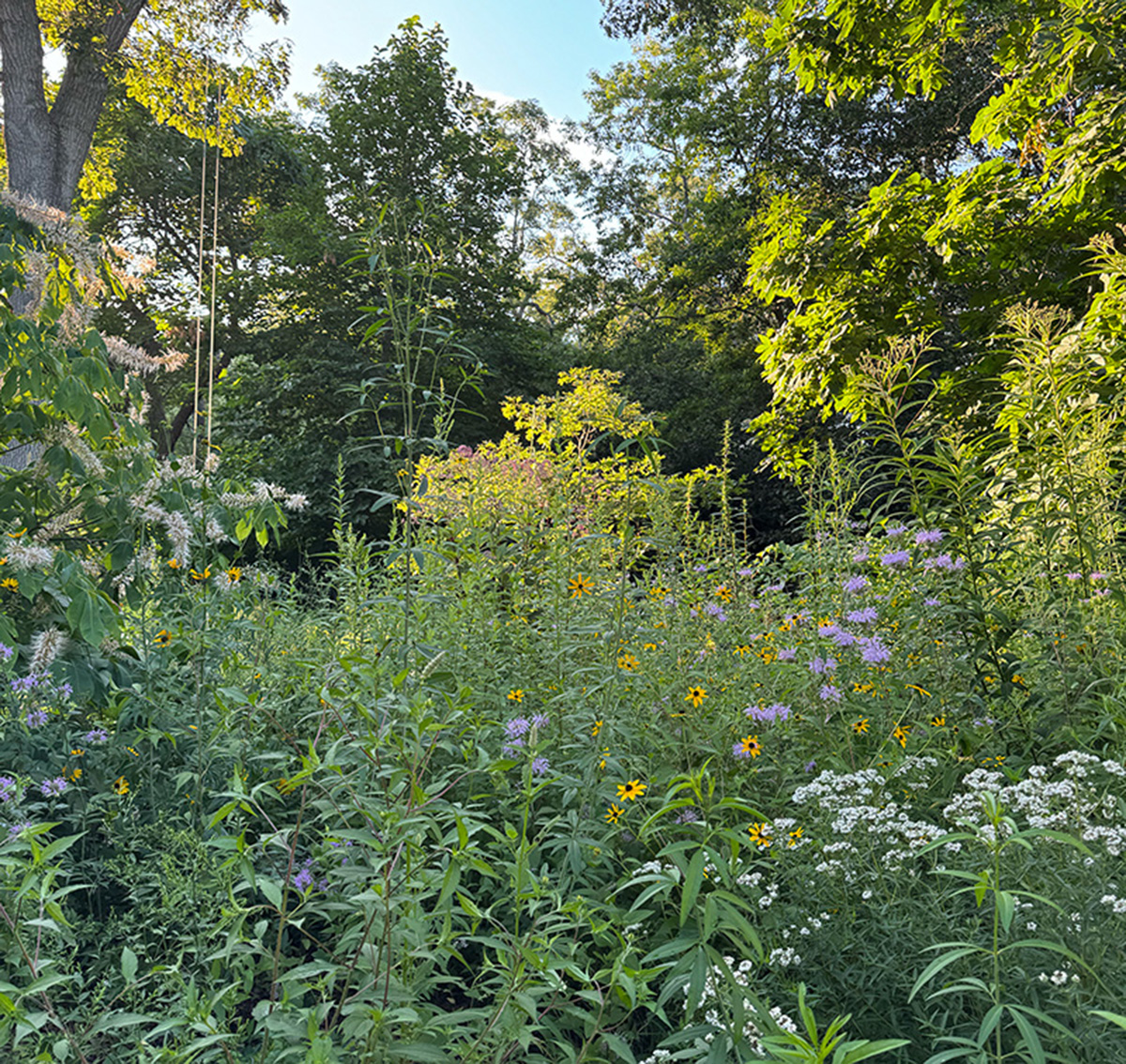
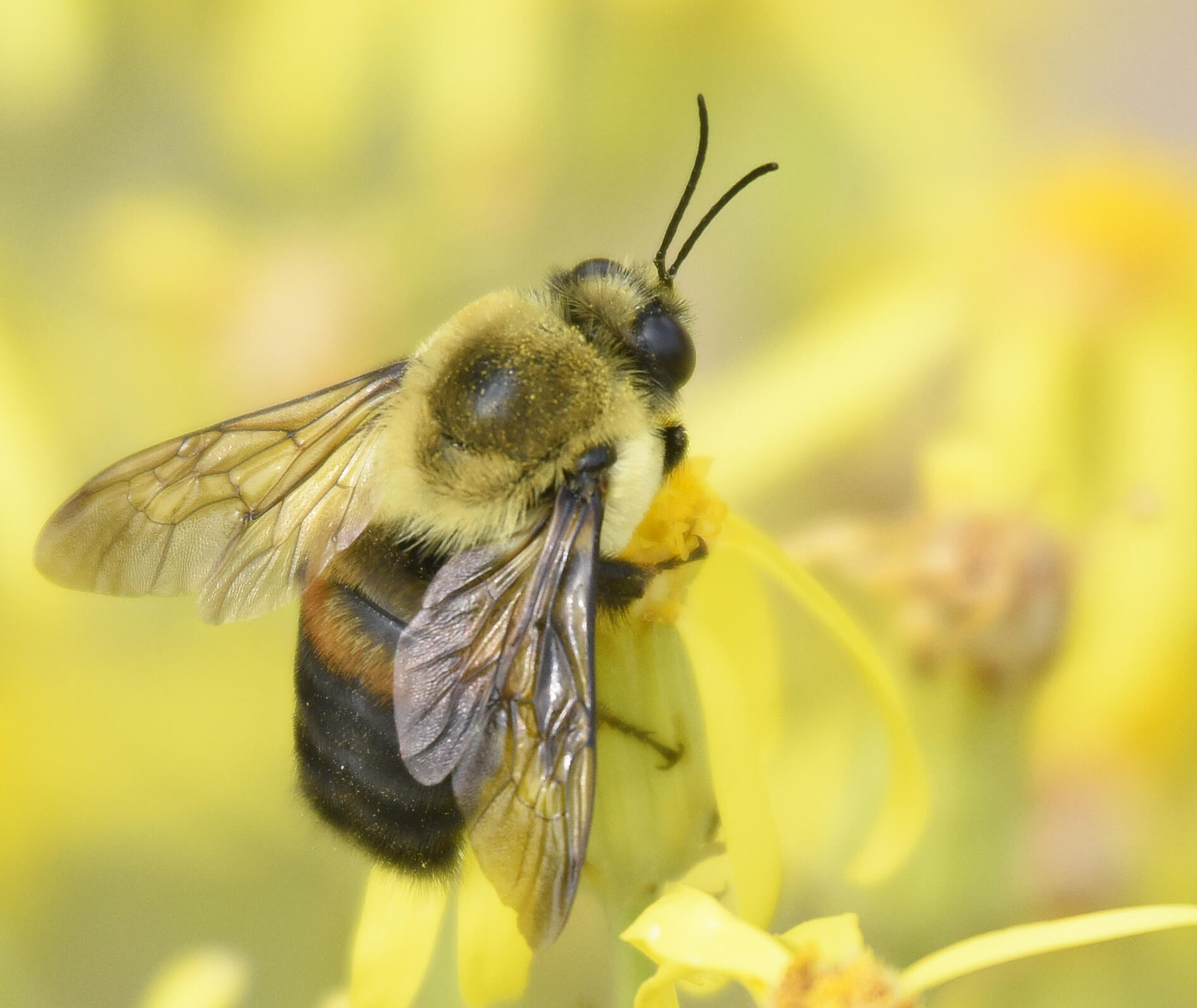
You’ll see these amazing insects, different butterflies and moths with different colors and patterns. You’ll see ground beetles cruising around in the grass and the low-growing plants. You might see solitary wasps with all sorts of cool patterning, little metallic green sweat bees that are just like these little emerald green jewels. The list really goes on.
I’ve been using the term ecological beauty since graduate school. I think I got it from my advisor, Gail Mangalato, who does amazing work. But, you know, I think taking that step back and looking at the overall ecological beauty of your garden, seeing the life it can support, being okay with some insects nibbling on some leaves because that means you’re providing habitat for all of this fantastic wildlife, is really just a great thing for everybody to do to kind of reframe what they’re looking at in their yard.
Tom Christopher
Well, thank you, Aaron. If listeners want to learn more about the Xerces Society, take advantage of its educational materials and support its work, how would you suggest they do that?
Aaron Anderson
Yeah, well, you can go to Xerces.org. And as you said, Tom, we have this great Xerces library full of all sorts of materials. We have information on native planting lists for pollinators. We have information on endangered species, all sorts of other pesticide reduction resources. The list really goes on. That library is free. I encourage everybody to go check it out. If you want to become a Xerces member, we really do rely on our members for the work that we do. There’ll be also a link on the website if you feel at all encouraged to donate as well. And then we also have something called the Bring Back the Pollinators Pledge. And you can also find that on our website or you can go to bbtp.org, Bring Back the Pollinators, and you can sign the pledge and be part of this community of people who are working to both provide flowering plants for habitat in their yards and providing nesting sites, which is a different topic we didn’t even talk about today, avoiding pesticide use.
And then also they’re pledging to spread the word, talk to their friends, to their neighbors about how they can help conserve pollinators. And, yeah, I think one of the most exciting things working with people, community members, is that we all can be part of the solution. It’s just these simple steps. So I encourage you to also check that out as well.
Tom Christopher
Great. And we should add that Xerces is spelled X-E-R-C-E-S.That’s important.
Aaron Anderson
Yes. Thank you.
Tom Christopher
Right. Well, take care, Aaron, and thank you very much. All right.
Aaron Anderson
Thanks for having me, Tom.
Tom Christopher
I appreciate it. I cannot end this episode without giving credit to the Nibbled Leaf Program, launched in 2022 through a partnership of the Garden Conservancy and the Perfect Earth Project. Gardens that open to the public as part of the Conservancy’s Public Days Program may now exhibit a Nibbled Leaf icon next to their listing in the Open Days directory. This signifies that the Garden maintains environmentally friendly practices detailed in a handbook supplied by Perfect Earth. These practices are designed to create landscapes that feed caterpillars, insects, birds, and pollinators. Such practices do indeed result in nibbled leaves, but these have become a badge of honor, and two-thirds of the gardens enrolled in the Open Days Program have adopted the nibbled leaf icon.
That brings us to the end of this week’s Growing Greener. Please join us again at the same time next week on this radio station, WESU 88.1 FM, for another episode. If you have comments or suggestions, please share them with me, Tom Christopher, via the same website, www.thomaschristophergardens.com. Growing Greener is produced as a community service in partnership with the Perfect Earth Project, a nonprofit dedicated to educating, engaging, and inspiring individuals, land care professionals and decision makers to adopt toxic-free, nature-based, and climate-responsible landscaping practices.
Transcribed by TurboScribe.
About Growing Greener
In 2025, Perfect Earth Project partnered with Thomas Christopher’s Growing Greener podcast. Tune in every week to listen to Tom talk with gardening experts and leaders, who are working and living in harmony with nature. They share their different perspective on how to make your personal landscape healthier, more beautiful, more sustainable—and more fun.
Support for Growing Greener comes from the Garden Conservancy, a national nonprofit dedicated to preserving, sharing and celebrating America’s gardens and diverse gardening traditions. Through preservation, education, and public access, the Conservancy helps protect these living works of art for future generations. Learn more and discover gardens near you at gardenconservancy.org.
Share